Success Stories

Where effort becomes
momentum.

A visual record of practical learning, market exposure, innovation challenges and entrepreneurship activity across the innobiz DUT ecosystem.

500+student businesses incubated across the ecosystem

More moments

A living archive of
entrepreneurship in action.

Explore event and programme moments from across the innobiz DUT ecosystem.

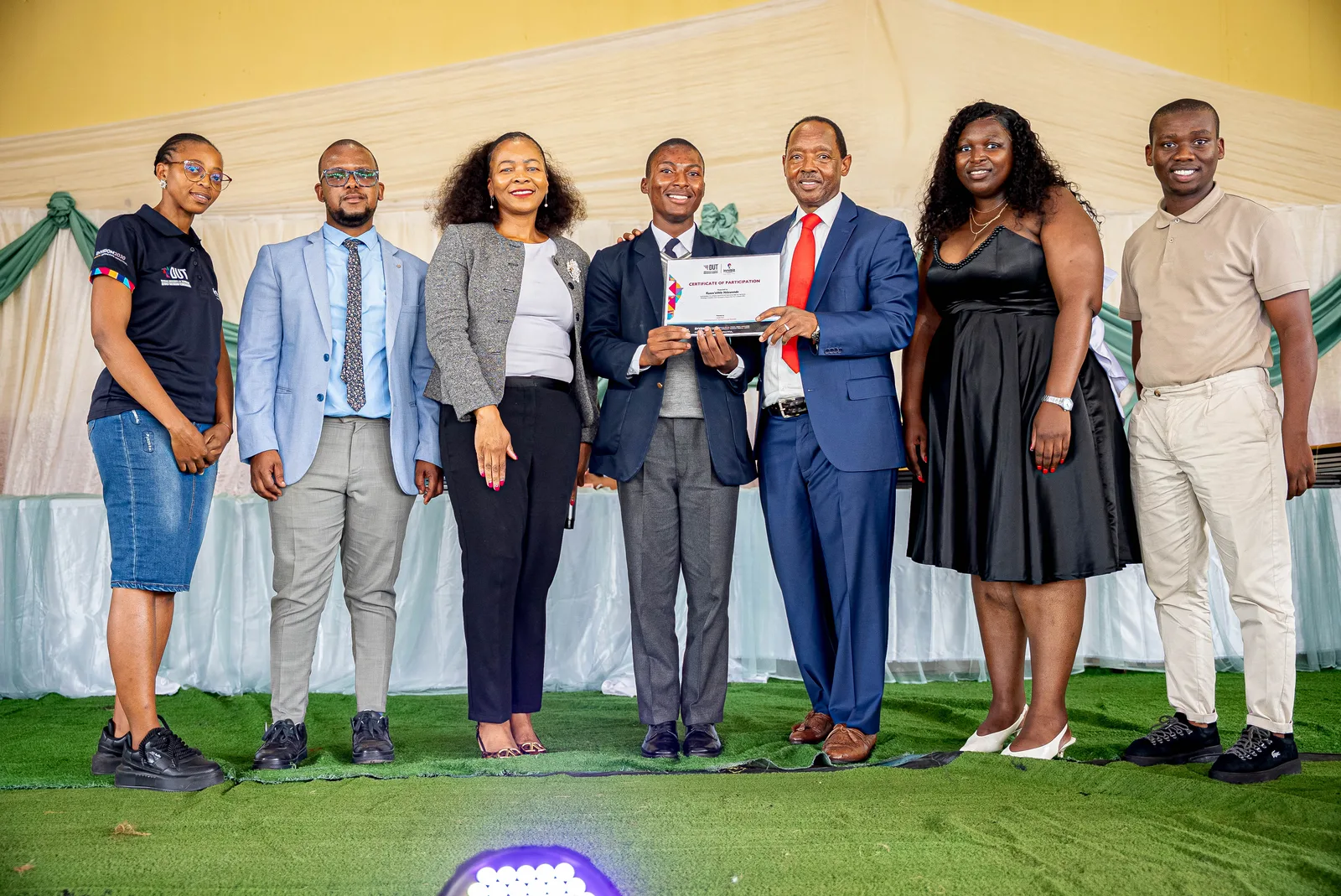
Nkandla Excellence Awards
Success-story archive

Nkandla Excellence Awards

Visual documentation supplied for the innobiz DUT success-story library.

Waste Innovation Challenge launch
2026

Waste Innovation Challenge Launch

An innovation-focused programme moment bringing together industry and higher education around sustainable waste solutions.

SUT Global Camp
2026

SUT Global Camp

A documented international programme moment from the innobiz DUT achievements archive.

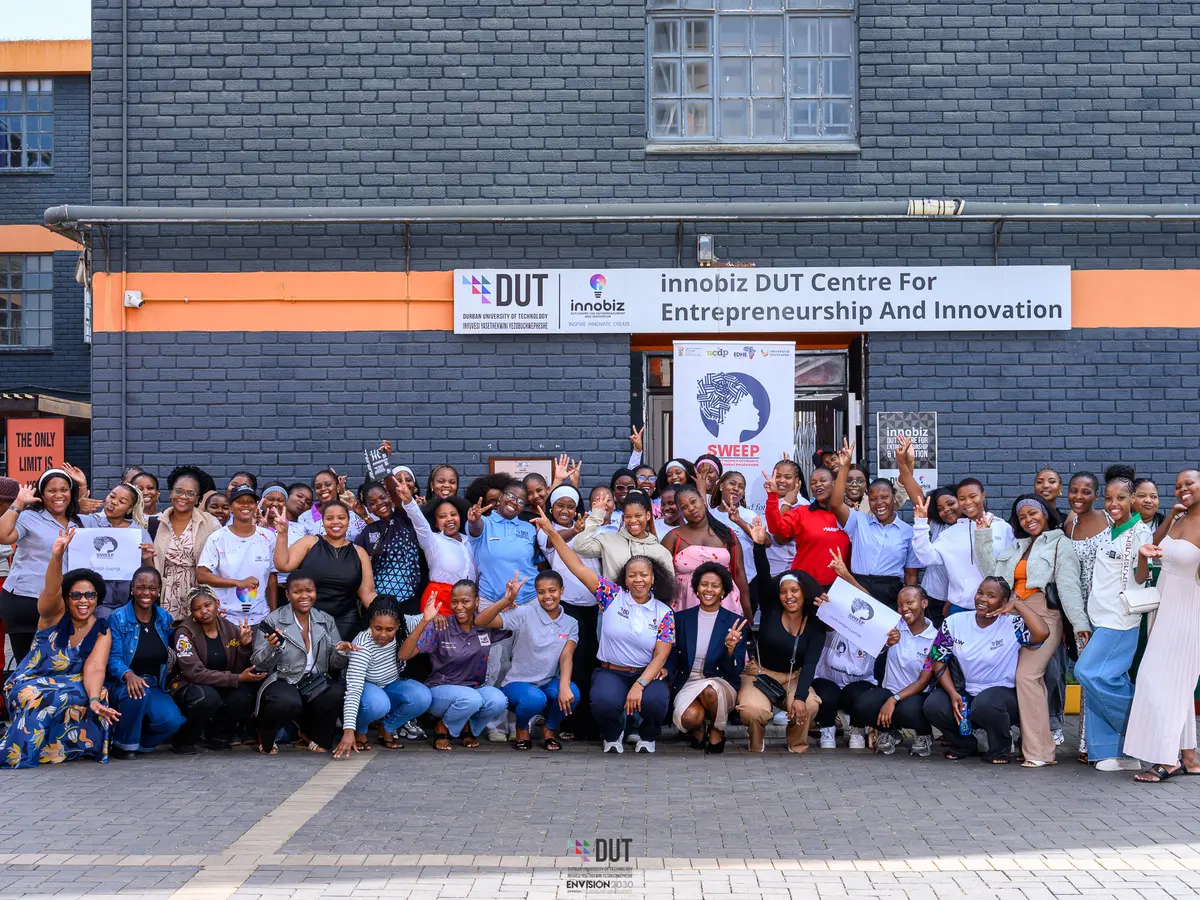
SWEEP Workshop
2026

SWEEP Workshop

A programme moment supporting women-led entrepreneurship, knowledge-sharing and business development.

Entrepreneurship stories

Stories of innovation
and impact.

Meet the entrepreneurs, explore the partnerships and discover the experiences turning ideas into opportunities across innobiz DUT.

Blue economy · Date: 29 January 2026

4th Maritime Youth Ocean Innovation Challenge Launch Event

Innovators, industry leaders and emerging entrepreneurs explore ocean sustainability at the Royal Natal Yacht Club.Read full articleClose article

The 4th Maritime Youth Ocean Innovation Challenge Launch Event, hosted by the eThekwini Maritime Cluster on 29 January 2026 at the Royal Natal Yacht Club, brought together innovators, industry leaders, researchers, and emerging entrepreneurs to explore forward-thinking solutions within the ocean and maritime sector. The challenge served as a collaborative platform for showcasing innovative ideas that address key maritime and ocean sustainability challenges, while promoting technological advancement and inclusive growth within the blue economy. Through knowledge sharing, creativity, and cross-sector collaboration, the Ocean Innovation Challenge reinforced Durban’s role as a leading maritime city committed to innovation, sustainability, and ocean stewardship.

The launch event was strengthened by the active participants and support of a diverse group of key stakeholders from across the maritime, logistics, and innovation ecosystem such as ASMSOL, SAAMBER, KLINE, Moses Kotane Institute, Transnet, Sandock Austral Shipyards, innoBiz at Durban University of Technology (DUT), and SANDRA (South African Network for Defence Related Industries), whose collective expertise and industry insight played a critical role in shaping the challenge. Their involvement not only provided valuable mentorship, technical guidance and real world perspectives to participants, but also reinforced the importance of cross-sector collaboration in driving meaningful innovation within South Africa’s ocean and maritime economy.

The innobiz DUT marketing team conducted a series of interviews with participants and key stakeholders following the Ocean Youth Innovation Challenge Launch Event. The interviews were aimed at capturing reflections, experiences and insights on the impact of the launch as well as gathering valuable feedback on youth engagement, innovation and collaboration. This process formed part of innobiz DUT’s commitment to documenting outcomes, amplifying stakeholder voices and strengthening future entrepreneurship and innovation initiatives.

One of the interviewed stakeholder Ms. Nomalanga Sokhela, the programme Manager for the Maritime Industry Development Programme of eThekwini Municipality’s Economic Development Department shared her organization’s partnership with the EMC (eThekwini Maritime Cluster) explaining why they choose to with the EMC, how serious is the issue of maritime plastic pollution in South Africa and why is it important to involve youth in solving these challenges.

“Partnering with the eThekwini Maritime Cluster leverages complementary strengths through the members network and industry intelligence combined with coordination and sharing of capabilities and resources.  This collaboration creates a safe and efficient ecosystem for supporting innovators to be able to effectively conceptualise, prototyping, testing, scaling up innovative solutions that are demand driven yet addressing real life coastal and maritime industry pertinent issues.

Maritime plastic pollution is a serious and growing threat. It harms biodiversity, undermines the fisheries and tourism sectors, clogs coastal infrastructure, and presents public health risks and most importantly on marine sources and shipping-related debris. The economic and ecological costs associated with pollution along the eThekwini Coastline require integrated, urgent innovative waste management and solutions.

Engaging youth also supports inclusive development empowering historically marginalised groups to participate in value chains and community led waste reduction initiatives. Young people foster entrepreneurship, creates job pathways in the emerging blue economy”.

She further explains what success would look like in five years to come by saying “Success would be demonstrable, measurable progress across social, environmental and economic indicators.”

Mr. Mthobisi Mbatha, one of the interviewed participants also shares his words behind his participation to the Ocean Innovation Challenge.  Mr. Mbatha is the founder of WaveCoin X.

“I am a young innovation leader who is deeply passionate about creating meaningful change in our communities. Innovation inspires me because it gives us the power to solve real problems and improve people’s lives.

What inspires me most is the belief that water is life. Our oceans are home to living creatures that are essential to the balance of our ecosystem and to human survival. When I saw the call for the Maritime Innovation Challenge, I immediately thought, why not me? I wanted to be part of an initiative that can protect our oceans, uplift communities, and contribute to economic growth. My goal is to transform society while helping to preserve marine life for future generations.”

He further explains why plastic pollution and maritime sustainability are important issues to address, especially in Durban and coastal communities.

“Plastic pollution is one of the biggest challenges the world is currently facing. It negatively affects our oceans, marine life, human health, and local economies. In coastal cities like Durban, plastic waste directly impacts fishing, tourism, and the livelihoods of many communities. Maritime sustainability is critical because healthy oceans support food security, economic opportunities, and environmental balance. If we do not address plastic pollution now, the damage to our environment and economy will continue to grow. Protecting our oceans means protecting our future.”

Back to article heading ↑
Student development · Date: 2026

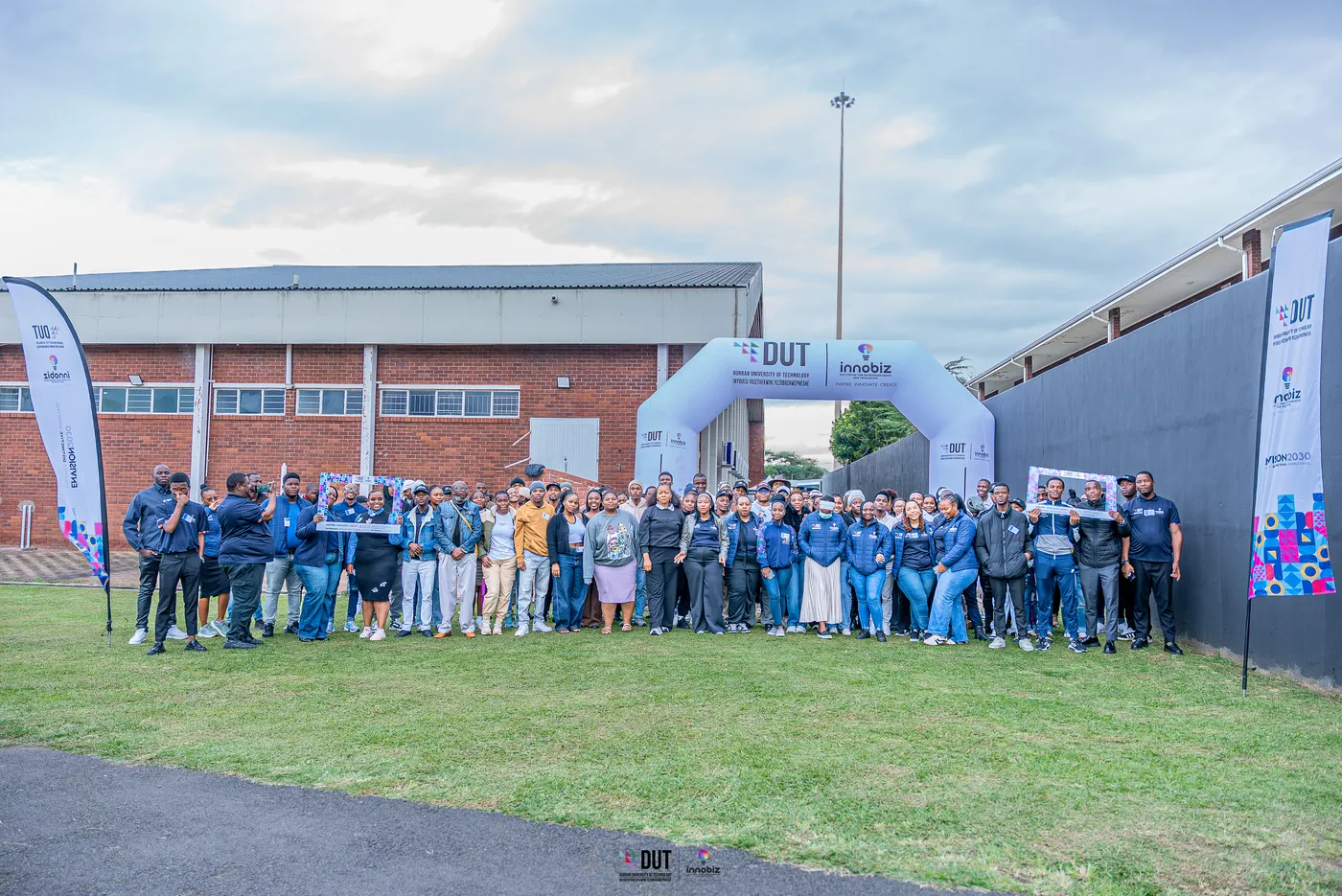
innobiz DUT Supports ADAPT@DUT First-Year Orientation 2026 at Midlands Indumiso Campus

Welcoming first-year students and their parents to university life, entrepreneurship and the support available at DUT.Read full articleClose article

innobiz DUT Supports ADAPT@DUT First-Year Orientation 2026 at Midlands Indumiso Campus

The innobiz DUT Centre for Entrepreneurship and Innovation, as a key supporting office at the Durban University of Technology (DUT), formed part of the ADAPT@DUT First-Year Orientation 2026 held at the Midlands Indumiso Campus. The two-day orientation programme welcomed first-year students and their parents into the DUT community, providing a comprehensive introduction to university life, institutional values, and available support structures.

Day One: Welcoming Students into the DUT Community

Day One of the ADAPT@DUT Orientation focused on introducing students and parents to the life of the university, DUT structures, and student leadership. Various speakers highlighted the importance of students feeling part of the DUT community, not only as academics, but as active participants in campus life.

Students were introduced to their Student Representative Council (SRC) and were guided on what is expected of them as DUT students, as well as what they can expect from the institution. The session reinforced DUT culture and core values, positioning these as central to students’ academic and personal development.

Speaking on behalf of the DUT Vice-Chancellor, Professor Vusi Gumede, Deputy Vice-Chancellor: Teaching and Learning, highlighted that from the many applications received, students had been selected to be part of DUT. He further expressed appreciation to parents and families for choosing and trusting DUT with their children’s academic journeys.

Professor Gumede also introduced the ENVISION 2030 Strategic Plan, outlining DUT’s commitment to producing creative, innovative, adaptive, and entrepreneurial graduates, supported through entrepreneurship centres such as innobiz DUT.

Dr. Mthiyane, DUT Midlands Campus Director, emphasized that the information shared from the first day of orientation was critically selected to benefit first-year students. He encouraged students to use this information to their advantage and described the Midlands Campus as a contributor to the success and identity of the city of Pietermaritzburg. As the capital city of KwaZulu-Natal, home to the High Court, Parliament, and the country’s largest annual marathon, Pietermaritzburg is supported by institutions such as DUT, which serves the province through education.

Representing innobiz DUT, Mr. Khothatso Memela, innobiz DUT Community Engagement Coordinator, presenting on behalf of Ms. Ngcobo, innobiz DUT Centre Manager, introduced the innobiz DUT Centre for Entrepreneurship and Innovation as an umbrella body for entrepreneurial activities at DUT. He shared examples of innobiz DUT incubatees who have excelled in their entrepreneurial journeys, encouraging students to apply for incubation and to graduate not only with academic qualifications, but also as entrepreneurs.

Celebrating 21 years of service, DUT continues to demonstrate rapid progress and remains the number one University of Technology in South Africa. First-year students were welcomed to be part of DUT’s continued journey of growth and innovation.

Day Two: Connecting Students to Support, Partnerships, and Opportunity

Day Two of the ADAPT@DUT Orientation focused on introducing students and parents to all DUT societies and support offices available to support students’ academic, personal, and social needs.

The programme created an interactive environment where students could engage directly with campus services and gain clarity on how to access support throughout their studies.

A question-and-answer session encouraged active student participation, with gifts awarded to students who engaged, further contributing to a welcoming and inclusive orientation experience.

In support of the programme, several external stakeholders were present, including Nedbank, a strategic partner of innobiz DUT, Absa, Standard Bank, Cell C, the Department of Labour, and the Department of Social Development. Their participation highlighted the importance of collaboration in supporting student development and employability.

Internal participation included all offices based at the DUT Midlands Campus, ensuring students were fully informed about available on-campus services. These included the Finance Office, Campus Clinic, Sports Office, and other administrative and student support units committed to enhancing the student experience.

Back to article heading ↑
Market exposure · Date not provided

Asset Class Summit

Ten innobiz DUT studentpreneurs showcase their products and connect with entrepreneurs, clients and potential investors.Read full articleClose article

SAMKELO MTSHALI

Ten studentpreneurs from the innobiz Centre for Entrepreneurship and Innovation formed part of the 1st Annual Asset Class Summit recently, receiving the opportunity to share their entrepreneurial journeys with a diverse audience and showcase their range of products.

The agenda to expose studentpreneurs under the innobiz DUT Centre’s entrepreneurship development incubation to market linkages, potential clients and investors allowed the ten studentpreneurs to exhibit their products at the Asset Class Summit, headlined by renowned South African entrepreneur, venture capitalist, investor, global public speaker and author Mr. Vusi Thembekwayo.

Held at the Olive Convention Centre in Durban, the 1st Annual Asset Class Summit was described by organisers as a platform where visionaries, investors, entrepreneurs, and industry leaders connect to unlock opportunities in property, business, and wealth creation.

The event aimed to provide a powerful platform focused on growth, innovation, and building sustainable economic futures and featured distinguished guest speakers from various sectors of the entrepreneurship landscape.

For the innobiz DUT studentpreneurs in attendance, the platform serves as a great opportunity for the studentpreneurs to network with fellow entrepreneurs, clients and potential investors and funders while also exposing the entrepreneurs' products to a diverse audience.

In his address, Mr. Thembekwayo, advised the audience, warned against the stereotyping of Black wealth as a crime and seeing poverty as the natural state of Blackness and questioning the legitimacy of the wealth of any Blacks that were not poor.

“If we do not change our relationship with wealth as a people, we can have workshops as much as we want, join programmes, go to incubators and raise funding, but we will always be poor because the heart gravitates to what it believes is its natural state. We were taught to think like this, this something we were educated and taught,” Mr. Thembekwayo said.

Furthermore, he advised the audience to “free” themselves of the need to be liked in order to serve their purpose

“Unti you are free of the need to be liked forget your ability to be wealthy, those two things are mutually exclusive. My own experience tells me that people will like you after you've arrived at your destination and then they will say “we knew it” and “we grew up with him or her”. I pray that you have the courage to be disliked,” Mr. Thembekwayo said.

Among other main speakers of the day were female entrepreneurs such as Dr. Lungile Mhlongo, Founder & Director of Numa Medical Aesthetic, Dr. Thandi Ngxongo, a chemical engineer with experience in the petroleum sector and owner of several fuel stations and Ms.Sanelisiwe Ngcobo, a conveyancer who is the Founder and Managing Director of Ngcobo SN Inc, a multi-regional law firm recognized for excellence in property law and conveyancing across South Africa.

The female speakers touched on the critical role played by education in their entrepreneurial journeys. Dr. Ngxongo emphasized the importance of investing in education and upskilling oneself as a major advantage in entrepreneurship.

“Education in entrepreneurship is very important, whether it's through formal or informal education. It’s very important that you upskill yourself as an entrepreneur because the only way we can grow is when you have knowledge, and knowledge is in the books.

“We need to love reading, all the time, whether you are in a taxi or flying you need to read something because that’s the only way. They say leaders are readers. Personally, my inspiration to register for my MBA was the fact that I want to own a garage, that was my vision,” Dr. Ngxongo shared.

Furthermore, she highlighted to entrepreneurs the significance of putting plans in place and that prior to purchasing a fuel station she had already put a five year plan in place, studying the tricks and trades of the business, identifying the weaknesses and spotting opportunities.

Ms. Sanelisiwe Ngcobo shared that entrepreneurship was not just about luck, but instead required some form of planning, execution and accountability and that it was key that entrepreneurs possess these attributes in their businesses.

“I knew I was definitely a good lawyer, but I invested in myself by getting a business coach because I had to be accountable as I was being given homework to do. It’s painful to be criticized but I knew where my weak points were and I dealt with them so that by the time someone tries to project it just doesn’t land,” Ms. Ngcobo said.

Dr. Mhlongo shared how her medical degree, plus a skin condition that she had, propelled her to go into business by providing skin care products for people with skincare problems like she had.

“

Additionally, the three female entrepreneurs said that education assists in structuring an entrepreneur’s thinking as this allows them to plan efficiently and strategize because they now have the background and basics from education on how to be more structured.

Mr. Thintani Dlamini, innobiz DUT Business Support Coordinator, said that the exposure of the studentpreneurs to such platforms bore great significance as it allowed several opportunities of growth, chief amongst them linkages to the markets, funding and investor opportunities and engagements with clients.

“Such events provide a diverse offering of people from the entrepreneurial space who might have a critical linkage to the markets for our entrepreneurs. There is also a wealth of information that will be shared by prominent speakers at this event that will be critical to the student entrepreneurs’s development.

“The event will also provide them with a chance to soak in knowledge from people who have many years of experience in the entrepreneurship space, people who are mentors and business owners who have encountered and navigated challenges in this journey. This will assist our young entrepreneurs to find ways to navigate challenges and obstacles that they also face in business,” Mr. Dlamini said.

Ms. Nontokozo Nkosi, innobiz DUT incubatee and founder of Nkosi’s Beauty Products, said that the opportunity to exhibit her products at the Asset Class Summit was a pivotal moment in her entrepreneurial journey.

“It means a lot to me as I got time to network with some big and prominent names in the South African entrepreneurship landscape while having the opportunity to showcase the products that I have. There were opportunities for networking and possibly collaborations and getting new clients and funders,” Ms. Nkosi said.

Mr. Kwanele Myeza, also an innobiz DUT incubatee and founder of clothing brand KSM Textiles, explained that the platform had provided him an opportunity for exposure to people who can support his brand in a variety of ways, including sales to customers, market linkages to other entrepreneurs in the same sector and event potential funding.

“At such events we get exposed to different target markets and through interactions with them I get to improve as this enables me to go back to my brand and see what alterations and improvements to my products and customer services,” Mr. Myeza said.

Back to article heading ↑
Leadership · Date not provided

Business Leadership Skills Workshop

Zakheni Ngubo shares practical lessons on self-awareness, communication, teamwork and resilience at the innobiz DUT Hackathon.Read full articleClose article

Mr. Zakheni Ngubo, one of the mentors at the innobiz DUT Hackathon, led a session on Business Leadership Skills that really connected with the students. Instead of turning it into a formal lecture filled with complicated business terms, he spoke in a way that felt real and easy to relate to. His session focused on the kind of leadership that students can start practising now, even while they are still finding their feet as future entrepreneurs and professionals.

He started by explaining that leadership is not about having a title or being in charge of people. According to him, leadership starts with how a person handles themselves, works with others, and responds under pressure. This immediately changed the mood in the room because students began to see leadership as something they are already capable of developing in their everyday lives.

One of the biggest points he focused on was self-awareness. He encouraged students to understand their own strengths, weaknesses, and habits before trying to lead anyone else. He explained that people grow into good leaders by being open to learning and accepting that they won’t always have all the answers. That honesty in his message made the session feel more genuine and less intimidating.

He also spent time talking about communication and how important it is in business and leadership. Whether pitching an idea, working in a team, or dealing with customers, being able to communicate clearly can make a huge difference. He reminded students that listening is just as important as speaking, especially when working with different personalities and ideas.

“Leadership is not about trying to control everything,” he said during the session. “It’s about knowing how to work with people, understanding them, and helping the team move forward together.”

As the session continued, he spoke about teamwork and responsibility. He reminded participants that in any project or business, things will go wrong at some point. What matters is how people respond in those moments. Instead of blaming others, he encouraged students to take ownership of their roles and support each other when challenges come up.

What made the session even more relatable was the way he used practical examples from real business situations. He spoke openly about pressure, mistakes, setbacks, and learning through experience. Students could tell that he wasn’t just speaking from theory, but from situations he had actually seen and dealt with himself.

Another strong message from the session was around discipline and consistency. He explained that many people want success quickly, but leadership and business growth take time. According to him, showing up consistently, staying focused, and being reliable are some of the things that separate strong leaders from the rest.

“People think leadership is about being perfect or always knowing what to do,” he added. “But sometimes leadership is simply about staying committed, staying calm under pressure, and being willing to keep going even when things get difficult.”

Throughout the session, students stayed engaged and interacted openly with him. Some shared their own thoughts and challenges, while others asked questions about confidence, teamwork, and managing responsibilities. The conversation felt natural, which made it easier for students to connect with the lessons being shared.

He also encouraged students not to wait for permission before stepping into leadership roles. Whether it’s taking initiative in a group discussion, helping a teammate, or speaking up with an idea, he reminded them that leadership is built through action and experience, not by waiting until you feel completely ready.

By the end of the session, many students seemed to walk away feeling more confident and motivated. The discussion wasn’t just about business, but it was also about personal growth, mindset, and learning how to work with people. It gave participants something practical they could carry with them long after the hackathon ends.

Overall, Mr. Ngubo’s session added a very human and personal side to the hackathon experience. While students had spent most of the programme focusing on ideas and innovation, his session reminded them that strong leadership is what helps those ideas grow. His message encouraged participants to not only build better solutions, but also become better teammates, communicators, and future leaders.

Back to article heading ↑
Business support · Date: 15 August 2026

Business Start-up Readiness Workshop

Practical guidance on turning ideas into businesses, preparing for launch and navigating the first year of entrepreneurship.Read full articleClose article

SAMKELO MTSHALI

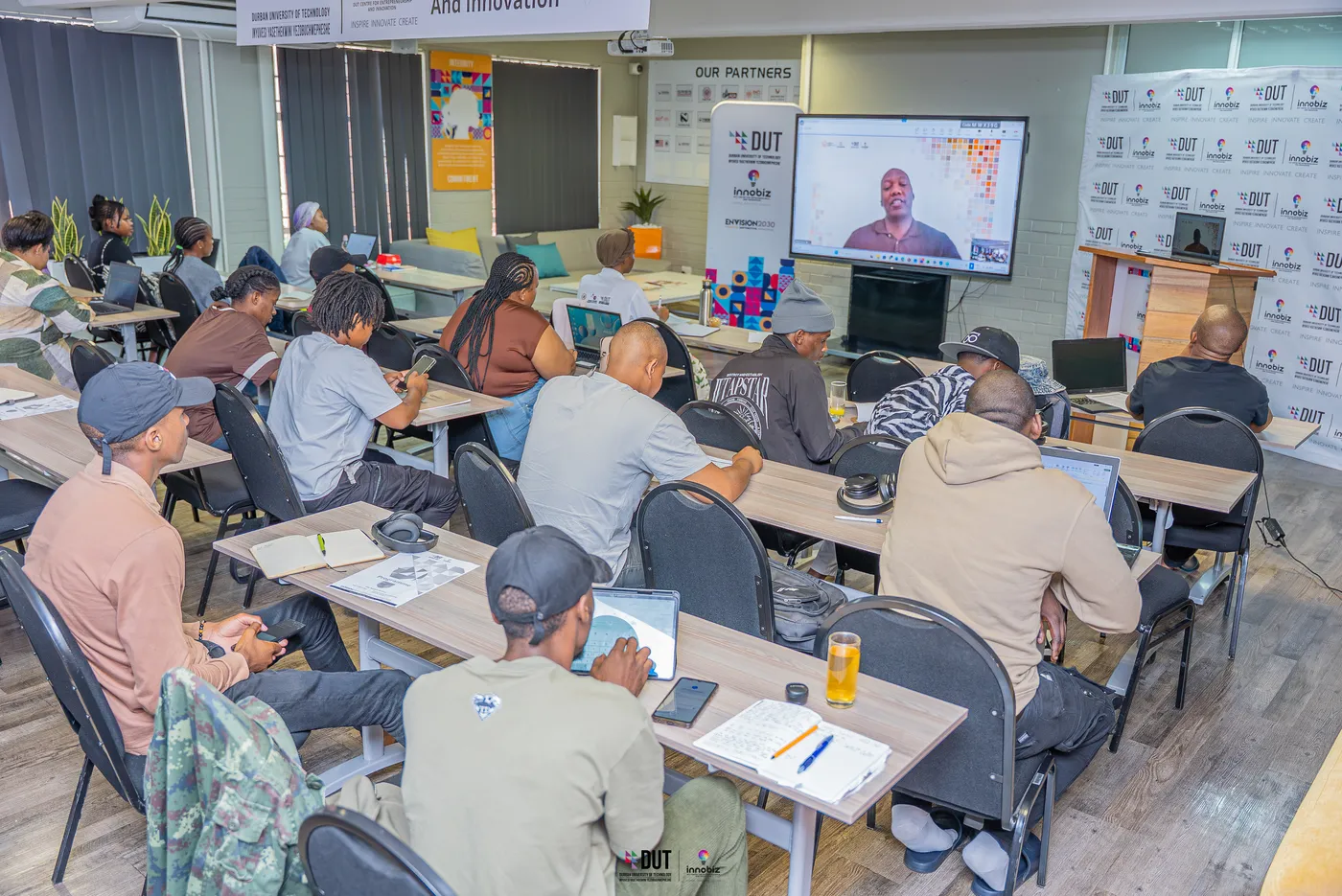
As part of its perennial efforts to equip student entrepreneurs with the necessary skills to establish and run successful, sustainable and profitable business ventures, the innobiz DUT Centre for Entrepreneurship and Innovation hosted a Business Start-up Readiness Workshop on Saturday, 15 August 2026.

The workshop aimed to help the student entrepreneurs to maneuver the rigors of the entrepreneurship space by assisting the budding entrepreneurs with the requisite practical skills, including how to turn an idea into reality and the ways to successfully navigate challenges faced by entrepreneurs in their first year of business.

Ms. Nompumelelo Sithebe, from the DUT Department of Auditing and Taxation, kicked off the session with her presentation on Business Start-up readiness focused idea generation, research, market validation, business model, financial planning, legal and tax compliance, launching the business and growing the business.

Among some of the key factors in starting a business, as shared by Ms. Sithebe, were the entrepreneur's personal readiness, market readiness, product and service readiness, financial readiness, operational readiness, legal and regulatory readiness, technology readiness and risk management readiness.

"Considering the fast pace technological age we are in, with Artificial Intelligence, it is quite important to understand the technological trends of the business sector you are in, that will help you keep aligned and in touch with the technological demands of the type of business you are in," Ms. Sithebe said.

She also highlighted the significance of self-interrogation by entrepreneurs before they invest money into starting business, by being aware of the sort of problem that their business is solving, understanding of the group experiencing the problem that the entrepreneur is solving, understanding of the seriousness of the business, and how customers were solving the problem currently.

"You also need to have an understanding of what makes your solution different, whether customers will pay for your solution, can the business survive in the long term and whether you can make a profit.

"You also need to understand your competition. You must be aware that competition is not necessarily a threat, but it can instead provide useful information including giving you an understanding of what your competitors are doing well, where their customers are dissatisfied, what prices they are charging, what can you do differently and what will make customers choose you," Ms. Sithebe explained.

Another critical point she shared with the student entrepreneurs was the essence of credibility, and how it shapes how a business is viewed by its clients and potential investors.

"What will make your clients trust you is if you are registered to a professional body relevant to the sector of business you are operating in, this gives your business a strong profile and most importantly credibility to your clients," Ms. Sithebe said.

She also touched on the problem-solution connection, highlighting in particular the importance of entrepreneurs keeping accurate financial records in order to be in compliance with tax authorities.

"Even if you are still in the early stage of your business and you are only making three transactions a month, you must still keep proper financial records so that you avoid flouting tax regulations which then leads to penalties from the tax authorities," Ms. Sithebe said.

To motivate the budding entrepreneurs to stay the course in the early stages of their businesses, Ms. Sinenjabulo Ndlovu, innobiz DUT SWEEP Community Engagement Office, delivered an engaging and encouraging presentation focused on the “First Year of Business: What Nobody Tells You”.

She touched on the reality checks of businesses, explaining that starting a business was exciting, but building one hard that needs endurance.

“Nobody tells you that your first year may include rejection, slow sales, financial pressure, long hours, mistakes, self-doubt, and changing your original idea. Your first year is about looking successful, it is about building something that can survive,” Ms. Ndlovu said.

As an operator in the government tendering space, she shared some of the challenges faced by contractors, including government departments not paying on time, which in turn affects staff salaries among other costs.

“You also need to understand that your business is not your business, an idea means nothing without execution. Have an understanding of who your customer is, what problem you are solving, why they would choose you and whether you will make money and how you will make money. Fall in love with the problem, not just your solution,” Ms. Ndlovu said.

Critically, Ms. Ndlovu shared the difficulties of achieving sales in the early stages of the business, saying that “sales will humble you”, but entrepreneurs need to learn to speak confidently about their business and advertise and promote their business.

“Promote yourself, follow up, approach customers and handle rejection. Your friends may support you, your family may encourage you, but support does not always equal sales, therefore confidence in how you speak of your business and basically living your brand and business will help you to go a long way,” Ms. Ndlovu said.

In conclusion, Ms. Ndlovu shared that in their first year of business the entrepreneurs need to start small, learn fast, serve, keep building, solve real problems, focus on customer value, improve through feedback, and think long term.

Back to article heading ↑
Enterprise funding · Date not provided

CEF Refinery Drive

CEF Group funding supports innobiz DUT and student-led energy ventures Oluhlaza Energy and Reycoal.Read full articleClose article

The innobiz DUT Centre for Entrepreneurship and Innovation and two of its student entrepreneurs were recipients of critical funding close to R1 million for the centre’s support to student entrepreneurship and for the student entrepreneurs’ research based businesses in the energy sector.

The funding came courtesy of energy solutions company the Central Energy Fund (CEF) Group in collaboration with the Young Entrepreneurs Institute and the Durban University of Technology, with the Centre receiving R500 000 while the student entrepreneurs received R120 000 apiece.

The funding disbursed to two female student entrepreneurs under innobiz DUT’s entrepreneurship incubation programme went to Ms. Nompumelelo Ngcobo, the founder of Oluhlaza Energy, and Ms. Tiffany Ogbannayo, founder of Reycoal.

Oluhlaza Energy, Ms. Ngcobo’s venture, is an on the rise green energy start-up with a focus on developing sustainable and renewable energy solutions both regionally and nationwide, while Reycoal, Ms. Ogbannayo’s enterprise, specialises in the production of sustainable, long burning eco-coal from coconut shells called Coco Briq.

Both businesses walked away with a monetary significant boost for their enterprises through the CEF Group’s Corporate Social Investment Support initiative.

Mr. Lloyd Ganta, an executive official at the CEF Group, said that the handover of the funding was to people that would help to shape the region’s future

“When I look at the young men and women in this room I’m reminded of something very simple, every enterprise, no matter how small or large, starts where you are with an idea, lack of capital and someone willing to bet on you.

“I’ve spent many years as a professional, seen many ideas flourish and a lot more not succeed, and they succeed because they had both capital support paired with mentorship and structure and I think it’s important that we meet here today to honour these young people, but to also honour DUT for the gesture in taking these young people under their wing and making sure that they are supported in their ventures going forward,” Mr. Ganta.

He said the CEF Group Refinery had a responsibility to the youth of the Durban South region and community at large, due to the region’s high unemployment and poverty.

“The reality facing many families who live in the shadows on this very side is poverty and unemployment. Enterprise development, anchored by the Young African Enterprise Institute, grounded with entrepreneurship and channeled through the DUT structured incubation is one of the most relevant ways we can respond to this challenge.

“To the entrepreneurs their cheques this afternoon, each of you is walking away with working capital and you’ve been drawn from young talent across KZN to be here this afternoon, we look forward to you to fuel the future of this region and this country,” Mr. Ganta said.

He also commended the Durban University of Technology for the “regal structure” that the University, through the innobiz DUT Centre which is its umbrella body for all entrepreneurial activities, brought to the incubation process.

“Handing over a check is easy, but building a foundation that can still be standing in five years time takes partners who know what they are doing. This is not charity or a photo opportunity, but it is an investment in people in this region in the face of the current economic inequality in Durban South and KZN,” Mr. Ganta said.

Ms. Zinhle Thupana, CEF Group Executive for Corporate Affairs, said that the region and the country at large was in an era that needed a transition of young people from job seekers to being the economic creators.

“It’s very important that we understand that, we need to see young people coming through and creating those opportunities because the future lies with you. Now it’s about us the older generation making that we mentor you, we provide funds, create opportunities for the youngsters because if we don’t do that we are really short-circuiting ourselves,”Ms. Thupana said.

She emphasized that the current economic climate in the country was no longer about job seeking, but the youth creating opportunities and changing the narrative. She added that CEF’s developmental mandate pillars required that the organization contribute and deal with inequalities and injustices of the past.

“We need to ensure that as an organization we contribute in the elimination of those challenges of the past, hence we are doing what we are doing and we are very intentional about it and ensure that it becomes impact,” Ms. Thupana said.

She congratulated the beneficiaries, saying that they had earned the funding coming their way because of the journey that they had traversed thus far in entrepreneurship, further encouraging them to make the best of the resources handed to them in the course of their entrepreneurial journey.

Mr. Linda Hasi, the Chief Innovation and Technology Officer at YAEI, said that at the core of their function was to assist young people to transition from lack of access to opportunities by providing the platforms to bridge that gap.

“We realised that we are putting these people into universities, but jobs are not there and what do we do then? We then pursued a pathway of entrepreneurship to say let us move away from them being job seekers to creators and YAEI was born,” Mr. Hasi shared.

Furthermore, he emphasized that it was critical that they do not pursue this path of entrepreneurship alone hence partnerships were critical to propel the movement forward and encourage young people to do it for themselves.

Mr. Ndumiso Cele, Engineer at Oluhlaza Energy, shared that the funding was an honour and welcome boost to the business because he had been on the verge of giving up on the project due to its complexities in research.

“We are doing a solar powered hydrogen system. Hydrogen is a very energetic gas that can be used to generate electricity, so our project is based on renewable energy and trying to generate sustainable electricity using solar energy and water,” Mr. Cele said.

He shared that one of their challenges was how to store the hydrogen due to how complex it was to store and ensure the safety protocols around it were followed.

Ms. Ogbonnaya, Founder and Director of Coco Bric, said that what had propelled her to establish Cocobriq was the incessant issue of climate change, particularly in an African context.

“We are the ones who are most adversely affected by climate change, but we are the ones who contribute the least to it. However, complaining about it won’t help and she instead utilized the skills learnt in my degree to kickstart Cocobriq as a product, recycling agricultural waste such as coconut shells and macadamia nut shells to create eco-briquettes,” Ms. Ogbonnaya.

Back to article heading ↑
Leadership · Date: August 2026

Conversations with CEOs: Women Leading the Future

DUT brings together women leaders, alumni and students for conversations about leadership, innovation, research and entrepreneurship.Read full articleClose article

SAMKELO MTSHALI

The Durban University of Technology (DUT) Business School in collaboration with the innobiz DUT Centre for Entrepreneurship and Innovation and the Department of Advancement and Alumni Relations recently hosted the 2026 leg of the Conversations with CEOs series, bringing down the curtain on Women’s Month in style.

With headline acts including Ms. Tozi Mthethwa, Group Corporate Support Services at Ithala Development Finance Corporation, Dr Thandeka Ellenson, Chief Executive Officer at the Moses Kotane Research Institute, and Ms Maishibe Ntlhane, Chief Executive Officer at the National Bioproducts Institute, the event was hosted at the DUT Ritson Campus under the theme “Women Leading the Future”.

The event saw inspiring leaders, DUT alumni and postgraduate students gather for meaningful conversations around leadership, innovation, entrepreneurship, research and collaboration to soak in a wealth of knowledge from the speakers.

The evening’s discourse, followed by an engaging CEO panel discussion, was capably led by the Programme Director Dr. Sifiso Myeni while there were also thought-provoking keynote addresses by Ms. Mthethwa, Ms. Nthlane and Dr. Ellenson who all shared their vast knowledge garnered through their extensive careers in leadership, innovation, entrepreneurship, research and collaboration.

Ms. Mthethwa spoke on the financing dreams, empowering women to build South Africa’s economy and the critical role that women play in the economy and how deliberate women should be in driving the role and space for women to start and run sustainable enterprises.

“Looking at the key sectors of the South African economy, and how and where are women playing a role, there’s a statistic from StatsSA that says 67.5% of the GDP comes from services sectors and these are sectors, including finance, trade, personal care, fashion design, transport and government, are where many women play a role.

“However, there are sectors where women show a lack of understanding of how to come into those sectors or some barriers exist for women not to come into those sectors, among these are mining and manufacturing.

“Manufacturing is one of the sectors of the economy that we call priority sectors for KZN. The province of KZN put together an economic revitalization strategy after the effects of Covid-19, this strategy looked at key sectors of the economy that needed to be driven together in a deliberate and focused manner to rebuild our economy.

“We were talking with Prof. Mashau where we talked about we as DUT and Ithala could partner and we recognized the important role of a DUT type of education that could produce a practical graduate who can be able to go into the market place and be able to trade,” Ms. Mthethwa said.

Ms. Nontokozo Ngcobo, innobiz DUT Centre manager who has worked in the entrepreneurship and innovation space with young people for over two decades, touched on the impact of internationalizing entrepreneurship and innovation development particularly amongst young people.

“Every year at DUT we receive a group of young people that come from different parts of the country, mainly from rural areas, who’ve not been exposed to innovation and the first time when they join the incubation programme they ask ‘what is innovation?’ because as DUT we talk about ‘innovative and distinctive’ as some of our key words.

“They come in not even understanding what innovation is, but they do have some business ideas, we have to then first expose them to changing the mindset through our various programmes that we have, including mentorship, basic business management skills, and the technical skills ensuring that whatever sector that they come in from they also understand the quality and the sector compliance,” Ms. Ngcobo shared.

She said that although the students may have been exposed to entrepreneurship through businesses in their families or communities, the key was exposing them to innovation and that this where international partnerships come in as the Centre, through the support of the University’s management, is then able to travel internationally with the students to international entrepreneurship exchange programmes where they are exposed to international innovation trends and best practices.

“Over the years we’ve travelled with over 500 students internationally and through that I’ve seen the mindset shift, over and above the services that we provide, in terms of innovation. Someone will travel maybe to Germany and they come back with a new perspective on how they can innovate because one of the biggest arguments is how do you innovate when you have not been exposed to innovation?”

Dr. Sifiso Myeni, from the DUT Business School, explained that the annual Conversations with CEOs series, now in its third year, was a creative platform for all the influential leaders to engage with DUT students, alumni, and the broader business community.

“The event aims to inspire, empower and expose our students to real work leadership experiences with strengthening connections between academia and industry and I will attest to that because within my own capacity I’m also doing Work Integrated Learning and I do understand the value of our students getting this practical, handson, experience creating the linkage between academia and industry,” Dr. Myeni said.

Ms. Ntlhane, speaking on “Innovation with Purpose: Women Leading South Africa’s Bioeconomy and Sustainable Future”, shared with the audience some guiding principles on leadership, saying that leadership does not happen by accident but require individuals to stand up and set aspirational and sometimes scary goals while being disciplined enough to see those through.

“We often talk about women having to ‘lean in’, but I’d rather say you need to lean in as well as stay the course. Leadership is much more than just a title and the corner office, and I can assure you both of those are great, but as leaders we must take responsibility for turning intention and goals into results and having the courage to see things through even when it’s difficult and could have been easier to walk,” Ms. Ntlhane said.

Zooming in on the pharmaceutical industry, Ms. Ntlhane said that if there was seriousness about building a sustainable bioeconomy there was a need for procurement policies that recognize long term economic and strategic value, not simply just the lowest price today.

“We need greater policy certainty to encourage investment, continued investment in technology transfer, local manufacturing capabilities, efficient and response regulatory environment and stronger collaboration between government, industry, academia and research institutions,” Ms. Ntlhane said.

Focusing on research, Dr. Ellenson highlighted the importance of research saying that it was at the core of everyday life, including what people consume, wear and more.

“Research makes a difference, it makes us understand why things are happening, why governments are taking the sort of decisions that they take, it makes us understand why companies make certain provisions or budget, it makes us understand why entrepreneurs sell to certain kind of client, it makes us understand the community problems that we have out there so that we can solve them to make a better South Africa,” Dr. Ellenson said.

Furthermore, she said that the future is not determined only by how much is produced but is determined by what people know, what they discover, what they create and how they translate that knowledge to economic and social value.

The DUT Business School, in collaboration with the Department of Advancement and Alumni Relations and the innobiz DUT Centre for Entrepreneurship and Innovation is proud to have created this platform in which bold questions met bold leadership.

Back to article heading ↑
DUT Student Entrepreneurs Recognised as Winners of the EDHE ABSA Entrepreneurship InnoVarsity Competition 2026Student achievement · Date: 2026

DUT Student Entrepreneurs Recognised as Winners of the EDHE ABSA Entrepreneurship InnoVarsity Competition 2026

Eight student entrepreneurs win the DUT internal rounds and progress to the KwaZulu-Natal Regional Rounds.Read full articleClose article

DUT Student Entrepreneurs Recognized as Winners of the EDHE ABSA Entrepreneurship InnoVarsity Competition 2026

Eight student entrepreneurs from Durban University of Technology (DUT), under the entrepreneurial tutelage of the innobiz DUT Centre for Entrepreneurship and Innovation, have been selected as winners of the DUT internal rounds of the EDHE ABSA Entrepreneurship InnoVarsity Competition 2026.

Their selection, which will see them compete in the KwaZulu-Natal Regional Rounds, highlights the growing culture of innovation, entrepreneurship and enterprise development among DUT students.

The EDHE ABSA Entrepreneurship InnoVarsity Competition 2026 provides student entrepreneurs with a platform to showcase their businesses, innovative ideas and solutions while gaining valuable exposure within the higher education entrepreneurship ecosystem.

At DUT, the internal rounds were facilitated through innobiz DUT Centre for Entrepreneurship and Innovation, creating an opportunity for student entrepreneurs to present their ventures and compete across four categories: Innovative Industries, Existing Business General, Existing Business Social Impact and Existing Business Tech.

The selection of the eight winners reflects the diversity of student entrepreneurship at DUT, with businesses spanning technology, education, food, agriculture, landscaping and innovative solutions.

Innovative Industries

The Innovative Industries category saw Sphelele Mvelase, founder of Over Me Solutions, and Lulwazi Jali, founder of Taxi Fynder, emerge as the category winners.Their achievement demonstrates how student entrepreneurs are developing innovative business concepts and exploring new ways of addressing opportunities within their respective industries.

Lulwazi Jali Sphelele Mvelase

DUT Student Entrepreneurs Recognised as Winners of the EDHE ABSA Entrepreneurship InnoVarsity Competition 2026 — supplied photograph 1
DUT Student Entrepreneurs Recognised as Winners of the EDHE ABSA Entrepreneurship InnoVarsity Competition 2026 — supplied photograph 2

Existing Business General

In the Existing Business General category, Ntandoyenkosi Sikobi, founder of Taste KwaStofela, and Lusanda Ndlovu, founder of Lomeon Greenscapes, were selected as the winners. Both entrepreneurs have progressed beyond the initial business idea stage, demonstrating the importance of building and developing sustainable enterprises while pursuing their academic journeys.

DUT Student Entrepreneurs Recognised as Winners of the EDHE ABSA Entrepreneurship InnoVarsity Competition 2026 — supplied photograph 3

Ntandoyenkosi Sikobi

Existing Business Social Impact

The Existing Business Social Impact category recognized Hleketani Bilankulu, founder of Everything's Math, and Thokozani Buthelezi, founder of Myco-Feeds. /////Their recognition highlights the role of entrepreneurship in creating solutions that can contribute to positive social and economic outcomes. Their ventures demonstrate how student businesses can be driven not only by commercial opportunities but also by the desire to address challenges and create meaningful impact.

DUT Student Entrepreneurs Recognised as Winners of the EDHE ABSA Entrepreneurship InnoVarsity Competition 2026 — supplied photograph 4
DUT Student Entrepreneurs Recognised as Winners of the EDHE ABSA Entrepreneurship InnoVarsity Competition 2026 — supplied photograph 5

Thokozani Buthelezi Hleketani Bilankulu

Existing Business Tech

The Existing Business Tech category was won by Ndumiso Mngomezulu, founder of Lubelo Tech Solutions, and Doliva Mputu Yamba, founder of Kizuri Tech Solutions.Their success highlights the growing role of technology and innovation in student entrepreneurship, as young entrepreneurs explore technology-driven solutions to respond to changing needs and opportunities.

DUT Student Entrepreneurs Recognised as Winners of the EDHE ABSA Entrepreneurship InnoVarsity Competition 2026 — supplied photograph 6
DUT Student Entrepreneurs Recognised as Winners of the EDHE ABSA Entrepreneurship InnoVarsity Competition 2026 — supplied photograph 7

Ndumiso Mngomezulu Doliva Mputu Yamba

Celebrating entrepreneurship and innovation at DUT

The success of the eight student entrepreneurs reflects DUT's commitment to fostering an environment where students can develop entrepreneurial skills, transform ideas into businesses and pursue opportunities beyond the traditional pathways of employment.

Competitions such as the EDHE ABSA Entrepreneurship InnoVarsity Competition provide an important platform for student entrepreneurs to gain experience in presenting their businesses, engaging with stakeholders and building confidence as emerging entrepreneurs.

For the winners, being recognized through the DUT internal rounds marks an important milestone in their entrepreneurial journeys. It also provides an opportunity to further develop their ventures and represent DUT as they progress to the next stage of the competition.

Through the innobiz DUT Centre for Entrepreneurship and Innovation, student entrepreneurs are supported in their efforts to Inspire, Innovate and Create, contributing to a stronger culture of entrepreneurship and innovation within the university community.

DUT congratulates all eight winners on their achievement and wishes them continued success as they take the next steps in their entrepreneurial journeys.

Back to article heading ↑
Sustainable innovation · Date: 18–20 June 2026

DUT Success at Green Youth Indaba 2026

Taxi Fynder founder Lulwazi Jali earns second place and R75 000 at the Green Innovators Pitch.Read full articleClose article

SAMKELO MTSHALI

The Durban University of Technology’s excellence in entrepreneurship shone brightly at the 11th annual Green Youth Indaba when Lulwazi Jali, a student entrepreneur within the institution, nabbed second place and R75 000 in prize money in the Green Innovators Pitch.

This year’s edition of the Green Youth Indaba - Green Innovators Pitch, hosted at Sun City from 18 to 20 June 2026, under the theme “Innovative businesses focusing on sustainability and environmental impact” saw 50 young entrepreneurs from the higher education space and wider society deliver their pitches in front of a panel of four judges.

Jali, who hails from KwaSwyimane in KwaZulu-Natal, is a third year ICT: Business Analysis student. He also doubles up as a student entrepreneur under the tutelage of the university’s student entrepreneurship development programme, the innobiz DUT Centre for Entrepreneurship and Innovation.

His story behind founding his enterprise “Taxi Fynder” is one that most South Africans can resonate with, as he says facing difficulties using public transport when growing up and in his young adult life was the motivation that propelled him to find a solution to address this quagmire.

Jali recalls his struggles when making his way around the Durban city centre, sharing that he often got lost and that this had led to him getting mugged in an incident in which his phone and wallet.

“I realised that there needed to be a change, so I started doing research on how to add safety and convenience to public transport and I realised that that’s exactly what the e-hailing industry is providing but not everyone can afford the price of a private ride.

“I then thought why not incorporate e-hailing efficiencies to the public transport industry so that even less privileged people can access to this safety and convenience when travelling and that’s how Taxi Fynder was born,” Mr. Jali shares.

He explains that Taxi Fynder is an app that shows taxi commuters available taxis and ranks on a map and includes taxi fares so that commuters can have an accurate travel budget. The app is linked to a driver app that shows drivers commuters waiting to be picked up, enabling them to leave the rank knowing where the demand is.

“It certainly wasn’t an easy journey to bring the Taxi Fynder idea to life because raising the capital to build and implement the platform came with a lot of pushback from funders and investors, so much so that I had to dig into my own empty pockets to see what I could put together with the help of my dedicated team.”

“Little did I know that there was a centre for Entrepreneurship and Innovation called innobiz at DUT, so being a student at DUT I decided to grasp the opportunity with both hands and I am happy to say that they welcomed me warmly and provided me with the training and mentorship required to truly tackle the business world,” Mr. Jali explained.

Significantly, he adds that through the sector specific training and workshops that he has received at innobiz he also learnt how to polish his business pitching skills, enabling him to articulate his business idea in front of potential clients and investors convincingly.

He also credits the mentorship he has received from the Centre both external mentors and the Centre’s Business Support Unit through mentors like the innobiz Centre Manager Ms. Nontokozo Ngcobo, and Business Support Coordinators Mr. Thintani Dlamini and Ms. Yvonne Phungula.

“Their mentorship has been a big plus as it equipped me with the necessary skills to win pitching competitions and obtain the funding needed to grow my business and as a result I am now also working with different taxi associations around KwaZulu-Natal, providing them with the Taxi Fynder services which help them compete against competitors in the e-hailing sector,” he shared.

At the heart of any business is the people it is meant for, and Mr. Jali reflects that as much as taxi associations are their primary target market, Taxi Fynder is truly for the people hence “we don’t charge them a single cent”.

“With Taxi Fynder Taxis no longer have to roam blindly looking for passengers without demand visibility as their search for passengers is now guided by the app, this saves millions of litres of fuel and as a result decreases magnitudes of carbon footprint, not to mention that with the 16 seater capacity of a minibus taxi more people can travel in one vehicle, compared to an e-hailing ride that transports much less passengers at a time,” Mr. Jali said.

Furthermore, he adds Taxi Fynder is not just bringing safe and convenient transportation, it is also bringing long awaited sustainability into the taxi industry.

“Taxi Fynder contributes to sustainable mobility by reducing the amount of time and fuel taxis spend searching for passengers. Through demand visibility, drivers can identify where commuters need transport, allowing them to operate more efficiently.

“This helps reduce unnecessary fuel consumption, lowers carbon emissions, and creates a more connected and data-driven transport system that benefits both commuters and operators,” he states.

At the heart of the business is the ease that the technology brings to a legacy industry in South African transportation, and Jali says that this has the potential to modernise the taxi industry by improving communication, route planning, passenger information, and operational efficiency.

He further states that by providing real time data on commuter demand and transport availability, technology can reduce uncertainty for both drivers and commuters, while it can also improve service reliability, support informed decision making, and help the industry become more sustainable and competitive.

“Taxi Fynder aims to make transportation safer and more efficient by reducing overcrowding at taxi ranks and limiting unnecessary driving in search of passengers. By connecting commuters with available transport more effectively, we can reduce waiting times, improve route efficiency, and provide commuters with greater visibility of transport options. This creates a more organised and predictable transport experience for everyone,” he shares.

.

On his participation in the Green Youth Indaba’s Green Innovators Pitch and being selected amongst the podium, Mr. Jali said that he was genuinely surprised, grateful, and excited because competing alongside so many talented young innovators was inspiring.

“Hearing Taxi Fynder announced as the First Runner-Up was an incredible moment. It was a validation of the hard work, research, and passion that has gone into developing the idea and most importantly the experience was both challenging and rewarding.

“The competition provided an opportunity to present Taxi Fynder to a panel of experts while demonstrating its potential environmental and social impact. It pushed me to refine my communication skills, clearly articulate the problem we are solving, and explain how innovation can contribute to a more sustainable transport sector.

He reiterates that this success would not have not been possible without the guidance and support provided by innobiz DUT Centre of Entrepreneurship and Innovation.

Zooming in on his participation in the competition, Mr. Jali said that he believes that the strongest aspect of his pitch presentation was the clear link between sustainability and practical impact.

“I was able to demonstrate how reducing unnecessary taxi movements could lower fuel consumption and emissions while simultaneously improving the daily commuting experience for millions of South Africans.

“The solution addressed both environmental and social challenges in a way that was easy to understand. But most importantly we had proof and our powerpoint presentation had embedded videos of taxi drivers sharing testimonials of how the app had helped their daily operations become smoother and more efficient,” he explained.

He highlights one of the biggest lessons that he learnt in the competition was that innovation comes in many forms, and that as a result he was inspired by the creativity, passion, and determination of the other participants.

Additionally, he said that the experience reinforced the importance of continuous learning, collaboration, and focusing on creating solutions that deliver measurable impact for communities and the environment, while he also emphasised the importance of proof of concept because “nothing matters more than numbers”.

“The award is a tremendous encouragement and confirmation that the vision behind Taxi Fynder has value. For the business, the funding provides an important opportunity to accelerate development, validate key assumptions, and move closer to bringing the solution to market. It represents both recognition and responsibility to continue building something that can make a meaningful difference,” Mr. Jali asserted.

He also revealed that the prize money will be invested into key areas that support the development and validation of Taxi Fynder, including software development, market research, and stakeholder engagement within the taxi industry.

“The goal is to scale the platform's customer base by onboarding more associations until we fully capacitate KZN and prepare the business for future growth and investment opportunities.

The next major milestones include, refining the business model based on user feedback, and building strategic partnerships within the transport sector.

“Our long term vision is to establish Taxi Fynder as a trusted digital platform that improves commuter access to transport while supporting a more sustainable and efficient taxi industry. Once we fully capture the KZN market we are planning to introduce Taxi Fynder neighbouring provinces, namely Mpumalanga, Free State and Eastern Cape,” he said ambitiously.

Ms. Nontokozo Ngcobo, the innobiz DUT Centre Manager, expressed her delight at witnessing one of the Centre’s student entrepreneurs succeeding on a nationally recognised platform such as the Green Youth Indaba.

“One of our greatest achievements is seeing students apply what we teach them and succeed at the highest levels. They are developing their pitching skills, refining their business ideas, and putting the systems and processes in place that make their ventures attractive to investors.

“Seeing our students compete against more than 50 businesses from across South Africa and securing second place is a tremendous success for both the students and the InnoBiz team, which works tirelessly to support their development,” Ms. Ngcobo shared.

She recalled that when Mr. Jali first joined the programme in early 2025, his idea showed potential, but it needed significant refinement.

“Through continuous mentorship, hard work, and his willingness to accept feedback and adapt, he has transformed that idea into a credible and growing business. His commitment to advancing his innovation is truly commendable.

I would like to thank the university for its ongoing support, which enables us to provide these opportunities for our students. I also want to acknowledge the dedication of the InnoBiz team, whose hard work plays a vital role in developing young entrepreneurs,” she said.

She added that most importantly,the success of students like Mr. Jali serves as an inspiring example of what can be achieved through commitment and perseverance.

“What makes this accomplishment even more significant is that he was not only competing within DUT, but against students and young entrepreneurs from universities and organisations across the country. To emerge as the runner-up at a national level is a remarkable achievement and one that fills us with immense pride,” Ms. Ngcobo said.

For DUT Mr. Jali’s success means it is the second year in succession that entrepreneurs under the innobiz DUT Centre win big at the Green Youth Indaba.

Mr. Jali’s success follows the success enjoyed by Mr. Luyanda Majozi, founder of Enigmatic Cotton, and Mr. Luvo Gugwana, founder of Green Arch Innovations, who earned a proud third place finish at the annual Green Innovators Pitch Competition and the Green SMME Trailblazer Award for 2025 at the 10th annual Green Youth Indaba held in Durban.

Back to article heading ↑
International collaboration · Date: 2 June 2026

DUT–JAMK Delegation Engagement Session

A delegation from Finland’s JAMK University of Applied Sciences explores entrepreneurship, mobility and innovation partnerships at DUT.Read full articleClose article

SAMKELO MTSHALI

In a bid to strengthen its partnership with its international partners, the JAMK University of Applied Sciences from Finland, the innobiz DUT Centre for Entrepreneurship and Innovation on Tuesday, 02 June 2026, hosted an entourage from JAMK during entrepreneurship and innovation information sharing session.

The innobiz DUT Centre for Entrepreneurship and Innovation was honoured to host the three man delegation from JAMK, at the DUT Indumiso Campus, for a collaborative engagement focused on exploring opportunities for partnership across various faculties within the Durban University of Technology.

The discussions brought together academic and innovation stakeholders to identify areas of mutual interest, including entrepreneurship development, student and staff mobility, innovation ecosystems, research collaboration and opportunities to strengthen international cooperation between our institutions.

As innobiz DUT continues to champion entrepreneurial thinking and innovation-driven development, engagements such as these are instrumental in creating pathways for knowledge exchange, global learning experiences and collaborative initiatives that benefit both students and academics.

Ms. Lorna McCullough, DUT Ecotourism Senior Lecturer, kicked off the day’s proceedings with a heartfelt DUT welcome to the guests of honour, stating that the institution was “absolutely delighted” to have them present at one of the University’s campuses to see what DUT was doing in entrepreneurship and to build strengthen the existing partnership and build future partnerships.

“We are all here because we are passionate about the whole idea of entrepreneurship. I was having a look at our ENVISION2030 strategy map on the wall and it has the word entrepreneurship five times in that one pager, it has the word innovation eight times and it says creativity four times, so these are really important words for our whole institution which is currently being driven by this strategy map,” Ms. McCullough.

The Finnish delegation led by Dr. Sunday Adewale Olayele, a multidisciplinary researcher and senior lecturer at the JAMK University of Applied Sciences, shared that the world was going in a multidisciplinary way, it is all about entrepreneurship and innovation, coming together and making things happen.

“The world is going in a multidisciplinary way, it’s not all about this the area of my specialisation such as I am an engineer or I am a doctor, the world is going beyond that now. It is all about entrepreneurship and innovation,” Dr. Olayele said.

He commended the work in entrepreneurship being done by DUT, particularly in the South African context of a skyrocketing unemployment rate, saying that it was critical for students to possess a mindset that went beyond just graduation and seeking employment by taking the skills transferred to them by the university to kickstart their lives in entrepreneurship.

“South Africa is a land of abundance when it comes to entrepreneurship. Entrepreneurship is a quick solution when it comes to the unemployment rates and DUT is doing a good job, nevertheless there is still room for improvement as they can extend the ties of entrepreneurship.

“I know the common entrepreneurship here is more traditional, but we also share the sort of entrepreneurship that can help the society. They could make a shift in looking at social entrepreneurship and also start some competitions that will help people, especially the students, to showcase their work where they can contact investors, funding ideas, and where they can get opportunities of financing if their work is accepted,” Dr. Olayele said.

He further stated that entrepreneurship was an opportunity to start alone, work alone and to become an employer of employees, and with more entrepreneurs in the country there would be more solutions for job opportunities.

“I think there is a need for more collaboration, networking and there is a need for more consultation, there is a need for more best practices in South Africa. Nevertheless, they have started well, they are progressing and I think with little effort they will turn the country around,” Dr. Olayele said encouragingly.

Ms. Nontokozo Ngcobo, innobiz DUT Centre Manager, said that the visit was significant in strengthening the already existing relationship with JAMK, but also to further explore avenues of new collaboration.

“We have our guests here from Finland so that we can have an effective conversation based on their departments from their institution. When we went to JAMK we saw a lot of things and one thing that Dr. Olayele indicated was that they have infrastructure and we have the population, what does that mean to us? We have a big population that needs to do their advanced diplomas, postgrads, PhDs, and even their university is looking for students. It's open, so we can start sending our students to that side.

“We have this relationship with Finland, there is so much that we are still going to do and Vice Chancellor Prof. Thandwa Mthembu, and DVC: RIE Professor Fulufhelo Nemavhola have asked that we detail projects that we will be doing in entrepreneurship,” Ms. Ngcobo said.

Mr. Ouli Pekka, a Specialist and Expert in the JAMK School of Business, working on AI, business, and digital innovation environments, shared some practical technological solutions that were a necessity in his homeland to address everyday needs that are generally human driven in most parts of the world, but due to Finland’s meagre populace they had to be technologically driven.

He said that one of the stark differences between his homeland, Finland, and South Africa was that South Africa had the strength of population, while Finland was a small country which had the strength of infrastructure.

“When we have few people in the population like we do in Finland, we need to find new ways, particularly technology to keep the country working and the economy running because we do not have as much human resources. When I was visiting India I realised that their big problem is that they have so many people, they don’t need automation, they don’t need AI.

“In Finland we have few people, for example in farms we have robotic cow milkers and the cow milk themselves, so it came from the need because there are so few farmers that needed to make new solutions including the self-driving tractors coming from that need because you don’t have the drivers.

“In countries like India if you need work for people you don’t need innovations because you need to continue the same structure because that manual labour means food and if you are changing things too much there will be a riot due to job losses,” Mr. Pekka said.

Significantly, Mr. Pekki said, it was all about understanding the ecosystem in one’s country and if you innovate you should do so broadly so everybody has a chance to live because not all innovations are applicable everywhere.

He further encouraged students in the University to explore their ideas as the programmes and opportunities offered by the institution were akin to a runway for them to explore their ideas by constantly practicing and moulding their ideas.

Mr. Jarkko Immonen, Senior Lecturer at the JAMK School of Business specialising on business information systems, said that at the core of his work was to attempt to help his students to form their own companies.

“We have succeeded in that in a few years because we have established several companies. It has been nice to visit DUT, I have really enjoyed the whole trip,” said Mr. Immonen.

One of the beneficiaries of the partnership between innobiz DUT and JAMK is Mr. Luyanda Majozi, the founder of streetwear fashion brand Enigmatic Cotton, who spent five months in Finland between August and December 2026.

Mr. Majozi was in Finland as an exchange student studying a course in International Business which comprised modules such as entrepreneurship, global sales management, entry to international markets while also participating in the Future Factory and InnoFlash projects.

“My experience in Finland was exceptional because amongst the many things that I learnt was that in Finland entrepreneurship is embedded into everyday life, all of these modules that I’ve counted are entrepreneurship centric and they challenged us as students to come up with solutions that could solve real world problems as we were studying entrepreneurship at international level,” Mr. Majozi said.

He further stated that his sojourn in the Nordic country had given him an opportunity to learn more about the entrepreneurship space on a global level which enabled him to come back to South Africa and use some of the solutions that had been imparted upon him back home.

“I was quite impressed by the culture in Finland, even the people who are great people. Another thing that was emphasised in Finland as we were doing the different modules in the course was the power and significance of collaboration because most of the work we were immersed in was group assignments.

“These group projects were enlightening because we were doing them with other exchange students from different countries giving new perspectives. So the power of collaboration and learning from other people as impactful because I have been able to use that with my team under my company because I understand what it takes to connect with people from different backgrounds,” Mr. Majozi said.

He also highlighted that being in a new entrepreneurial setting and having to expand his horizons beyond South Africa had taken him out of his comfort zone as he had to learn a different language, culture and way of living.

“It’s also very cold in Finland, so all of those challenges built a better individual in me, a better entrepreneur, and in the midst of all of that I was also continuing with my course at DUT online and I just graduated from that course with cum laude.

“Finland was a learning curve for me as an academic and an entrepreneur, so I would like to thank innobiz DUT and JAMK for for giving us this opportunity through this collaboration because this collaboration is hugely important because it gives us an to be out there and learn about new things that we can come back and implement,” Mr. Majozi said.

Another voice from DUT who added to the discussion was Dr. Xolani Mhlongo, a lecturer in the DUT Department of Nursing, who said that the department was planning on integrating entrepreneurship into its programme.

“In nursing we have previously been more health sciences focused, now we see that we have got so many problems, especially after our students have completed (their studies) they do not have employment particularly now at a time when we do not have enough jobs for students.

“We want to introduce entrepreneurship so that they’ll have the mindset, so that they go and develop their own business because there are so many things that they can do after completing. We currently have a group of students that we’ve selected that we are working with this year,” Dr. Mhlongo said.

He said that they had encouraged students to bring forth their ideas that could be worked on and we hope to be constantly engaging with the innobiz DUT Centre because they were overflowing with ideas.

Back to article heading ↑
Durban Business Fair 2026Market exposure · Date: 1 May 2026

Durban Business Fair 2026

DUT student entrepreneurs showcase their ventures and engage with Small Business Development Minister Stella Ndabeni.Read full articleClose article
Durban Business Fair 2026 — supplied photograph 1

Pictured: Small Business Development Minister Stella Ndabeni alongside innobiz Centre Manager Ms. Nontokozo Ngcobo at the 28th Durban Business Fair.

innobiz DUT student entrepreneurs put on stellar show for Small Business Development Minister.

May 1, 2026

Exciting times lay ahead for women entrepreneurs in universities across the country and particularly the SWEEP DUT Chapter following Department of Small Business Development Minister Stella Ndabeni’s announcement that her department will soon be launching the Women Entrepreneurship Fund with women entrepreneurs in universities the targeted beneficiaries.

Minister Ndabeni was responding to questions posed by the innobiz DUT Centre for Entrepreneurship and Innovation Marketing Team as she crisscrossed the numerous exhibition stands at the 28th edition of the, Durban Business Fair, held at the sprawling Durban Exhibition Centre in the heart of sunny Durban on Friday 30 April 2026 in which eight students from the Durban University of Technology exhibited their ventures.

The Durban Business Fair got off to a spectacular start for the innobiz DUT Centre for Entrepreneurship and Innovation and its eight student entrepreneurs exhibiting at the Fair, with the Minister Ndabeni paying a personal visit to each one of the innobiz student entrepreneurs’ stands.

Ndabeni toured the eight stands showcasing DUT student entrepreneurship alongside innobiz DUT Centre Manager Ms. Ntokozo Ngcobo, who introduced the gobsmacked student entrepreneurs to the Minister and her entourage.

Wi th the Centre intent on spreading the entrepreneurship and innovation message to youth not only within DUT, but to those in the wider community, Ms. Ngcobo delivered a detailed account of DUT’s strategic goal on entrepreneurship in radio interviews with KZN regional commercial radio station Gagasi FM and local radio station Inanda FM.

The star-studded line-up of innobiz student entrepreneurs showcasing their wares at the Durban Business Fair, which has around 500 businesses exhibiting their enterprises across three days, included Mrs. Londiwe Gumede of Pinkani Ceilings, Miss. Ntokozo Nkosi of Nkosi’s Natural Beauty, Mrs. Thembelihle Mathaba of Thobelihle Bees, Miss Siyethemba Ngema of Isithenjwa Holdings, Mr. Luyanda Majozi of Enigmatic Cotton, Mr. Steven Kazadi of KZD Solutions, and Thokozani Buthelezi of MyCo Feeds.

Zooming her focus on student entrepreneurship and the significance for students to start businesses at university level, Ndabeni said that students should seize the opportunities afforded to them by centres of entrepreneurship at institutions of higher learning.

“We do have centres for entrepreneurship in most universities and TVET colleges, we are doing this because we have realised that there’s lots of unemployment, especially from the graduates who are only taught what to do but not how to trade the knowledge that they have acquired, that’s why we established the centres.

“We will soon be introducing a programme for women, the Women Entrepreneurship Fund, which targets women in universities, in colleges, and rural women in whichever areas in order to make sure that they are able to really tap into economic opportunities,” Minister Ndabeni said.

Ndabeni’s department recently launched the Chancellors Entrepreneurship Fund where we are encouraging the Vice-Chancellors to make sure that they encourage students to be able to trade and be entrepreneurs and be innovative in their space. We say forward with student entrepreneurship,” said Minister Ndabeni.

Furthermore, Minister Ndabeni implored graduates to use the knowledge that they have acquired at university by commercialising it insteading waiting for employment opportunities to come to their doorstep because “there is space for everyone in the economy that we are building”.

Ms. Ngcobo hailed the opening day of the 28th Durban Business Fair as not just a great day for DUT, but for the innobiz DUT student entrepreneurs as they received exposure to fellow exhibitors at the Fair.

“But the highlight for our student entrepreneurs was engaging with the Minister of Small Business Development directly, and for me just seeing them pitching their businesses to the Minister in less than a minute and tell her of their products and seeing her quite impressed to see that these are student run business was the highlight of the day,” Ms. Ngcobo enthused.

Furthermore, Ms. Ngcobo shared that the student entrepreneurs’ excitement was palpable as they networked with fellow entrepreneurs, stakeholders and investors, adding that this was also significant for the University because this all due to the platform that DUT offers to the entrepreneurs.

“This will serve to further encourage and grow the entrepreneurship awareness to fellow students at DUT, and other young people out there in the community because they come in and see our stand and also visit students’ stands and enquire about how they are able to manage both their academic and business life.

“It was an inspirational conversation and engagement to observe from my side, today was such a beautiful day and we had great success,” Ms. Ngcobo said.

The innobiz DUT platform continues to nurture a new generation of student entrepreneurs who are not only building businesses but also redefining what it means to innovate with purpose. From construction and wellness to digital solutions and sustainable agriculture, these young entrepreneurs are carving out unique spaces in competitive industries while balancing academic responsibilities.

Among them is Pikankani Ceilings’ Mrs. Gumede, whose construction services company specialisises in ceiling installation, drywall partitioning, and bulkhead design. Her business stands out through its commitment to quality craftsmanship and tailored solutions for clients.

Reflecting on her journey, Mrs. Gumede said: “What makes my business different is the level of detail and care we put into every project, we don’t just install ceilings, we bring our clients’ visions to life.”

Like many student entrepreneurs, she has faced the challenge of balancing studies with running a business, but innobiz DUT has provided her with mentorship and practical tools to grow.

Presenting her work to the Minister marked a turning point, boosting her confidence and pushing her to pursue larger opportunities.

She noted, “That moment made me realise that my business can go far beyond what I imagined.”

Miss. Siyethemba Ngema, founder and owner of Isithenjwa Holdings, had a busy day with her stand stationed at number 89 attracting lots of customers keen to purchase her variety of baked goods.

“Today’s exhibition was pretty productive with a lot of clients coming to the stand not just to enquire, but also to buy our baked goods. It was particularly exciting when Minister Ndabeni visited our stands as innobiz DUT student entrepreneurs, engaging with her about the business was incredible and having her compliment my products,” Miss. Ngema said.

In the wellness space, Mthoko represents Infinity Soma Wellness Clinic, a somatology-led spa that blends relaxation with medical-grade professionalism. The clinic offers a unique approach by combining therapeutic treatments with a clinical standard of care.

Mthoko emphasised, “We’re not just offering treatments, we’re creating a space where wellness meets professionalism in a way clients can trust.” Navigating a competitive industry while still studying has not been easy, but innobiz DUT has helped strengthen both technical and business understanding.

Presenting to the Minister was both an honour and a confidence booster. “It showed me that what we’re doing is important and recognised,” Mthoko said, adding that the experience reinforced the importance of maintaining high service standards.

Steven Kazadi, founder of KZD Solutions (Pty) Ltd, is making strides in the digital innovation space. His company focuses on developing tech-driven solutions that address modern challenges, blending creativity with functionality.

Mr. Kazadi explained, “Our goal is to create digital solutions that are not only innovative but also practical for real-world problems.” Access to resources and funding has been a challenge, but through innobiz DUT, he has gained valuable exposure and connections.

Presenting to the Minister validated his work and strengthened his belief in his vision. “It reminded me that my ideas have value and can make a real impact,” he said.

With advice to focus on scalability, Mr. Kazadi is now working towards expanding his reach and refining his offerings.

Completing this group of innovators is Thokozani Buthelezi, founder of MYCO-FEEDS, a business focused on sustainable mushroom cultivation using agricultural waste such as sawdust, wheat straw, and coffee grounds.

His approach not only produces food but also addresses environmental sustainability. Mr. Buthelezi shared: “We’re turning waste into something valuable while contributing to food security, that’s what makes MYCO-FEEDS special.”

Like his peers, he has faced challenges in scaling production and sourcing consistent materials, but support from innobiz DUT has been instrumental. Presenting to the Minister was a proud and affirming moment.

“It showed me that my work can contribute to something bigger, especially in supporting communities,” he reflected. With guidance to focus on impact and scalability, he plans to expand production and collaborate with local farmers.

Together, these student entrepreneurs embody the spirit of innovation fostered by innobiz DUT. Their journeys highlight not only the challenges of entrepreneurship but also the power of support, mentorship, and opportunity in transforming ideas into impactful ventures.

Back to article heading ↑
Student entrepreneurship · Date: 10 September 2026

EDHE Absa Studentpreneurs Indaba 2026: Day One

Fifteen DUT studentpreneurs join a national platform for entrepreneurship, innovation and collaboration.Read full articleClose article

SAMKELO MTSHALI

The 9th annual EDHE Absa Studentpreneurs Indaba 2026 kicked off today, Thursday 10 September 2026, with 15 studentpreneurs from the Durban University of Technology, under the auspices of the innobiz DUT Centre for Entrepreneurship and Innovation, amongst the over 500 participants from 26 universities in attendance at the flagship student entrepreneurship event.

Hosted at the Birchwood Hotel and OR Tambo Conference Centre in Boksburg, Johannesburg, by the Universities South Africa (USAf), through the Education Development in Higher Education (EDHE) programme and partners including Absa, United Nations Economic Commission for Africa, serves as platform for the advancement of student entrepreneurship, innovation, and collaboration across South Africa and the African continent.

The EDHE said that the Indaba, held under the theme “Entrepreneurship In Action: From Vision to Implementation. From Policy to Impact”, seeks to integrate knowledge sharing, practical application, and stakeholder engagement, the Indaba contributes to building a dynamic and inclusive entrepreneurial ecosystem that supports youth economic participation and drives sustainable socio-economic development.

In an impassioned welcoming address to the delegates, Dr. Edwell Gumbo, Director, Entrepreneurship, Universities South Africa (USAf), told the gathered studentpreneurs to spring into action by ensuring that their important ideas leave their heads and notebooks and meet customers.

“In a project you learn teamwork, in a startup you quickly teamwork is important. This is the bridge we want to build between academia and student life, a university experience where learning does not end with a mark on an assessment but can become a prototype, a service, a social innovation or a growing enterprise.

“Academic knowledge and entrepreneurship are not competing parts, they strengthen one another. The discipline you develop through your studies can make you a better entrepreneur,” Dr. Gumbo said.

Given South Africa’s Achilles Heel of a high youth unemployment rate, currently sitting at 47.4% (equating to 5 million unemployed youth aged between 15 and 34) according to the Quarter 2 according to the Quarterly Labour Force Survey by Statistics South Africa, Dr. Gumbo said that South Africa needed graduates who were not only prepared for the world of work, but who can help shift that world.

“We need young people who can produce products, services, opportunities and employment. We need entrepreneurs who understand the communities that they serve, who can build businesses that are innovative, ethical and sustainable,”

“This is why student entrepreneurship matters. A student business may begin modestly, with just one product, one customer, one sale, but the significance can be much greater, it builds confidence, and develops problem solving ability.

“It teaches financial discipline, communication, resilience and leadership and enables students to see themselves not simply as people waiting for opportunities, but as people capable of creating them,” Dr. Gumbo said.

In a message of support from headline sponsors Absa, Mr. Setlogane Manchidi, Managing Executive: Corporate Citizenship at Absa, said gatherings such as the Indaba gave him great hope because those attending were people cognizant of the fact that higher education could no longer seek to produce graduates who are job seekers, but rather graduates who are job creators.

“Sitting in this room are innovators, future founders, problem solvers, and leaders of not only of tomorrow but of today. Sitting in this room are people who are constantly agitated by what they see around them, seeing opportunities where others see challenges.

“I am particularly excited to be here today because what I am seeing and feeling here is possibility multiplied. We at Absa understand the impact that an entrepreneur has in creating possibilities,”

He said that the studentpreneurs had the possibility of earning an income by transforming an idea into something that creates value for themselves, for others and for the broader society, the possibility of employment creation to reverse the ever climbing employment rate, and the possibility of economic inclusion.

“Most importantly, there is the possibility of solving everyday problems and pain points, the possibility of greater social mobility and then of course the possibility of dignity for our people,” Mr. Manchidi said.

Professor. Thandi Lewin, Deputy Director-General for the University Education branch at the Department of Higher Education and Training (DHET), said that such platforms were important as they provide a platform for knowledge sharing, the creation of sustainable enterprises that create value, employment and opportunities.

“We welcome this Indaba because our socio-economic circumstances make the entrepreneurship agenda increasingly urgent. The time has come for us to ask some more difficult and very important questions.

“How do we move from talking about entrepreneurship to building an entrepreneurial society? How do we move from inspiring entrepreneurial ideas to creating successful enterprises and how do we move from celebrating isolated success stories to ensuring that entrepreneurial opportunities become accessible to every young person regardless of their background?” Professor. Lewin said.

She added that these should be the questions to be asked in the face of the stark reality of skyrocketing unemployment rate confronting South Africa which dictates that entrepreneurship could no longer be treated as an optional extra, but a vehicle that has become essential to the higher education system.

Mr. Thintani Dlamini, innobiz DUT Business Support Coordinator, said that the day’s proceedings had been particularly informative and impactful with the speakers sharing their wealth of knowledge through in-depth panel discussions with topics aligned to what studentpreneurs expected to receive.

“The panel discussion that drew a lot of attention from the studentpreneurs was where funders shared the process of accessing funding from different organisations, SEDFA, Mr. Price and other finance support organisations.

“Students were excited to hear from the horse’s mouth the outlining of the processes, the requirements necessary from the studentpreneurs to be eligible for financial support. A critical question to the funders was based on the criteria that they have on the application not being fair to the studentpreneur; a studentpreneur cannot be expected to have similar documentation with someone who has been in the entrepreneurship space for quite some time.

“Critically, there was a request for the finance support organisations to have a separate requirements especially for students to understand their level of entrepreneurship stage so that they can be able to be accommodated in the application process,” Mr. Dlamini highlighted.

A proud moment for DUT at the Indaba saw innobiz studentpreneur and Founder of Enigmatic Cotton, Mr. Luyanda Majozi, led an industry panel discussion titled “Fireside Chat: What it takes for the Gents to become a Successful Founder” with Mr. Sheldon Tatchell: Founder and Chief Executive Officer of leading South African barbershop Legends Barber.

Back to article heading ↑
Student entrepreneurship · Date: 11 September 2026

EDHE Absa Studentpreneurs Indaba 2026: Day Two

Studentpreneurs learn from experienced founders, explore business opportunities and showcase Enigmatic Cotton.Read full articleClose article

SAMKELO MTSHALI

The second and final day of the informative EDHE Absa Studentpreneurs Indaba 2026 saw studentpreneurs soak in a wealth of experience and inspiration from young speakers currently in the entrepreneurship and innovation space.

Mr. Abednigo Tau, a former Charted Accountant at Deloitte, author with five published books and serial entrepreneur who now employs over 500 people across several businesses resigned from his job 12 years ago at the big accounting firm to begin his entrepreneurial journey, shared inspirational anecdotes from his entrepreneurial journey with the attentive studentpreneurs.

Mr. Tau’s entrepreneurship portfolio, under his group of companies Prometheus Capital which has had over R1 billion in turnover, spans from an accounting firm called Thamani, an education digital application Tuta-Me, incubation business MyDough, Lemi Technologies, to a bakery, a call center and a property business while he also serves on the board of the Momentum Group.

“Ever since I was young I wanted to work for myself, not because I didn’t think work was cool, I just generally wanted to work for myself and create some semblance of impact and my version of what impact looked like was to ask myself if I could create jobs.

“Over the past 13 years we’ve grown every single year, even during Covid-19 there was a 3% growth. The point of this is that for success you need to have a growth mindset,” Mr Tau said.

Sharing his unorthodox approach to spotting opportunities in entrepreneurship, he stated that his rule was that there were three types of business models, boring, difficult and exciting. He said that boring created millionaires, difficult created billionaires and exciting creates heart palpitations.

“In my time at Deloitte I couldn’t convince anyone of my peers who was in accounting, tax and audit to go and start a bookkeeping business for SMMEs. They generally all thought it was the most boring thing because why study seven years as a CA to go collect slips in shoe boxes from coffee shops and do their books.

“When we went into the market, through Thamani, we found it to be extremely uncompetitive and because of our qualifications we got credibility very quickly. This taught me three important lessons, and I stand by this and don’t mean to offend anyone about this; boring businesses create millions, difficult businesses create billionaires and exciting businesses create heart palpitations.

“If you go to a culinary school and you ask 20 would be chefs what they wanted to do, 19 out of 20 would tell you they want to own restaurants, but here is the problem, in my mind restaurants are very exciting businesses, because everyone wants to own a restaurant.

“No one in that class is going to say they want to provide the toothpicks to every restaurant, no one is going to say they want to provide the salt and pepper shakers, no one is going to say they want to do the washing and dry cleaning of the table clothes, but the people in those businesses are millionaires, they are sustainable, they’re boring, mundane, repetitive, but they don’t have to compete for feet coming into the door,” Mr. Tau said.

Another young entrepreneur, Ms. Mosa Hope Mapheto, University of South Africa student and social entrepreneur who founded and owns Greatfuel, a renewable energy business turning waste cooking oil sourced from restaurants into biodiesel.

Without a background in entrepreneurship, Ms. Mapheto said that she learnt about entrepreneurship through shadowing business owners who refined waste cooking and resold to vulnerable households in her community of Ga-Mphahlele in the Limpopo Province.

“I said to myself that I wanted to disrupt this industry, I wanted to do something about this waste cooking oil and then got into the Shell Petroleum incubation programme where I pitched my biodiesel idea to them, starting my journey in the biodiesel business.

“Eventually Shell Petroleum said that I was ready to supply them with biodiesel and they wanted 10 million litres annually and being a small business and still figuring out my way in the industry and then Covid came, disrupting our dependence on restaurants as business was slow,” she said.

Her big breakthrough came in 2024 when funding ensured that she was able to purchase machinery for her business and started supplying contacts in farming and construction and with the spike in diesel prices earlier this came more opportunities for business with companies approaching her for her biodiesel.

“Another big breakthrough when a government entity wanted bulk supply. Unfortunately this has also led to physical threats and intimidation, including my drivers being run off the road and threats about my family but because of mentorship from my mentor Mr. Zakheni Ngubo I remembered the why of doing what I do,” Ms. Mapheto said.

She also owns a 40 hectares farm, a portion of which she now grows sunflowers and extracts oil from them and now sells cleaner cooking oil, through her brand to her community instead of them consuming the refined waste cooking oil.

Her business also saw her train over 300 youth in sustainable agriculture and food production while also establishing school garden initiatives in five primary schools.

Another highlight for the Durban University of Technology at the Indaba was an exciting fashion show put on by the institution’s own Mr. Luyanda Majozi and his Enigmatic Cotton streetwear fashion brand, a display that received a standing ovation from the audience.

Mr. Majozi, who also serves as the EDHE Communities of Practice (CoP) for DUT, was delighted with the opportunity to both exhibit and put on a fashion show at the Indaba, describing it as a fantastic opportunity to showcase his talent, meet new clients and potential investors in his venture.

“I’m very grateful to have received the opportunity to attend the EDHE Absa Studentpreneurs Indaba 2026, because here I’ve been able to showcase my products to a larger audience including students from across 26 public universities.

“I’ve also been able to engage with potential investors who are looking to invest in my business while we also learnt a lot from interesting topics such as the commercialisation of our innovative business ideas and I’ve been able to perform a fashion show on stage. I than innobiz DUT for granting me this opportunity,” Mr. Majozi said.

The attending innobiz DUT students also weighed in, collectively describing the experience as informative, educational and transformative for their businesses as they aimed to use the tools garnered from the Indaba to aid the progress and sustainability of their ventures.

Mr. Lusanda Ndlovu, innobiz DUT studentpreneur and owner of Lomeon Landscapes, said: “The sessions were fruitful as we got to understand about the key features we need to possess in our businesses for us to be successful and for us to grow in our business because our businesses are still fledgling.”

“We have also learnt that it is not always about receiving huge sums in the millions through funding for us to start up, it’s okay to start with building your network and to get to know people that know people so you can be able to grow. I thank innobiz for this great opportunity.”

Ms. Ntandoyenkosi Sikobi, founder of Taste KwaStofela, described the two days at the Indaba as insightful, highlighting addresses by experienced entrepreneurs as a key takeaway.

“What resonated with me was listening to entrepreneurs that have been in the game advising us to keep going and not allow ourselves to succumb to failure and continuing to apply consistency through repetition of the business principles that can take us to where they are.

“We are very young, but we are very blessed to be part of such an organization and we thank innobiz DUT for allowing us such a great trip, we are grateful to have had the opportunity to engage with likeminded people who have a lot of years of experience and have them show us the way,” Ms. Sikobi said.

Back to article heading ↑
Women in business · Date: 1 August 2026

EmpowerHer Trade Fair

Women student entrepreneurs showcase their ventures, build networks and engage on access to economic opportunities.Read full articleClose article

The Minister of Women, Youth and Persons With Disabilities has lauded the Durban University of Technology’s entrepreneurship centric approach, and also urged institutions of higher learning to work with the government in the creation of policies and regulation that limits barriers to access to funding for businesses led by women, youth, and persons with disabilities.

Minister Chikunga was speaking to media houses including the innobiz DUT Centre for Entrepreneurship and Innovation’s Marketing team on the sidelines of the EmpowerHer Market Trade Fair at the Olive Convention Centre in Durban on Saturday, 01 August.

The event, which also doubled up as the launch of the 2026 Women’s Month Campaign, was hosted by Minister Chikung’s Department of Women, Youth and Persons with Disabilities in the Presidency in tandem with financial services giant Absa, kicking off Women's Month in entrepreneurial style.

Student women entrepreneurs under the innobiz DUT Centre for Entrepreneurship and Innovation were amongst hundreds of women from across the country who descended upon the EmpowerHer Trade Fair to showcase their wares to potential investors and customers.

On the eve of the Trade Fair, the department had described the event as being aimed to advance women's economic empowerment by creating opportunities for women-owned businesses to showcase their products and services, access new markets, establish business partnerships, and connect with potential investors and customers.

The platform provided the innobiz DUT CENTER'S cohort of female student entrepreneurs the opportunity to network and market their ventures to an audience including fellow women entrepreneurs from the wider public, government departments and entities, financial institutions, civil society organizations, potential investors and members of the public.

In a statement, the department also emphasized that the launch of the 2026 Women's Month Campaign would recognize the significant contribution women make to South Africa's economy, while highlighting the persistent barriers many continue to face, including limited access to finance, procurement opportunities, markets, technology, information, and business development support.

“These challenges are further compounded by poverty, unemployment, unequal pay, discrimination and gender-based violence and femicide (GBVF),” the department said.

Minister Chikunga hailed the Durban University of Technology and other tertiary institutions for exposing women student entrepreneurs to platforms such as the EmpowerHer Market Trade Fair.

“What pleased me this time around is actually seeing tertiary institutions bringing young people who are studying entrepreneurship because in our time it did not exist, so we are very happy about this.

“Tertiary institutions must also help us with research to gauge what is required by the economy tomorrow so that we channel our women, our young people, towards that so that their businesses can thrive,” Minister Chikunga said.

She said that it was critical for tertiary institutions to work with government to provide future centric research so that appropriate resources in terms of training and other means towards projects tertiary institutions come up with, adding that this would help the government to plan better and not be reactionary.

“We are very happy that we have students from the Durban University of Technology being here and saying this is what we are studying and we are already doing it. It is different from having theory without experience.

“The ones that are here are saying we have theory on how to run a business, but we are also doing it, so at any time when we graduate we will go out there and run our businesses because we’d have started at a time when we were being taught at tertiary institutions,” the Minister said.

She also emphasized the need for young women and entrepreneurs to utilize government agencies such as the National Youth Development Agency (NYDA), saying that the agency now has an increased budget to further aid the development of youth entrepreneurs.

“This time around the we even increased the (NYDA) budget, because in previous times it was getting a budget that is less than a billion Rands but today we are at R1.8 billion, which means they upscale their work and include more young people, giving them grants to start businesses and support them,” Minister Chikunga said.

Additionally, Minister Chikunga implored the youth and young women entrepreneurs to knock on the doors of entities such as the Small Enterprise Development and Finance under the Department of Small Business Development.

“The budget for women, youth and persons with disabilities to start and run businesses has been increased, that will be the case with the Department of Trade and Industry which too has got a budget. What is of critical importance is to ensure that our women have access to these funds,” Minister Chikunga shared.

Furthermore, she stated that it was critical for requirements for funding of women led businesses to ensure the accessibility to funds, because if requirements for funding are barriers women will still not access the funding.

“What is also of critical importance is, and where we believe our tertiary institutions can help us, is the issue of regulations on the Public Procurement Act. I'm not in business so I might not know what may be included in those regulations that can actually be more barriers than opportunities.

“Our tertiary institutions must help to look into regulations that have now been published for public comment by participating and using students like the ones that you have who are already studying entrepreneurship to say what do you think are the challenges that might create barriers, or things that must be removed or included so that it’s easy for young people, women and persons with disabilities to access those set-asides,” Minister Chikunga added.

Delving into the Public Procurement Act, Minister Chikunga said that government was attempting to make accessibility easier for women, youth and persons with disability as already women have 40% set aside for any procurement by the government, with the youth having 30% set aside while persons with disabilities have 7% set aside.

Amongst the student women from innobiz DUT exhibiting their products at the Trade Fair were Miss. Grissenda Thembeka Madondo, the owner and founder of perfume brand Grissenda Euphorias, and Miss. Thembelihle Mathaba founder and CEO of beekeeping business Thobelihle Bee Farming based in Empangeni on the KwaZulu-Natal north coast.

The two innobiz incubatees described the experience of exhibiting their businesses at the EmpowerHer Trade Fair as impactful as they were able to network with fellow women in business, to see how they run their businesses and what tips they could also pick up from fellow women leading businesses in terms of how they market their business, package their product offerings.

The pair said that the highlight of the EmpowerHer Trade Fair was when Minister Chikunga and her entourage visited their exhibition stands to engage and have a look at the products and services that they offer.

Back to article heading ↑
Innovation · Date: 17 February 2026

Entrepreneurship and Innovation Engagement

DUT launches its Entrepreneurship and Innovation Inter-Faculty competition at an engagement with key ecosystem partners.Read full articleClose article

The much anticipated inaugural and groundbreaking Durban University of Technology (DUT) Entrepreneurship and Innovation Inter-Faculty competition was launched amid much fanfare on Tuesday, 17 February 2026, with departments within the University’s six faculties poised to battle it out throughout the year as they vie for pole position at the end of the year.

The launch of the competiton, which is under the auspices of the innobiz DUT Centre for Entrepreneurship and Innovation, formed part of an exciting Entrepreneurship Engagement event that was graced by high profile stakeholders from DUT’S Technology Transfer and Innovation (TTI) unit, Universities South Africa (USAf), and the Small Enterprise Development and Finance Agency (Sedfa), all critical players in the university entrepreneurship and innovation ecosystem.

Amongst some of the distinguished guests were Dr. Edwell Gumbo, Director: Entrepreneurship, Universities South Africa (USAf), Ms. Jaana Puukka, a Global Higher Education & Innovation Strategist based in Finland and France, Dr. Pinkie Ntola, the DUT TTI Interim Director, Mr. Nhlakanipho Nkontwana, former Head of Department at the KwaZulu-Natal Department of Economic Development, Tourism and Environmental Affairs (EDTEA).

The grand occasion was buzzing with the spirit of innovation and collaboration as innobiz DUT hosted a dynamic Entrepreneurship and Innovation Engagement at the DUT Indumiso Hall.

The event, part of DUT’s broader ENVISION2030 strategy, underscored the University’s commitment to embedding entrepreneurship across faculties and positioning innovation as a driver of social and economic transformation.

The key highlight of the engagement was the official launch of the DUT Entrepreneurship and Innovation Inter-faculty Competition, led by Ms. N gcobo alongside the Executive Deans, designed to spark healthy innovation rivalry while providing structured support for student-led business ideas.

The programme brought together University leadership, international experts, government representatives, academics, and student entrepreneurs to explore how institutions of higher learning can institutionalize entrepreneurship and strengthen innovation ecosystems. It was more than just an event, it was a strategic dialogue on shaping future ready graduates and sustainable enterprises.

The engagement officially opened with welcoming remarks from Dr. Ntola, alongside Ms. Nontokozo Ngcobo, innobiz DUT Centre for Entrepreneurship and Innovation Centre Manager, who outlined the purpose of the day, to deepen collaboration, unlock opportunities for students, and create practical pathways from ideas to impact. Reflecting on the importance of entrepreneurship in higher education, Dr. Ntola said; "Entrepreneurship is no longer an optional extra in higher education, it is a necessity. Innovation is the bridge between knowledge and impact.”

She said that DUT, as a University of Technology, had the responsibility to create job creators and not job seekers. ,

“We have to develop job creators, solution builders, and change makers. Platforms like this engagement ignite possibility thinking, challenge conventional career paths, and empower our students to see themselves as architects of South Africa’s economic future.

Her remarks were followed by a corporate overview of entrepreneurship at DUT presented by the innobiz DUT Marketing Team, highlighting the institution’s growing footprint in nurturing student led ventures and fostering an entrepreneurial culture across faculties.

A key highlight of the morning was a presentation by Ms. Ntsiki Mkhize, Stakeholder and Partnerships Manager at EDHE, who addressed the institutionalization of entrepreneurship at South African universities. She emphasized the importance of embedding entrepreneurial thinking into teaching, research, and community engagement.

Addressing the importance of entrepreneurship in higher education, Ms. Mkhize stated; “Entrepreneurship is vital in higher education because Universities are no longer just centres of knowledge production, they are catalysts for economic participation and job creation.

Ms. Mkhize said that in a country like South Africa, where youth unemployment remains a serious challenge, institutions must equip students not only to seek employment but to create it, adding that embedding entrepreneurship into higher education empowers students with problem-solving skills, resilience, and the ability to turn ideas into viable ventures.

“Innovation drives economic development by transforming local challenges into sustainable business solutions. When students and young entrepreneurs develop innovative products and services, they stimulate new industries, create employment opportunities, and enhance competitiveness.

In South Africa, innovation is particularly important for addressing socio-economic issues such as food security, energy access, digital inclusion, and township economy development. It strengthens local value chains and promotes inclusive growth,” Ms. Mkhize asserted.

During the panel discussion, Ms. Mkhize further expanded on key questions raised by the moderator, offering deeper insight into the institutional role of entrepreneurship in higher education. She stated.

“Entrepreneurship in today’s higher education institutions is not optional, it is essential. Universities must intentionally design systems that integrate entrepreneurship into curricula, research agendas, and community partnerships. It is about building an ecosystem where innovation is supported structurally, academically, and financially.”

Responding to questions around economic transformation and inclusive growth, she added that innovation contributes directly to economic development in South Africa by unlocking new industries and empowering young people to participate meaningfully in the economy.

“By supporting student entrepreneurs, universities help address unemployment, stimulate township and rural economies, and strengthen local value chains. This creates a multiplier effect that benefits communities and the broader national economy.”

Bringing an international lens to the discussion, Ms. Jaana Puukka, a Global Higher Education and Innovation Strategist, shared insights on building entrepreneurial Universities that are globally connected yet locally engaged.

She highlighted the role of partnerships, innovation hubs, and policy alignment in creating ecosystems that support student entrepreneurship at scale. Her presentation underscored that entrepreneurship in Universities is not a trend but a structural shift in how higher education institutions operate and deliver impact.

A powerful panel discussion followed, focusing on bridging the gap between University research, student innovation, and government policy.

The panel featured distinguished leaders including Mr Nhlakanipho Nkontwana, former HOD of KZN Economic Development, Tourism and Environmental Affairs; Professor Pfano Mashau, Director of the DUT Business School; and Ms Ntsiki Mkhize, EDHE Manager of Stakeholder and Partnerships.

Adding to the discussion, Prof Mashau reflected on the impact of such platforms on students’ perspectives, explaining.

“Engagements like this expose students to real world insights, success stories, and practical strategies. They shift students from a theoretical mindset to a solution-oriented and opportunity driven mindset. When students interact with entrepreneurs, industry leaders, and innovation practitioners, they begin to see possibilities beyond traditional career paths. It builds confidence and encourages calculated risk taking.”

He further contextualised the engagement within the University’s broader direction, stating that such engagement aligned directly with DUT’s strategic goal of fostering innovation, entrepreneurship, and community engagement.

“As a University of Technology, our mandate includes producing graduates who are industry ready and capable of contributing to socio-economic transformation. Programmes like this support commercialization of ideas, promote applied research, and strengthen partnerships between academia and industry.”

Emphasising the broader societal impact, Prof Mashau said that communities benefit when student led innovations address real, local challenges.

“Whether it’s affordable agricultural solutions, digital platforms for informal traders, or environmental sustainability projects, these initiatives create jobs, stimulate local economies, and improve quality of life. When Universities actively support student entrepreneurs, the impact extends far beyond campus, it reaches households, townships, and rural communities.”

The panel unpacked practical opportunities available to student entrepreneurs within government and development agencies, while also addressing the policy and funding mechanisms required to support scalable innovation. The discussion reaffirmed the importance of collaboration between academia, industry, and the public sector in building resilient entrepreneurial ecosystems.

The programme continued with a thought-provoking session by Professor Thomas Dobbelstein, Honorary Research Professor and Chairperson of the DUT Business School, titled “Understanding Your Target Market and Their Core Needs.”

Prof Dobbelstein emphasized that sustainable entrepreneurship begins with a deep understanding of customer problems rather than assumptions about products.

He encouraged student entrepreneurs to engage directly with their communities, conduct meaningful market research, and design solutions rooted in real demand. His presentation reinforced the principle that innovation must be customer-centred, data-informed, and responsive to shifting market dynamics.

An open discussion and forward looking session was then facilitated by Ms. Dorinda Borg, Lecturer in the DUT Department of Somatology. Her session created space for reflection, dialogue, and practical alignment of ideas shared throughout the day.

Ms. Borg encouraged participants to think critically about implementation, collaboration, and accountability beyond the engagement. She highlighted the importance of cross-disciplinary participation, ensuring that entrepreneurship is not confined to business faculties but embraced across all academic disciplines.

A defining moment of the engagement was the official launch of the DUT Entrepreneurship and Innovation Inter-faculty Competition, led by Ms. Ngcobo alongside the Executive Deans. The competition aims to ignite healthy innovation rivalry across faculties while providing structured support for student-led business ideas.

As the Durban University of Technology advances its ENVISION2030 agenda, engagements such as these signal a clear intention to nurture bold thinkers, empower student entrepreneurs, and position the University as a leading entrepreneurial institution in South Africa and beyond.

Back to article heading ↑
Entrepreneurship conversations · Date not provided

The Entrepreneurship Talk with Penuel

Student entrepreneurs share their journeys, challenges and ambitions in conversations led by Penuel Mlotshwa.Read full articleClose article

It was a special two days at the innobiz DUT Centre for Entrepreneurship and Innovation as the Centre hosted The Entrepreneurship Talk with Penuel, bringing together student entrepreneurs, innovators and business leaders under one roof to delve deep into all things entrepreneurship.

At the heart of the engagement were inspiring anecdotes of humble beginnings, ups and downs, resilience and the forging of sheer grit from the panel of five selected entrepreneurs from the three phases of the innobiz incubation programme as they shared about their journeys, challenges, lessons and ambitions in pursuit of entrepreneurial excellence.

The panel steering the critical conversations, led by Penuel and innobiz DUT Centre Manager Ms. Nontokozo Ngcobo, consisted of Mr. Mlungiseleli Bucu founder for 4th AI, Ms. Melokuhle Ntleko founder of Takkie Wash SA, Mr. Nkanyiso Dlamini founder of Ruth Concepts, Ms. Sinalenjabulo Ndlovu founder of Nondela Project and Ms.Humeira Hassan founder of Aquagreen Technologies.

Led by Mr. Penuel Mlotshwa through his popular YouTube podcast The Penuel Show in collaboration with innobiz DUT, The Entrepreneurship Talk with Penuel aimed at striking a connection between our student entrepreneurs and potential customers through one of the country’s foremost podcasters, authors, serial entrepreneur, advocate for local entrepreneurship and a distinctive voice on contemporary South African issues.

Ms. Nontokozo Ngcobo, the innobiz DUT Centre Manager, thanked the University’s Executive Management Committee led by DUT Vice-Chancellor and Principal Professor Thandwa Mthembu for creating an enabling environment for such platforms to exist thus ensuring that entrepreneurship development thrives within the DUT community.

“Prof. Mthembu always talks about an enabling environment and he has created DUT to be an enabling environment for entrepreneurship development not only because of the high unemployment rate that we have in South Africa, but also because there are people who are not made to work, people who show characteristics of being an entrepreneur and universities are safer spaces for that,” Ms. Ngcobo shared.

She highlighted that this integration of entrepreneurship into the curriculum was critical in aiding the development of entrepreneurs who often come with “brilliant and crazy ideas”, but have no idea of financial management.

“That’s why we bring you into the programme to teach you those critical financial management skills. Through innobiz we cover basic financial, business management skills, how to market your businesses, and how to integrate AI into your businesses.

“The University is currently going further than just creating entrepreneurs by ensuring that even there is integration of entrepreneurship into the curriculum, ensuring that we start to ignite the entrepreneurial mindset from the classroom because that makes our work easier when we receive entrepreneurs who are not raw, and have no idea of finances and helping their customers, but possess the basics of business,” Ms. Ngcobo said.

Furthermore, she also thanked the University for supporting the exposure of students to international markets, entrepreneurship trends and best practices through benchmarking expeditions abroad.

“We thank the University for supporting our crazy ideas, when you talk of exposure we now have a budget for local and international exposure and that exposure contributes to how you think, the perspectives of other people in the entrepreneurship space and critically contributes to your business growth,” Ms. Ngcobo said.

Mr. Mlotshwa also weighed in on the support given to student entrepreneurs by the University through critical programmes such as those on offer at innobiz, saying that the institution’s Executive Management Committee had seen the vision to support student entrepreneurship development.

“We speak about it in passing, but I don’t think you guys understand how difficult it is to run a department like this. There are a lot of institutions in South Africa that speak a big game about entrepreneurship ‘we need entrepreneurs, entrepreneurs are the ones that create jobs’, but when you actually get on the ground you realise there’s a lot of red tape and a lot of pushback.

“We are not sure why this is, but we are hoping some of these institutions will engage us so that people like Ms. Ngcobo can assist them and show them how this thing actually works. From my side I would also like to thank Prof. Mthembu and his executive team and the whole of DUT for creating an enabling environment for what this is and I’m looking forward to taking this on the road to other universities because this is desperately needed in the country,” Mr. Mlotshwa asserted.

The entrepreneurs on the panel took turns to share their experiences in the world of entrepreneurship.

Mr. Dlamini recounted how he had created his own system to get funding from investors including diligence in ensuring he documents every transaction in his business, making it attractive to investors including leading financial institutions who offered him big loans due to his detailed bookkeeping.

Ms. Hassan whose business is based on the commercialisation of her research, said that a big challenge was bridging the gap between research and actually commercializing it by ensuring that the research has a societal impact when commercialized to avoid the research not making a difference in communities through its commercialization.

Ms. Nhleko, who runs a string of seven businesses, shared that she had to find her footing early as a young entrepreneur particularly in relationship to managing older employees and ensuring that there was consequence management and discipline within her enterprises and she had to learn leading her staff component while navigating growth as an entrepreneur.

Mr. Bucu said that the first challenge that young entrepreneurs needed to overcome was to shut out the noise from doubters by believing that their idea is worth pursuing and putting in as much work as possible in ensuring that they refine and grow their ideas and businesses.

Ms. Ndlovu highlighted that although navigating a male dominated industry in the electrical construction space was a challenge, it was one she had relished by telling herself that she belonged and was rightfully competing in the space through providing competent and quality work.

The session also involved an insightful question and answer session, in which tactics and techniques of navigating various sectors were discussed, including sourcing of funding, commercializing of research, protection of ideas through Intellectual Property and linkages to markets.

Back to article heading ↑
Financial Literacy, Branding and Marketing WorkshopBusiness skills · Date not provided

Financial Literacy, Branding and Marketing Workshop

Student entrepreneurs strengthen financial literacy, marketing and branding skills with experts from iKhokha and Bonakude Consulting.Read full articleClose article

innobiz hosts financial literacy, branding and market workshop for student entrepreneurs.

As the innobiz DUT Centre for Entrepreneurship and Innovation continues its bid to equip student entrepreneurs under its tutelage with critical skills needed to run their ventures, it hosted a Financial Literacy, Marketing and Branding Workshop.

Student entrepreneurs from across the Centre's incubation phases, attended the informative session held at the Hotel School at the DUT Ritson campus where their skills were honed by entrepreneurship experts from iKhokha and Bonakude Consulting.

Financial Literacy, Branding and Marketing Workshop — supplied photograph 1

Pictured: Student entrepreneurs who attended the innobiz DUT Financial Literacy workshop.

Sharing the purpose of the session Mr. Thintani Dlamini, innobiz DUT Business Support Coordinator, said that it was designed to ensure that participants gained practical knowledge on managing business finances, budgeting, pricing, and financial record-keeping, as well as understanding branding, target markets, customer engagement, and effective business promotion to support sustainable business growth.

"The Financial Literacy session equipped studentpreneurs with a better understanding of managing business finances, including budgeting, cash-flow management, pricing, financial record-keeping, and making informed financial decisions.

The session emphasized the importance of separating personal and business finances and maintaining proper financial records to support sustainable business growth and funding readiness," Mr. Dlamini said.

Financial Literacy, Branding and Marketing Workshop — supplied photograph 2

Pictured: innobiz DUT Business Support Coordinator Mr. Thintani Dlamini.

He also explained that the importance of the marketing and branding session was to place focus on helping studentpreneurs understand how to position their businesses in the market, identify and understand their target customers, develop a strong brand identity, and effectively communicate their value proposition.

"Participants were also introduced to practical approaches for promoting their businesses and building brand visibility and customer engagement," Mr. Dlamini said.

Kicking off the session was an eye-opening presentation on Marketing and Branding by Ms. Yonela Ndabankulu, Product Marketing Manager at financial technology firm iKhokha, delivered a session focused on business branding and marketing.

In her presentation, Ms. Ndabankulu shared the basics of business branding and marketing with the student entrepreneurs, and how critical these aspects are in the growth of their enterprises.

"You could be making the best cakes, building the best furniture, but if the people do not know about it nobody will buy it. If you are not out there, people will not buy your producing," Ms. Ndabankulu said.

She highlighted to the student entrepreneurs that the way that they brand their businesses was why people choose their product, as it is the branding that determines how people feel when people think about their business.

Financial Literacy, Branding and Marketing Workshop — supplied photograph 3

Pictured: Ms. Yonela Ndabankulu from iKhokha.

"Your brand should speak to quality reliability, trust, affordable, and how do you want customers to feel after they buy from you, happy, valuable, and proud?" Ms. Ndabankulu said.

She also shared with the entrepreneurs on marketing and how they can ensure customers find out about your business by marketing the business without breaking the bank.

Mrs. Nelisiwe Bulose, an executive at consulting, accounting, and assurance firm BONAKUDE, shared a session on financial literacy, how to manage their finances in the running of their business and how to make informed business decision, sustaining and upscaling their businesses, market analysis and the importance of the location of their business.

"You can start a business without knowing a thing about finances, but I am here to help you understand the basics of finances in starting your business," Mrs. Bulose said.

She touched on the significance of the entrepreneurs understanding their business costs, particularly costs that they have incurred before they have even started their business and bookkeeping not only just for tax return purposes, but also for potential investors to know what the business' financial status looks like.

"Keep your financial records, if you're an entrepreneur who understands their financial status, you are better positioned to grow your business and even attract potential investors. Keeping strict regulation of your financial records is a must, a necessary evil," Ms. Bulose asserted.

Financial Literacy, Branding and Marketing Workshop — supplied photograph 4

Pictured: Mrs. Nelisiwe Bulose from Bonakude.

She also touched on the significance of entrepreneurs being able to clearly distinguish between their fixed and variable costs in the running of their businesses.

"You can split your costs into your fixed and variable costs, for instance things like rent or internet service will fall under your fixed costs and variables change such as delivering costs," Mrs. Bulose said.

She also highlighted that profit does not necessarily mean profit or cash in the bank, because it can happen that customers buy on credit because a business can be profitable but have a high level of debtors.

"You have to have strong controls, outstanding payments and checking your cash on a regular basis, daily or weekly and try and minimize unnecessary spending, which is something that needs discipline," Mrs. Bulose said.

She encouraged student entrepreneurs to always on the lookout for potential sources of funding, including government entrepreneurial development support initiatives, competitions, financial institutions, and angel investors among others.

"Your mindset as the entrepreneur of this business also needs to be strong and always alert, your risk appetite is also a determining factor in the direction that you go in as an entrepreneur," she said.

Back to article heading ↑
International collaboration · Date not provided

DUT Finland Expedition

A DUT delegation visits Finnish universities to deepen existing partnerships and explore new collaborations.Read full articleClose article

As part of the Durban University of Technology’s constant drive to reach global standards of operation in all aspects of the higher education sector an eleven strong delegation from the University recently made a benchmarking expedition to icy Finland for engagements with a variety of universities from the Nordic country.

Led by Professor Fulufhelo Nemavhola, the Deputy Vice-Chancellor: Research Innovation and Engagement (RIE), the entourage headed north with a primary focus on deepening ongoing collaborations with institutions such as the JAMK University of Applied Sciences and to forge new relationships with various other institutions of higher learning in Finland.

Amongst the universities that the DUT delegation paid visits to are University of Helsinki, JAMK University of Applied Sciences, Tampere University of Applied Sciences (TAMK), Aalto University, Haaga-Helia University of Applied Sciences, and the Metropolia University of Applied Sciences.

Other members of the travelling party included Ms. Nontokozo Ngcobo, the innobiz DUT Centre for Entrepreneurship and Innovation Manager, Professor Rendani Maladzhi, Head of Department at the DUT Faculty of Engineering and the Built Environment, Professor Melanie Lourens, DUT Dean of the Faculty of Management Sciences, Professor Gugu Mchunu, Dean of the Faculty of Health Sciences, Professor Pholoho Morojele, Dean of the Faculty of Arts and Design, Professor Pfano Mashau, Director of the DUT Business School, Dr. Nomcebo Mthombeni, Director of Research and Post-Graduate Support, Dr. Lavern Samuels, Director of International Education and Partnerships, Dr. Jivinia Jithoo, Manager of International Education and Partnerships and Mr. Solomon Nyamurima, the Entrepreneurship Programme Facilitator at the Centre for Social Entrepreneurship.

The main purpose of the visit was the deepening and strengthening of ongoing collaborations with emphasis on thematic areas such as sustainable bioeconomy and energy solutions, industry renewal with a focus on automation, robotics and business development, as well as entrepreneurship and innovation in teaching and learning.

The Finland study visit was undertaken as part of Durban University of Technology’s (DUT) internationalisation strategy, with a specific focus on business education, entrepreneurship development, applied research, innovation ecosystems, and industry integrated learning.

The visit was coordinated in partnership with UNIPID and Finnish higher education institutions, aiming to benchmark global best practices while identifying strategic collaboration opportunities for the DUT Business School and the Faculty of Management Sciences.

Another institute that the entourage visited was the University of Helsinki, where amongst the programme highlights were roundtable discussions on academic partnership opportunities while there was also a visit to the University of Helsinki’s entrepreneurship incubator.

On the visit to the Tampere University of Applied Sciences (TAMK), an institution that is internationally recognised for innovation pedagogy, interdisciplinary collaboration, and its Proakatemia team entrepreneurship model, the travelling party engaged in meetings with executive and academic leadership, held discussions on innovation pedagogy, smart technologies, circular economy, and health and wellbeing. They also undertook a campus tour focusing on living labs, prototyping facilities, and piloting environments.

The DUT group also paid a visit to the Aalto University where they engaged in strategic discussions on curriculum mapping, joint programme development, and entrepreneurship qualifications. They engaged in a campus tour highlighting start-up innovation spaces.

The visit to Haaga-Helia University of Applied Sciences, a private university of applied sciences with a strong reputation in business, hospitality, ICT, and entrepreneurship education, saw the DUT travelling party explore several of the institution’s academic offerings including Business and services industries, sports and hospitality management, emerging technologies, and education pedagogy.

The final visit of the trip was to the Metropolia University of Applied Sciences, which is Finland’s largest university of applied sciences and plays a key role in applied innovation, simulation-based learning, and professional education. On this visit the group engagement is key discussions including executive leadership discussions on existing and new collaborations and tours of simulation and innovation laboratories.

Back to article heading ↑
Women in leadership · Date not provided

G20 Women Leaders

A webinar explores women’s contributions to entrepreneurship, economic participation and global cooperation.Read full articleClose article

G20 Women Leaders

Inspiring a New Generation of Global Female Contributors to Economic and Entrepreneurship within Society.

As South Africa’s Women Entrepreneurship Leaders continues to ascend, innobiz DUT SWEET hosted a G20 Women Leaders webinar “Inspiring a New Generation of Global Female Contributors to Economic and Entrepreneurship within Society” to promote economic cooperation.

The G20 (Group of Twenty) is an international forum that brings together the world’s leading economic to discuss global issues and promote economic cooperation. The G20 consist of 19 countries and the European Union, representing about 85% of global GDB and two-thirds of the world’s population. Some of the G20’s main’s focus include Promoting economic growth and stability, Encouraging financial stability and forum and lastly Addressing global challenges such as climate change, poverty and inequality. The G20 provides platform for governments, international organizations and other stakeholders to collaborate and find solutions to pressing global issues.

The discussion took off by Miss. Sandisiwe Khuzwayo (SWEEP coordinator) opened the session by welcoming attendees and sharing an overview of SWEEP and its mission. Followed by Miss Nompulelo Ngcobo who also expanded on the crucial role SWEEP plays in supporting female entrepreneurs.

Our first speaker H.E. Chief Dr Jewel Howard- Taylor former Vice President of Liberia spoke about technological information and networking for women in entrepreneurship learning and develop technology amongst young entrepreneurs. She also emphasized the importance of making a meaningful impact in one’s country and encouraged women to position themselves to influence by building knowledge and cultivating strong networks.

Second speaker was Zanele Tsambo- African Women in Leadership President- South Africa. Miss Z Tsambo was asked to tackle a sub topic of “Driving Gender Equity in Africa’s Economic Systems”. Miss Z Tsambo is the first woman in South Africa to be issued license to mine explosives. She also mentioned some of the challenges such as structural barriers cultural norms, limited access to funding and digital exclusives, gender equity and urged women to break these barriers.

Next speaker was Tarantan “Tara” Kaveetanakul CTO, WhyWaste- Thailand who also tackled the sub topic “Innovating for Impact: The Role of Women in Tech and Sustainable Business”. Miss T Kaveetanakul emphasized how women in tech are driving both technological innovation and sustainable business play a crucial role and stated that their involvement is not just about diversity, it’s about creating more inclusive and effective solutions and shaping a more sustainable future.

Dr. Meredeth Summers Director, USSAVI- United State also shared insights on the “The of Research and Education in Advancing Women’s Economic Inclusion”. Followed by Dr Thulile Mofokeng Lecturer, DUT- South Africa. Dr T. Mofokeng mainly focused on the sub topic of “Empowering Student Entrepreneurs in High Education Institutions”, she spoke high volumes in empowering women and not leaving anyone behind and impactful business driving cultural change and supporting innovative initiates that innobiz DUT have to our students.

Dyah Ayu Puspita vice Director, HIPKA Academy- Indonesia, shared valuable insights on Youth Development and Women’s Capacity Building in the Asia-Pacific region, highlighting opportunities to empower young women and strengthen their roles as future leaders.

The session concluded with an engaging Q&A facilitated by Londiwe Gumede, DUT SWEEP Secretary, followed by heartfelt closing remarks from Siyethemba Ngema, DUT SWEEP Mentor, who encouraged attendees to continue driving change and uplifting other women along the way.

Back to article heading ↑
Business development · Date not provided

Gap Analysis Workshop

A three-day workshop helps entrepreneurs assess business gaps, strengthen systems and identify opportunities for growth.Read full articleClose article

Gap analysis Workshop

innobiz DUT Centre for entrepreneurship and innovation hosted a three-day Gap Analysis Workshop which aimed to analyze entrepreneurs’ businesses, identify gaps and challenges they are currently facing to see how they can be assisted.

These sessions included reflections from 2025 last sessions which helped kick start and understand the entrepreneurs’ where about and see if they have done self-development from the information given to them.

To kickstart the sessions, Ms. Nontokozo Ngcobo, manager of innobiz DUT Centre for Entrepreneurship and Innovation welcomed and shared the purpose of the 3-day session as important for students to understand the level of their businesses to identify the current challenges and gaps they are currently facing. To identify entrepreneurs who are ready for funding, and those who are ready to graduate the innobiz DUT incubation program.

She highlighted how important it is of students to submit their reports so that it will be easier to analyze their business stage. The monthly report is very important to innobiz DUT because it assist in understanding the areas that needs intervention to ensure that their businesses receive right support as the Centre plan to do.

“You need to share your monthly report, job creation, the clients you have, and the challenges you currently have. This help us understand what step to take and what needs to be done”. She said

“If you do not submit these reports that we ask from you, how do you expect us to be able to track your business. The platform given to you is also evaluated, if these are not submitted then DUT will see no need to give entrepreneurs these kinds of opportunities”. She urged students.

Ms. Ngcobo discussed the significance of utilizing the platform which provides them with all the people from different organizations with various experiences. This session is for entrepreneurs to feed on all the information that will be shared.

The first session continued with student entrepreneurs presenting their businesses to understand their level of operation, where each highlighted their monthly revenue and the challenges they face to improve. Students stressed the issue of their business systems which made them struggle to get their payments of their services from their customers.

Mr. Thintani Dlamini, Business support coordinator, highlighted the importance of the gap Analysis workshop by stressing the challenges of hosting these kinds of sessions, in his words saying that they face challenges of balancing academics and entrepreneurship program when it comes to scheduling.

“There are times when we need entrepreneurs’ attendance but they cannot fully participate because they still have to commit to their primary goal of attending academic lectures. This forces us to move our sessions to weekends to be able to get their full participation.”

Mr. Dlamini encouraged entrepreneurs to not be shy to share their business stage as this is an entrepreneurship space where their main goal as entrepreneurs is to learn. Share what your business offer, and share where the gap is so that it is easy to identify the type of assistance you need.

“Do not be afraid to share your struggles because this platform is made for this. We have people from different organizations to assist with any kind of challenge you are facing.”

Mr. Dlamini highlighted what entrepreneurs should not do when it comes to funding as they have the tendency of entitlement in terms of the need to get financial support even if they are not ready to access that support. Part of the gap analysis session is to try to navigate and give them explanation so that they can understand who qualifies for the funding.

The role of business coordinator needs one to expose themselves with various environment, engage with business owners and mentors. This assist you as a person working with students to get more experience and expertise so that you can be able to assist students.

You also need to do self-development and not wait for opportunities of meeting new people, but do research and develop yourself, as you will find student entrepreneurs who will come to you for advice and they expect you to have answers to their questions as a business coordinator.

Mr. Dlamini further encouraged entrepreneurs to share their offerings as an entrepreneur, share the gaps that needs to be attended. We are in an entrepreneurship space, sessions like these where we get together and engage with any challenges we face as entrepreneurs. Sessions like these are importance.

Ms. Nokuthula Ndebele, MSME Growth Strategist and SEDFA representative delivered a presentation on funding readiness, preparing small businesses to access funding opportunities. Her training highlighted the importance of business plan, business compliant, types of funding SEDFA offers and more.

“Firstly, it is important that your business plan is clear, ensure that your business is compliant CIPC, SARS, UIF, valid tax clearance certificate, business bank account. Ensure that you have all these documents” she said.

Ms. Ndebele also highlighted the importance of differentiating personal account and business bank account which many entrepreneurs seem to not understand. It is important that you do not use business account for your personal use. When screening your funding application, your business bank statement should not have recordings of something not related to your business.

It is significant that student entrepreneurs understand the different types of funding so that they know which one they qualify for. Some include Grants which are non-repayable funds, loans which are payable, blended finance which are combination of loan and grant, equity which are investment in exchange for ownership, invoice/purchase order finance which are based on secured orders, and revolving Credit which are flexible, cashflow-based borrowing.

Ms. Ndebele added that SEDFA does not only assist with funding but it has another segment, business support, which assist with business plan and business-related activities. Anything that has to do with business they offer help and guidance.

Furthermore, Ms. Ndebele shared types of fund they offer, which are Spaza shop fund, Purchase Order Funding, Youth Challenge fund, and Amavulandlela fund. These funding cater for different purposes and have different compliances and it is important that entrepreneurs understand each.

Mr. Zakheni Ngubo, entrepreneurship mentor delivered a presentation diving deep into gap analysis looking at business systems and compliances. He encouraged entrepreneurs to use excel templates which is free and easy to use.

“You need to have a platform that helps you track your business, when we analyze your business we see what is your pricing, what are your costing, what are margins, and where are your stock levels”. He said highlighting the significant of using the right systems to track your business.

When you are running your own business the first important thing you need to learn is one-on-one with a customer, how you close up this customer, how you sell to this one customer. Learn this before you think about the money and profit.

Mr. Mhlangano Khumalo, DUT procurement specialist, stressed that there is a lot that needs to happen looking at the two entities, innobiz DUT and DUT. Critically important is the issue of how programs within innobiz DUT are structured to be able to respond where the encore institution, DUT, comply, based on the agreement they have.

“At this point we are stressing as much as we can that innobiz DUT procurement is fulfilled through the procurement reforms within DUT. But in future, the assumption is that innobiz DUT will be a fully fleshed entity of the institution.” He outlined.

Issues to deal with how innobiz DUT is assisting with programs and issues around policy compliance will be dealt with, but in the interim, DUT procurement is as and when is required to support and entrepreneurs will be within the program or incubation of innobiz DUT.

Mr. Khumalo further emphasized that the Centre manager, Ms. Ngcobo is visible in terms of what needs to happen, and procurement is trying as much as possible to align through all the relevant prescript that they have within DUT institution.

Mr. Khumalo shared his view on innobiz DUT in relation to the South African employment in his words saying, it is still a long way to go because DUT is the entity or rather the NPC sits and where academics, the pipeline which enables students to be able to learn in a structured lawn, still needs to be integrated.

“Issues of unemployment from my point of view has to be a robust engagements and relevant strategies and benchmarking with other concept of similar nature needs to lock in to ensure there is alignment and there is compliant to the institution to fulfill the mission and that of innobiz DUT as a Centre of innovation and promoting entrepreneurs from young students.” He said.

On students utilizing platforms like the innobiz DUT and other DUT supporting offices Mr. Khumalo stressed out that it boils down within the strategy of innobiz DUT in terms of the sector analysis and looking at whatever literature material in terms of where government sit and other role players and civil society groups as it were.

To be able to innovate you need to come up with concept that have potential for demand. Understanding the ecosystem, the DUT as an institution of learning, the innobiz DUT as a Centre of entrepreneurship and the conglomeration between the two institution, then defines the trajectory from within which then starts to respond. Because this is not an enabler that says innobiz DUT is the employer, but it brings a narrative to be able to map where unemployment levels are. That start to promote and to inculcate trajectory that will see more students employing other students.

“It is not a one stop shop, from a sector analysis and looking where we failed, our economic trajectory, that is where the alignment needs to happen most, through excellence by participating students.” He added.

The second day, Saturday, was set off by Mr. Ngubo with a recap on previous day and outlining the importance of tracking the information given during the course of the workshop to ensure it is well received by the student entrepreneurs.

Opening presenter, Ms. Machabane Mokoena, accounting services manager at Bonakude Consulting, an accounting firm that assist with booking, payroll services, income tax, and CIPC submissions and all other account businesses may require, delivered a presentation on business processes and accounting systems for SMEs. The presentation tailored to try and highlight how it can be inefficient for small businesses to not have a proper business recording system.

“When it comes to business processes, especially accounting for the funds that come in and out, entrepreneurs see this as an administrative burden. They do not recognize this as an investment. As business advisers, we need to ensure we make them understand the importance of this.” She said.

In her words, Ms. Mokoena encouraged students to paint the picture to their potential sponsors. Without the numbers clearly visualized in writing, they can not see where their potential lays. It is important to work out the numbers to paint the picture.

Not having a proper system of recording can result in finance losses as a result of non-compliance. To be compliant you need to finish the supporting document. Without internal processes of recording you will not be able to support what you present.

Ms. Mokoena further praised the platform given to student entrepreneurs by innobiz DUT, these sessions are beneficial, not only to the entrepreneurs, but also to the stakeholders at large. They get to meet potential partners. innobiz DUT and DUT have created a platform that will assist the economy through creative, innovative businesses.

Ms. Nandi Mtolo, another Bonakude Consulting representative discussed that working with various entrepreneurs is inspiring as the young minds have the eager of wanting to learn new things, they have ambitions and goals. It easy to work with them when they have clear plans of executions of their innovations.

First time working with innobiz DUT, Ms. Mtolo showed interest in extending their partnership as this is a good platform for entrepreneurs. Looking at our country and lack of job opportunities, creating more youth owned businesses can help with this crisis of unemployment.

“This is a great opportunity and I will advice these students to use it wised, anything is possible so, they have to utilize all the information shared to their advantage.” She said.

“These entrepreneurs need to ensure that they are compliant with SARS and everything in terms of making sure that when they do their business they ensure they are compliant. They do not want their businesses in the next few years owing SARS. But they are lucky because we do all those services, like I said, we have an accounting division where we assist with tax services, and the SARS dept management.” she added.

Ms. Mtolo further outlined the notifiable thing among student entrepreneur’s business, the systems they use. entrepreneurs need to do research on the systems they use for their businesses. They need to have a great system that is manageable, ensure they are solid, and do not backfire on their businesses.

Mr. Zakheni Ngubo, business mentor, shared the first section of the sessions aimed to focus on compliance, how entrepreneurs ensure their systems and operations are compliant. If they need limit regulations, if they are an export, they have the export requirement.

“This is why we started with pitching, being able to position your business, this comes with structures and requirements for you to communicate effectively. Do you have your logo, your website, do you have communication structures, are you using google adds or social media? What methods are you using in take your message across?” He outlined.

Compliant and communication coexist, as entrepreneur, when you have all the compliant documents, you need to be able communicate that across. And your compliant needs to be clear to potential clients or investors. Entrepreneurs needs to have good financial recording as this is almost the main purpose of the business.

The third topic is competency, which is why the second day focused on financial management. Outside of being compliant entrepreneurs need to understand their finances, their economics, and margins because that helps you determines strategy. It helps you make decisions on the go one way or another. Whether suppliers change, you to negotiate better or you need to change location.

“You need to be competence enough to be able to look at the pillars your business and systems so you can be able to make informed decisions because you have facts.” He added.

These entrepreneurs are on different levels and many or them are running which is a good thing. They develop their businesses with great ideas and they are great people. But the subject of systems seems to be one they are struggling with which is normal for SME’s.

The main thing is that entrepreneurs are willing to build solutions, mentor’s job is to convert these solutions into viable enterprises. Which means systems, processes, compliant documentations, security, all these things that entrepreneurs need to create longevity.

They are running and making money but the thing is how we help them develop strategy. There are amazing concept and is potential for partnerships. Not only among students but with partners like CSIR who help them develop and strengthen their tech.

Towards the end of the Gap analysis workshop, the last day, Ms. Ngcobo took the stand to do reflection on what entrepreneurs learned. Starting with entrepreneurs with businesses that are not yet operating. While planning your long-term business it important to develop an idea that can operate soon and you can start making profit.

“From my side, I wanted to check how these two past days have been and so far, I am happy with the feedback. I hope that it is used and we see great change in your businesses.” She said.

She encouraged entrepreneurs to connect and present their businesses to each other. Even if they might not build partnerships, they might find opinions and ideas that will help their ideas.

On the words of encouraging entrepreneurs to submit their reports, Mr. Thintani Dlamini advised students to engage and shared that this helps their services to be recognized by innobiz DUT, and as a Centre there are services that innobiz DUT require that some entrepreneurs offer.

Going forward to another phase of the incubation program, he discussed criteria of graduating from incubation to post incubation or post to alumni. It is important to understand these as it needs face-f2-face review where the business is analyzed thorough.

To first activity of the last day, entrepreneurs were given the opportunity to present their business canvas as was their homework activity from yesterday session. Feedback and advices were given back by entrepreneurs, business support coordinators and business mentor Mr. Ngubo.

The session further did an activity of familiarizing entrepreneurs with the easy to use record keeping Dashboard system that allows them to assist in profiling their business. The system allows them to have stable information and easy to access for anytime use.

The system also helps with the notification of current opportunities where student entrepreneurs can apply for and with all the information in one place, possible sponsors are able to see what their businesses offers.

The system shows financials, revenue, and more that the business needs to be able to get exposure. The more information is put on the system about the business the more it is to track the business operations.

Mr. Ngubo added that students needs to learn to use AI as a tool that can make their work easy for record keeping. The more entrepreneurs use it the more opportunities are explored on how it can further reduce work.

“As much as it makes things easier, it is important to also add some human touch, always review your recording and add things you might have missed”. He added.

Overall, the workshop involved speakers of different environment all adding up to entrepreneurship as the main goal of coming together. Informative topics including funding opportunities, business systems and accounting, B-BBEE compliance, financial and marketing structure review, and check point and mentor feedback.

Back to article heading ↑

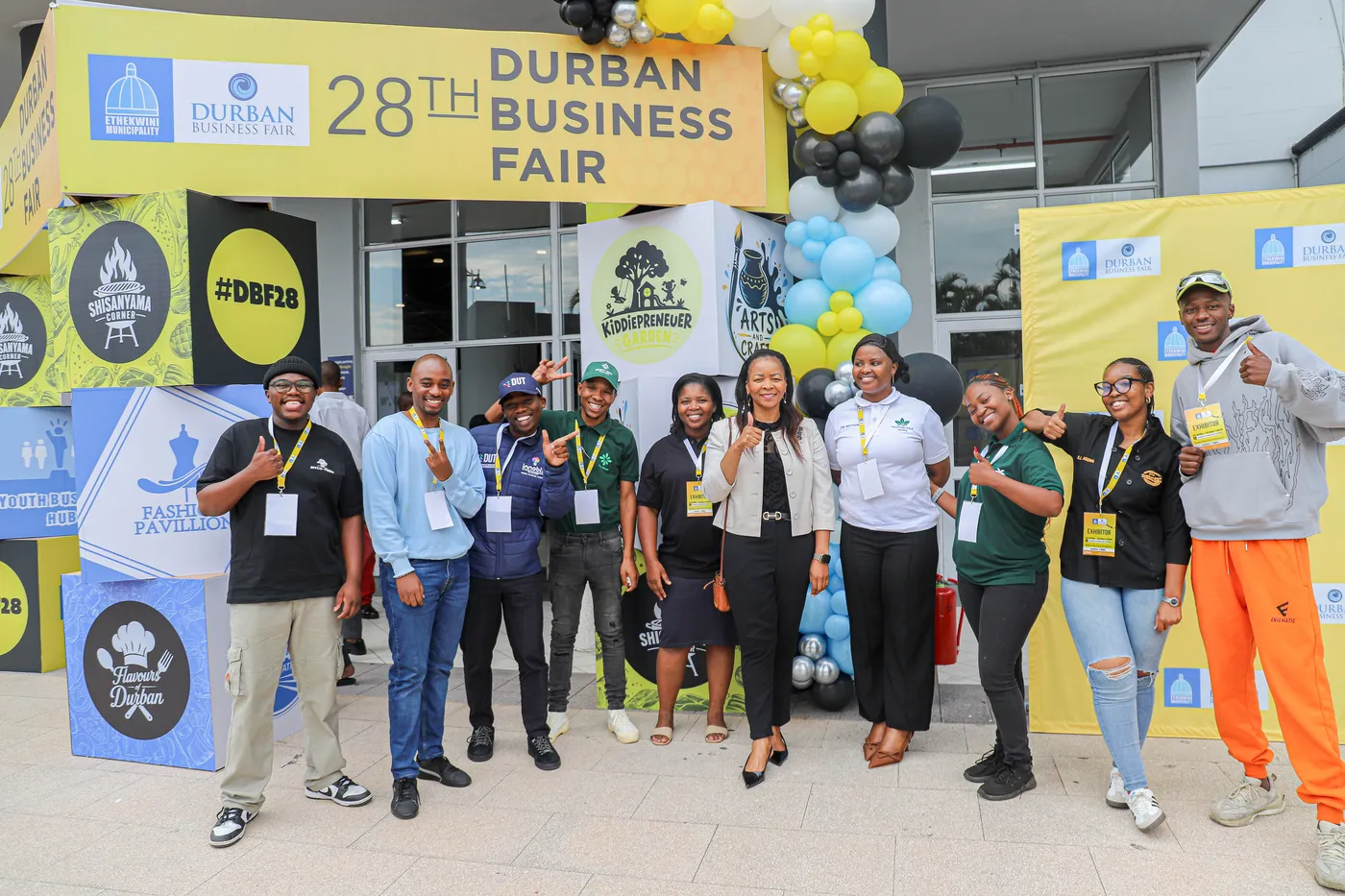
innobiz DUT Hackathon Bootcamp 2026Innovation · Date: 24 April 2026

innobiz DUT Hackathon Bootcamp 2026

Prospective student entrepreneurs collaborate on practical solutions and develop their ideas during the fourth Hackathon Bootcamp.Read full articleClose article

The fourth edition of the innobiz DUT Centre for Entrepreneurship and Innovation Hackathon Bootcamp officially kicked off, Friday 24 April 2026, with the new cohort of prospective student entrepreneurs, to be nurtured under the Centre’s auspices, encouraged to use the three-day long session to think outside the box and not to limit themselves as their your ideas matter.

In a warm welcoming address to the student entrepreneurs, DUT Midlands Campus Director Dr. Nonhlanhla Mthiyane delivered an inspirational pep talk in which she urged the cohort of over 100 student entrepreneurs to continue building, learning, and not to be afraid to fail.

She shared that the variety of ideas that the student entrepreneurs had mattered in a bid to solve the many societal problems that needed entrepreneurial solutions centred in innovation and creativity as intended in DUT’s ENVISION2030 blueprint.

“Failure in life as in business is a stepping stone, so embrace failure because it is through failure that you learn and become stronger in character, and here in this Hackathon and in the programme you are here you are going to build resilience,” Dr. Mthiyane shared.

Ms. Nontokozo Ngcobo, innobiz DUT Centre, shared a detailed account of the services that the Centre had at its disposal for the benefits of the student entrepreneurs under its tutelage, highlighting the significance of student entrepreneurs utilizing these services fully.

The innobiz DUT Hackathon Bootcamp 2026, held at the Indumiso Campus of the Durban University of Technology, brings together a diverse group of students with one thing in common, a passion for innovation and problem-solving.

Over the course of the event, participants step out of their comfort zones to collaborate, share ideas, and work on practical solutions to real-world challenges.

Pictured: Ms. Sinalenjabulo Ndlove, Programme Director and MC

innobiz DUT Hackathon Bootcamp 2026 — supplied photograph 1

Adding to the energy of the event is the programme director and MC, Sinalenjabulo Ndlove, a fourth-year Human Resources student at DUT’s Durban Campus. With a strong presence and a natural ability to engage the audience, Sinalenjabulo helps guide the flow of the programme while keeping participants motivated and connected throughout the experience.

With the buzz that fills the campus, the hackathon is more than just a competition. It’s a space where creativity meets opportunity, where students learn from one another, and where ideas begin to take shape into something meaningful.

Through this experience, innobiz continues to play an important role in encouraging entrepreneurship and helping students turn their ideas into something that can make a real impact.

Pictured: Dr. Nonhlanhla Mthiyane, Midlands Campus Director

innobiz DUT Hackathon Bootcamp 2026 — supplied photograph 2

Dr. Nonhlanhla Mthiyane, the Midlands Campus Director at the Durban University of Technology, officially opened the innobiz DUT Hackathon with a warm and heartfelt welcome.

In her remarks, she spoke about how important it is to create spaces where students can come together, think differently, and tackle real challenges. She encouraged everyone to fully embrace the experience, reminding them that some of the best ideas come from simply being willing to try, collaborate, and learn from one another.

Her address really set the tone for the rest of the event. She touched on how initiatives like the hackathon go beyond academics, helping students build confidence, think independently, and prepare for the real world.

Her words left a strong impression on the room, giving participants a sense of purpose and excitement as they got ready to begin their journey.

“Don’t be afraid to explore your ideas and take them as far as you can,” she said. “This is your space to think, to create, and to work together. What you start here might seem small, but it can grow into something meaningful if you believe in it and put in the effort,” she explained.

Pictured: Ms. Nontokozo Ngcobo, innobiz Centre Manager

innobiz DUT Hackathon Bootcamp 2026 — supplied photograph 3

Following the opening, Ms. Nontokozo Ngcobo, innobiz Centre Manager at the Durban University of Technology, stepped in to share the purpose behind the hackathon and to give students a better understanding of what innobiz is all about.

Her approach was simple and relatable, making it easy for everyone in the room to connect with what she was saying. She made it clear from the start that this wasn’t just about competing, but about learning, growing, and giving ideas a real chance.

She spoke about how the hackathon gives students the opportunity to move beyond theory and actually apply what they’ve been learning. Working in teams, thinking under pressure, and solving real problems are all part of the experience.

She encouraged students to trust their ideas, even the ones that feel uncertain, and to lean on each other throughout the process.

Ms. Ngcobo also shared more about innobiz and how it supports student entrepreneurs. She explained that the centre is there to guide students who want to take their ideas further, offering mentorship, resources, and opportunities that can help turn concepts into real businesses. For many in the room, this gave a clearer picture of what’s possible beyond the hackathon itself.

As she wrapped up, her message was grounded and encouraging. She reminded students that the hackathon is what they make of it, and that the effort they put in will shape their experience. There was a sense of honesty in her words that really resonated with the audience.

“This is your chance to really try something. Don’t overthink it or hold back. Work together, ask for help when you need it, and give your ideas a fair shot. You might surprise yourself with what you come up with,” she said.

Back to article heading ↑
Student achievement · Date: 11–12 August 2026

DUT Success at the InnoVarsity Entrepreneurship Competition: KZN Regional Rounds

Three DUT studentpreneurs win regional categories and advance to the national finals of the EDHE Absa Entrepreneurship InnoVarsity Competition.Read full articleClose article

With it studentpreneurs nabbing three wins in three of the four categories of the 8th Annual EDHE (Entrepreneurship Development in Higher Education) Absa Entrepreneurship InnoVarsity KwaZulu-Natal Regional Rounds Competition 2026 saw the Durban University of Technology finally banish the ghosts of a disappointing 2025 edition of the contest.

Victory in the Existing Business: General, Innovative Industries and Commercialization of Academic Research categories of the prestigious intervarsity competition meant that the innobiz DUT Centre for Entrepreneurship has roared back strong in the 2026 leg, with three of its studentpreneurs emerging triumphant amongst a strong pool of contestants.

The competition initially boasted five categories, Existing Business: General, Existing Business: Social Impact, Existing Business: Tech, Innovative Industries, and Commercialization of Academic Research categories.

However, the Existing Business: Tech, was later disqualified after competition regulations had not been met, according to competition organizers.

The competition was hosted by the EDHE and Absa in collaboration with the Mangosuthu University of Technology at the Coastlands Musgrave Hotel, from 11 to 12 August, as four universities from KwaZulu-Natal battled it out for glory.

The intense competition pitted student entrepreneurs from the Durban University of Technology against their contemporaries from Mangosuthu University of Technology, the University of Zululand and the University of KwaZulu-Natal to find the best student entrepreneurs in the Existing Business: General, Existing Business: Social Impact, Innovative Industries, and Commercialization of Academic Research categories.

With success proving elusive in the 2025 edition of the competition, the DUT and its student entrepreneurs under the innobiz DUT incubation programme returned strong for the 2026 edition, nabbing first position in Existing Business: General, Innovative Industries, and Commercialization of Academic Research categories.

Our three proud winners, who also leave the competition with a prize money of R5000 for making it to the National Finals to be held in Johannesburg in November 2026, are:

Existing Business: General category winner Ms. Ntandoyenkosi Sikobi Director of Taste KwaStofela, Commercialization of Academic Research category winner Ms. Nandipa Sozoyi, Director of SoMbo Connect, and Innovative Industries category winner Mr. Lulwazi Jali, Director of Taxi Fynder.

Dr. Connie Israel, Executive Director: Institutional Advancement at MUT, said that the importance of the competition went beyond the occasion of the EDHE Absa Entrepreneurship InnoVarsity 2026 KwaZulu-Natal Regional Round.

“South Africa continues to grapple with high levels of youth unemployment, poverty and inequality and these realities demand that universities rethink how we can prepare graduates for the future, for this reason the EDHE has become one of the most important strategic initiatives within our sector.

“It’s vision is simple but transformative, entrepreneurship should not be viewed as an optional extra or confined to Business Schools, rather it should become an integral part of university experience, equipping graduates from every discipline with the ability to identify opportunities, solve problems, innovate responsibly, and create better societies,” Dr. Israel said.

Ms. Zana Boshoff, Project Manager: EDHE, Universities South Africa (USAf), said that student entrepreneurship had a massive contribution to make to the South African mainstream economy, and that student entrepreneurs should view themselves as gamechangers in this regard.

“To our student entrepreneurs I wish to acknowledge the enormous sacrifices that you made to be here today, because building a business while pursuing a university qualification is no small achievement, it requires discipline, resilience, determination and exceptional time management.

“Many of you spent your days attending lectures, completing assignments, preparing for exams and tests and then your evenings, weekends, and holidays to develop your brands, to studying customers, manage finances,” Ms. Boshoff said.

Ms. Nontokozo Ngcobo, innobiz DUT Centre Manager, expressed her delight at the outcome of the competition for DUT and the studentpreneurs under the innobiz DUT’s entrepreneurial tutelage.

“We are super excited for the win in three categories out of four that we got as DUT, making it to the nationals of this particular competition, because our students have been working very hard with almost daily presentations, thanks to the innobiz Business Support team who have been working tirelessly on weekends ensuring that our students are well prepared,” Ms. Ngcobo said.

With the competition’s National Finals three months away, in November 2026, she said that it would be all hands on deck and sleepless nights for the innobiz team to prepare the studentpreneurs for success.

“There’s no time to wait. We are going to start as early as now, working hard and even on weekends, to ensure that they are ready for the nationals by closing whatever gaps that are there.

“We also want to thank the University’s entire executive, the VC Prof. Thandwa Mthembu, the DVC: RIE Prof. Fulufhelo Nemavhola, for making resources available to support us in doing what we do. It makes our work even more easier because we are doing this work with available resources, making our lives much more easier,” Ms. Ngcobo

In the Commercialization of Academic Research category, Ms. Sozoyi of Sombo Connect, successfully presented her project which she describes as a governance platform for indigenous systems that ensures that indigenous knowledge systems translate into digital and institutional frameworks and are not extracted without benefit to the communities these systems originate from.

“I’m so excited with the outcome of this competition, it shows that we are reaping the benefits of all our hard work because research is not easy, we have long nights, and long days. I’m happy that we made it through and it’s showing now through this victory of ours, it’s not just my victory alone, it’s my ancestors’ victory and DUT’s victory.

“I’m so grateful for the support from the innobiz DUT Centre because they’ve provided me with mentorship, infinite guidance within the team so I’m really grateful for this opportunity. They’ve also helped to elevate the way I package my business and that is something I can use in my future businesses as well,” Ms. Sozoyi explained.

For his success in the Innovative Industries category, Mr. Jali of Taxi Fynder, presented his digital minibus taxi innovation that configures taxi routes for commuters and displays them on a map along with their fares.

The mobile application also allows for commuters to track their minibus taxi on a live map instead of waiting blindly. The application also has features like sharing trip details with friends and family, allowing Taxi Fynder to add safety to taxi commuting while connecting passengers to drivers seamlessly.

“I feel ecstatic after winning in the regional rounds, this is a great opportunity and a huge milestone for Taxi Fynder. The innobiz DUT Centre has helped us so much in preparing us to pitch by sharpening and elevating our pitching skills and it’s through them that we were able to express the skills we’ve developed on this platform, ensuring that we shine to the rest of the industry.

“This is a great opportunity for each and everyone of us who were able to make it through and I can’t wait to participate in the National Finals in November,” Mr. Jali said.

Ms. Sikobi’s victory in the Existing Business: General category came courtesy of her enterprise Taste KwaStofela, which she describes as a township-born woman led experiential food business using woodfire pizza to connect people, create economic opportunities and celebrate South Africa culture.

“I’m extremely delighted with my victory in this competition and this category, it’s a massive achievement for me to go through the regionals to the national finals. I am really grateful for the assistance of innobiz DUT in preparing us to get here through training and our mentor, Mr Zakheni Ngubo, who has been onboarded by innobiz DUT. I am just over the moon,” Ms. Sikobi said.

With at least three months before the student entrepreneurs head to Johannesburg for the National Finals, they have committed to using the available time to fully utilizing the resources availed by DUT and innobiz to fine-tuning their business pitches to increase their chances of success on the national platform.

Back to article heading ↑
Student entrepreneurship · Date: 11 August 2026

InnoVarsity 2026: KZN Regional Rounds Begin

Ten DUT student entrepreneurs prepare to showcase their businesses at the EDHE Absa InnoVarsity KwaZulu-Natal Regional Round.Read full articleClose article

SAMKELO MTSHALI

The EDHE Absa Entrepreneurship InnoVarsity 2026 KwaZulu-Natal Regional Round Hosted in collaboration with the Mangosuthu University of Technology (MUT) has kicked off at the Coastlands Hotel in Musgrave, with the Durban University of Technology fielding a delegation of 10 student entrepreneurs chomping at the bit for the success.

The competition will see student entrepreneurs present their enterprises across five categories, including Existing Business: General, Existing Business: Tech, Existing Business: Social Impact, Innovative Industries, and Commercialisation of Academic Research.

The student entrepreneurs representing DUT under the innobiz DUT banner be Mr. Lulwazi Jali of Taxi Fynder and Mr. Sphelele Mvelase of Over Me Solutions competing in the Innovative Industries category, Ms. Ntandoyenkosi Sikobi of Taste KwaStofela and Mr. Lusanda Ndlovu of Lomeon Greenscapes representing in the Existing Business: General category.

The University and the Centre will also have Mr. Hleketani Bilankulu of Everything’s Math and Mr. Thokozani Buthelezi of My-Co Feeds, battling it out in the Existing Business: Social Impact category, while Mr. Ndumiso Mngomezulu of Lubelo Tech Solutions and Ms. Doliva Mputu Yamba of Kizuri Tech Solutions will compete in the Existing Business: Tech category.

The innobiz DUT representatives in the Commercialisation of Academic Research category are Ms. Nandipha Sozoyi of Sombo Connect and Ms. ⁠Sthabile Sithole of EcoCascade Biotechnologies.

Ms. Yvonne Phungula, innobiz DUT Business Support Coordinator leading the innobiz DUT delegation at the competition, expressed delight at having ten students representing the Durban University of Technology (DUT) at the EDHE KZN Regional Rounds.

Ms. Phungula said that the participation of the studentpreneurs was a reflection of their commitment to innovation, entrepreneurship, and the development of solutions that can create meaningful impact within society.

“As a coordinating team, we are proud of the preparation and determination demonstrated by our students. These regional rounds provide an important platform for them to showcase their ideas, engage with other student entrepreneurs, receive valuable feedback from the panel of judges and gain exposure to the broader entrepreneurial ecosystem,” Ms. Phungula shared.

Furthermore, she said that the Centre’s expectations for this year’s regional rounds were not only centred on achieving strong results, but also on ensuring that the studentpreneurs gain valuable experience, build confidence, and represent DUT with pride.

“We look forward to seeing them challenge themselves, learn from the experience, and hopefully progress to the next level of the competition.

“We wish all ten DUT students the very best as they take on this opportunity. We are confident that they will represent the institution with passion, professionalism, and the innovative spirit that continues to shape the future of student entrepreneurship at DUT,” Ms. Phungula asserted.

The day’s proceedings kicked off with a welcome from Dr. Connie Israel, Executive Director: Institutional Advancement at MUT, who said that the importance of the day went beyond the occasion of the EDHE Absa Entrepreneurship InnoVarsity 2026 KwaZulu-Natal Regional Round.

“South Africa continues to grapple with high levels of youth unemployment, poverty and inequality and these realities demand that universities rethink how we can prepare graduates for the future, for this reason the EDHE has become one of the most important strategic initiatives within our sector.

“It’s vision is simple but transformative, entrepreneurship should not be viewed as an optional extra or confined to Business Schools, rather it should become an integral part of university experience, equipping graduates from every discipline with the ability to identify opportunities, solve problems, innovate responsibly, and create better societies,” Dr. Israel said.

“We meet just a day or two after Women’s Day, and during a month in which our country will celebrate the contribution, courage and resilience of women. I must commend the organisers for the foresight for this.

“Women's Month should never simply become another date on our institutional calendars, it must challenge us to ask the important questions, what are we doing to change the lives and opportunities of women today.

She emphasized that transformation should not only be spoken of in speeches and policy and strategy documents, but that it should be visible in the opportunities that are created and the women encouraged to take their ideas seriously and students given the confidence to become an entrepreneur.

“Transformation should be seen in the woman whose innovation grows from an idea to an enterprise that creates jobs that change lives, that is the kind of transformation that we should work towards, women not only participating in the economy but helping to shape it,” Dr. Israel said.

Ms. Zana Boshoff, Project Manager: EDHE, Universities South Africa (USAf), said that student entrepreneurship had a massive contribution to make to the South African mainstream economy, and that student entrepreneurs should view themselves as gamechangers in this regard.

“To our student entrepreneurs I wish to acknowledge the enormous sacrifices that you made to be here today, because building a business while pursuing a university qualification is no small achievement, it requires discipline, resilience, determination and exceptional time management.

“Many of you spent your days attending lectures, completing assignments, preparing for exams and tests and then your evenings, weekends, and holidays to developing your brands, to studying customers, managing finances,” Ms. Boshoff said.

She added that higher education had a critical responsibility because institutions of higher learning should become places where talent is nurtured, barriers are dismantled, where every student, regardless of gender or discipline, is empowered to transform ideas into solutions.

“Entrepreneruships provides one of the most powerful pathways to do this, it is very encouraging that EDHE has placed women’s economic empowerment at the centre of its work,” Dr. Israel said.

She said that with the EDHE boasting initiatives such as the Student Women Economic Empowerment Programme (SWEEP), such programmes were a critical contributor to gender equality, financial independence, and inclusive economic growth.

Zooming on the

Back to article heading ↑
Global learning · Date: 2026

DUT at the KMUTNB International Leadership Camp 2026

Four DUT student entrepreneurs join international peers in Thailand to develop technopreneurship and leadership skills.Read full articleClose article

In alignment with the Durban University of Technology’s internationalization strategy forming part of the institution’s ENVISION20230 strategic roadmap, four students under the university’s various entrepreneurship incubation programmes are currently in Thailand, participating in the King Mongkut's University of Technology North Bangkok International Leadership Camp 2026.

The quartet of students representing the university on this significant global platform are Ms. Tiffany Mokoteli, from the Faculty of Arts and Design and Mr. Adivhaho Nemutudi from the Faculty of Accounting and Informatics, both currently under the tutelage of the innobiz DUT Centre for Entrepreneurship and Innovation, Ms. Sthabile Mgube from the Faculty of Accounting and Informatics who is under the Hult Prize DUT incubation programme, and Ms. Cheyeza Shikwambana from the Faculty of Accounting and Informatics and is under the Technology Transfer and Innovation office.

The four DUT student entrepreneurs are currently immersed in the KMUTNB International Leadership Camp 2026 under the theme “Technopreneurship Skills for Global Innovators” where they are rubbing shoulders with international counterparts from the host nation, Thailand, Indonesia, Taiwan, Malaysia, the Philippines, China and Myanmar.

The KMUTNB International Leadership Camp 2026 convenes student entrepreneurs from diverse international institutions to foster cross-cultural collaboration, innovation, and leadership development. The program continues to create a vibrant space where participants engage in meaningful exchanges, shared experiences, and collaborative learning that transcend borders.

The program aims to promote the internationalization of the university by applying essential global skills, including entrepreneurial skills, leadership skills, and cross-cultural skills.

The icebreaker sessions were filled with energy, laughter, teamwork, and new connections as participants engaged in activities designed to strengthen collaboration and build lasting relationships. This provides a great foundation for an inspiring week of entrepreneurship, innovation, and leadership development ahead.

The platform at the KMUTNB is an exciting opportunity for DUT’s student entrepreneurs to join emerging innovators and leaders from around the world in a dynamic exchange of ideas, cultures, and entrepreneurial perspectives that they can use to enhance their own ventures upon their return home, whilst also imparting the experience amassed on this trip to their fellow incubatees in the in their respective entrepreneurial programmes at DUT.

This international experience also provides our student entrepreneurs with valuable opportunities to expand their global networks, strengthen their leadership capabilities, and explore collaborative approaches to innovation.

Through meaningful engagement with peers from diverse backgrounds, they are gaining insights that will help shape future-ready ventures and drive impactful change in their communities.

Back to article heading ↑
KZN Tech Horizons Hackathon 2026Technology and innovation · Date: 2026

KZN Tech Horizons Hackathon 2026

Students, innovators and industry leaders gather for a public lecture session at iKhokha headquarters in uMhlanga.Read full articleClose article

KZN Tech Horizons Hackathon 2026 Opens with Inspiring Public Lecture Session at iKhokha HQ

Pictured: Students, innovators and industry leaders engage during the opening session of the KZN Tech Horizons Hackathon 2026 at iKhokha HQ in uMhlanga, where technology and innovation took centre stage

KZN Tech Horizons Hackathon 2026 — supplied photograph 1
KZN Tech Horizons Hackathon 2026 — supplied photograph 2

The KZN Tech Horizons Hackathon 2026 officially commenced with a dynamic and thought-provoking public lecture session held at the iKhokha headquarters in uMhlanga, KwaZulu-Natal.

Hosted under the theme “Innovation for Social Impact & Indigenous Knowledge Systems,” the event brought together students, developers, entrepreneurs, researchers, and industry leaders to explore how technology and innovation can be used to address societal challenges while embracing African knowledge systems and community-driven solutions.

The morning session, which formed Part 1 of the day’s programme, created a vibrant platform for meaningful conversations around digital transformation, cyber-security, innovation, and the importance of preserving indigenous knowledge within modern technological spaces.

The programme officially began with the master of ceremonies Mr. Thulani Mabuza, who delivered the context-setting session with energy and enthusiasm. He encouraged participants to see innovation not only as technological advancement, but also as a tool for positive social change and inclusive development.

“This hackathon is not only about technology and coding. It is about using innovation to create solutions that can improve lives and uplift communities. As young innovators, we must also remember the importance of our own indigenous knowledge systems and how they can work together with modern technology to shape a better future,” said Mr. Mabuza.

Delivering the welcome address, Mr. Sphiwe Khuzwayo emphasized to the guests, speakers, and participants of the prestigious gathering, the significance of creating opportunities that empower young people to think creatively while remaining connected to the realities and needs of their communities.

“The future belongs to young people who are able to innovate with purpose. This platform gives participants the opportunity to explore how technology can solve real societal challenges while also appreciating the value of indigenous knowledge and community wisdom. Innovation becomes more powerful when it is people-centered,” said Mr. Khuzwayo.

The public lecture session continued with an insightful presentation by Mr. Pratish Neerputh and Mrs. Shraddha Neerputh titled “Developer Guide: Secure by Design”. Their session highlighted the importance of cybersecurity and building secure digital systems from the earliest stages of development, especially in a world that increasingly relies on digital solutions.

“Security should never be treated as an afterthought. As developers, we have a responsibility to create systems that are safe, reliable, and trustworthy. As technology continues to evolve, we must ensure that innovation remains ethical, secure, and accessible to the communities it is meant to serve,” Mr. Pratish Neerputh said, with his word also echoed by Mrs. Shraddha Neerputh.

One of the major highlights of the morning programme was the keynote lecture delivered by Dr. James Stanger from CompTIA. His address explored the future of technology, emerging digital skills, cybersecurity trends, and the growing need for adaptability within the global digital economy.

“Technology is changing the world at an incredible pace, but innovation becomes truly meaningful when it creates positive impact for people and communities. Young innovators must remain curious, adaptable, and committed to lifelong learning because the future will belong to those who can combine technical skills with purpose-driven innovation,” said Dr. Stanger.

The morning public lecture session concluded with a powerful closing keynote address by Mr. Muzi Ntombela from the Centre for Public Service Innovation (CPSI). His presentation focused on the role of innovation in community development, public service transformation, and sustainable social impact.

“Innovation is not only about building new technologies. It is also about creating solutions that respond to the realities faced by our communities every day. By combining innovation with indigenous knowledge systems, young people have the power to develop solutions that are relevant, sustainable, and capable of transforming society for future generations,” said Mr. Ntombela.

The morning public lecture session successfully laid a strong foundation for the remainder of the KZN Tech Horizons Hackathon 2026. Participants left the session inspired, motivated, and ready to continue engaging in collaborative innovation activities and solutions-driven discussions throughout the rest of the programme.

Pictured: innobiz DUT Tech Club Team.

KZN Tech Horizons Hackathon 2026 — supplied photograph 3

innobiz DUT Tech Hub & Tech Club Participation

The innobiz DUT Tech Lab was also present and actively represented at the KZN Tech Horizons Hackathon 2026, contributing to the overall DUT participation within the programme.

Through workshops, hackathons, mentorship, and project-based learning, the Tech Club provides students with hands-on experience in technology, entrepreneurship, and innovation. Supported by the innobiz DUT Centre for Entrepreneurship and Innovation, the club gives students access to expert guidance, resources, and a collaborative innovation ecosystem.

Their participation at the KZN Tech Horizons Hackathon 2026 reflects DUT’s continued commitment to digital skills development, innovation, and preparing students to engage with real-world challenges through technology.

Day 2: Innovation Presentations & Awards

On Day 2, the spotlight shifted to the participants as teams presented their innovative solutions developed during the hackathon. Participants showcased creativity, critical thinking, technical skills, and a strong commitment to addressing social challenges through innovation.

Their ideas reflected the power of combining technology, entrepreneurship, and community-driven thinking to create meaningful impact.

Pictured: Top 3 Winning Team

KZN Tech Horizons Hackathon 2026 — supplied photograph 4

Top 3 Winning Teams (DUT Representation)

1st Place: Cipher Syndicate – Xolani Mchunu

2nd Place: The Herd – Ndumiso Shoba

3rd Place: Fine Code – Akhona Khuzwayo, Sphokazi Mutswale & Asanda Ndlovu

Pictured: Ms Sindiswa Khuzwayo (innobiz DUT Media Content and Marketing Administrator) and Fine Code Team

KZN Tech Horizons Hackathon 2026 — supplied photograph 5

A special highlight of the third-place team, Fine Code, is that they were mentored by Ms. Sindiswa Khuzwayo (Media Content and Marketing Administrator at the innobiz DUT Centre for Entrepreneurship and Innovation), whose guidance contributed significantly to their success.

Additional Participant Recognition

The hackathon also celebrated outstanding student contributions, including:

Nhlanganiso Moyana

Adivhaho Nemutudi

Tshedza Mbedzi

Naledi Mudau

Their participation, teamwork, and problem-solving abilities reflect the innovative spirit and excellence of DUT students in real-world environments.

Special Awards

Best Female Representative: Blue Dev (KZN Tech Horizons Hackathon 2026)

Best Male Representative: Adiwele (innobiz DUT Tech Club)

Sponsor Acknowledgement

The KZN Tech Horizons Hackathon 2026 was proudly sponsored by Amazon Web Services (AWS), whose support played a key role in enabling a platform for innovation, collaboration, and skills development.

From insightful lectures to high-impact innovation pitches, the first two days of the hackathon demonstrated the exceptional talent, creativity, and potential of young innovators in KwaZulu-Natal. Participants left the programme inspired, empowered, and better equipped to use technology and innovation as tools for meaningful social impact.

The KZN Tech Horizons Hackathon 2026 continues to stand as a powerful platform for shaping future leaders, strengthening innovation ecosystems, and driving technology for good.

Back to article heading ↑
Sustainable innovation · Date not provided

Mr Price Foundation x EDHE Waste Innovation Challenge Launch

DUT hosts a national challenge encouraging students, researchers and innovators to turn waste into impactful solutions.Read full articleClose article

The Durban University of Technology, through its entrepreneurship nerve centre the innobiz DUT Centre for Entrepreneurship and Innovation, on Monday hosted the successful launch of the inaugural Mr Price Foundation x EDHE Waste Innovation Challenge at the DUT Indumiso Campus Main Hall.

The groundbreaking competition will see students, researchers and innovators from across South Africa’s 26 public universities pit their innovative wits against each other in efforts to bring about the best and societally impactful innovations produced from waste material.

The Mr Price Foundation x EDHE Waste Innovation Challenge competition was heralded by all and sundry as an opportunity for universities to advance Sustainable Development Goals and the Environmental, Social and Governance (ESG) priorities by showcasing student led innovation and strengthening industry led partnerships and equip graduates with the tools to launch impactful enterprises.

Participation is open to students and recent graduates across South Africa’s 26 public universities, aged from 16 to 34. Up to 400 qualifying participants will receive training in waste-to-value business models, circular economy principles, product development and pitching.

From this cohort, 20 teams will be selected for an intensive bootcamp, before finalists present their innovations at the EDHE National Finals in the final quarter of the year.

Brought by the collaborative efforts of the Mr Price Foundation and the Universities South Africa and the Entrepreneurship Development in Higher Education, the competition will see the country’s best innovative minds go hammer and tongs in a quest for the mouthwatering shared prize funding of R245 000.

The podium will be divided into five winning teams who will share R245,000 in prize funding, with R100,000 awarded to first place, R75,000 to second place, R40,000 to third place, R20,000 to fourth place, and R10,000 to fifth place.

Significantly for their continuous entrepreneurial development and progression, the victory will not only be monetary for the winning teams as they will also receive mentorship, business development support, technical and sustainability training, and national exposure to partners and potential investors.

Mr. Octavious Phukubye, the Executive Director of the Mr Price Foundation, emphasised the significance of such platforms being granted to young people, stating that it was the youth that would shape South Africa’s future.

He said that the Mr Price Foundation understood universities, colleges and technical universities to be the custodians of the human capital that they required to fully take advantage of the space of waste innovation.

He said that young innovators should contribute fresh ideas and unique approaches to solving waste related issues by tapping into problem solving approaches related to waste in a unique way because young people represent a level of creativity through which they can tackle waste.

“I think young people have got incredible ideas that are so complex, yet so simple, in how we can execute, design, and build businesses and make them thrive, so when we are thinking about young people in this space it’s because also the impact of waste is felt by young people if you think about the ecosystem, whether it’s glass or plastic in our riverbeds, in our communities, it’s the young people affected most because they are the biggest population in the country.

“It was a no-brainer for us to say let’s centre young people and invite them, work with them, partner them, to be able to solve this problem that we have in the waste space,” Mr. Phukubye asserted.

He added that through this Waste Innovation Challenge the Mr Price Foundation hoped to achieve the creation of a circular economy, create an opportunity to reuse some of the materials used in the different value chains, and also build businesses in the process.

Dr. Phethiwe Matutu, Chief Executive Officer at Universities South Africa, said that the invention of the Mr Price Foundation spoke to the heart of USAf’s mandate of working with South African universities to support entrepreneurship and innovation amongst students.

“This waste innovation challenge is one of the ways in which our young people are being encouraged to innovate solutions around real life problems in our country and globally, so it was just a no-brainer as we are struggling with the issue of waste, particularly plastic waste in our seas, in our rivers, and in our communities.

“To find ways of innovating and making sure that we use waste to the benefit of society is an area that is long overdue,” Dr. Matutu said.

Furthermore, she emphasised that the participation of the youth in the Waste Innovation Challenge was significant because the students were undergraduate and postgraduate students who are fully immersed in research, and universities are using them as foot soldiers on the ground in a bid to reach society and communities

“If you manage to change their minds about anything, you can be assured of change generally. In this sense if the mindset of the young people is changed then the mindset of society will be changed. Young people within universities are researchers busy with their research projects and even those that are not researchers would have a kind of an interest in this area and once that happens then it means more research is going to be conducted along these areas,” Dr. Matutu said.

Dr. Pinkie Ntola, the Technology Transfer and Innovation Director at the Durban University of Technology, described DUT’s hosting the launch, through its University’s nerve centre for entrepreneurship and innovation the innobiz DUT Centre for Entrepreneurship and Innovation, as an honour and privilege given how significant this initiative which seeks to tackle waste, one of the biggest environmental issues plaguing our planet, through innovative solutions, was.

“At DUT, our identity is deeply rooted in innovation with impact. As a university of technology, we exist at the intersection of knowledge creation, practical solutions, and societal transformation. Today’s launch speaks directly to that mission.

“South Africa’s waste challenge is not only an environmental concern—it is a socio-economic one. It demands bold thinking, cross-sector collaboration, and solutions that are inclusive, scalable, and sustainable,” Dr. Ntola said.

She stated that the Waste Innovation Challenge reframes waste not as a burden, but as an opportunity for innovation, entrepreneurship, and green economic growth, and commended the Mr Price Foundation and Usaf for their leadership and foresight in creating a platform that empowers innovators to develop solutions that respond to real-world challenges.

“This initiative demonstrates how the private and public sector partnerships can play a catalytic role in building an innovation ecosystem that is responsive to national priorities and community needs.

“As DUT, we are particularly proud to host this national launch because innovation, sustainability, and engagement are central pillars of our research agenda. Through our researchers, technology stations, innovation hubs, and entrepreneurial support structures, we are committed to advancing solutions that contribute to the circular economy and environmental resilience,” Dr. Ntola added.

Ms. Nontokozo Ngcobo, the Manager of the innobiz DUT Centre for Entrepreneurship and Innovation, said that hosting the launch of the Waste Innovation Challenge was a recognition of the DUT’s ongoing work as an institution in green innovation, applied research and sustainable waste practices within the KwaZulu-Natal region.

“One of the innobiz DUT Centre’s objectives, as envisioned in DUT’s ENVISION 2030 blueprint, is the continuous prioritization of environmental sustainability, with a keen focus on green ecosystems, sustainable energy practices and we achieve this through our University’s distinctive education which aims to foster ecological consciousness,” Ms. Ngcobo said.

Back to article heading ↑
Education and leadership · Date: 19 March 2026

Nkandla CMC Excellence Awards

innobiz DUT joins the celebration of teachers and learners, encouraging education that develops future global leaders.Read full articleClose article

SAMKELO MTSHALI & NKULULEKO JILI

The innobiz DUT Centre for Entrepreneurship and Innovation’s Manager Ms. Nontokozo Ngcobo has urged teachers in the Nkandla District, northern KwaZulu-Natal, to be intentional in their work of teaching and learning in order to produce learners who will be global leaders, beyond good school marks.

Her message came on the occasion of the Nkandla Circuit Management Centre Excellence Awards held on Thursday, 19 March, 2026, to honour teachers and learners who had excelled in the National Senior Certificate (NSC) Final Examinations for 2025.

The awards ceremony was to honour schools that obtained 100% distinctions, 100% + distinctions co-curricular and 90% special awards.

The innobiz DUT Centre’s role in enhancing innovation and entrepreneurship in the Nkandla area, through a variety of programmes including the groundbreaking Agri for Schools gardens programmes, saw the Centre honoured at the Nkandla Circuit Management Centre Excellence Awards, an event in which innobiz Centre Manager Ms. Nontokozo Ngcobo was a guest speaker.

The Centre’s relationship with the Nkandla schools began in 2023 through the collaboration between the Centre, the US Consulate General in Durban, the University of Maryland (UMD), and the University of Alabama (UAB) where 18 schools in Nkandla, northern KwaZulu-Natal, were adopted for a gardening and entrepreneurship programme which saw these schools presented with gardening tool packages worth R18 000 each to kickstart their own school gardens.

The relationship between the Centre, its partners, and Nkandla schools has continued to blossom in the intervening years, with the Centre in 2025 at the fulcrum of the launch of the Vumanhlamvu Digital Centre in Nkandla in August 2025.

This pioneering skills centre was brought by the collaborative efforts of the innobiz DUT Centre for Entrepreneurship and Innovation alongside its partners the Moses Kotane Research Institute and the KZN provincial government, as a result of the sterling power of collaboration between organisations.

In her address at the Excellence Awards, Ms. Ngcobo said that she believed that the road to a transformed South Africa is paved through the classrooms of Nkandla. “We don't just see "rural schools" here; we see incubators of future global leaders,”Ms Ngcobo said.

Given the rich history and tapestry of the northen KZN town, Ms. Ngcobo said that there was something special about the soil of Nkandla in that it has produced some of rhe country’s most recognizable and influential leaders.

“This landscape has produced giants who have navigated the most difficult times of our history. We look at the resilience of the former State President, honorable Jacob Zuma; the strategic mind of the current Premier of KZN; and the vision of MEC Zondi.

“I am also particularly proud to serve under one of Nkandla’s finest sons, my very own VC, Prof Thandwa Mthembu, leading DUT with over 38 000 students and 3000 staff .These leaders prove that coming from an area with limited resources is not a disadvantage, it is a training ground for greatness. It builds a "never die" spirit that the world desperately needs,” Ms. Ngcobo shared.

She also touched on DUT’s commitment to Nkandla through the impact of the 18 Adopted Schools, highighting that innobiz does not just talk about community engagement but it invests in it.

“Over the last two years, my department has officially adopted 18 schools right here in Nkandla. We have invested nearly R1 million into this community.

“This hasn't been a "handout," but a strategic partnership focused on Teacher Training, School Gardens for sustainability, and our Tech for Kids and Entrepreneurship programs. We’ve brought in local and international partners to ensure your children are global citizens,” Ms. Ngcobo said.

She further stated that this program, officially launched last year alongside the KZN Premier, DUT VC Prof. Mthembu, and the Moses Kotane Research Institute, was already yielding world-class results.

“Through this initiative, we took three KZN learners to Russia including your very own son of the soil, Kusas’elihle Ndawonde from Mnyakane High School,” Ms. Ngcobo said.

She also applauded schools which had taken ownership and sustained these projects to date, namely: Ithala High, Mphathesitha High, Amaphuthu High, Sibomvu Primary, Mbonomuhle Primary, Songeni Primary, Chwezi Primary, Mngandi High, Mloyiswa High, Sgananda Primary, Mome Primary, Vumanhlamvu Primary, Sbhudeni Primary, Khomo Primary, Ntolwane Primary, Mnyakanya High, Ndukuyakhe Primary, and Kwa Magqondo Primary.

“The Nkandla CMC has achieved an overall pass rate of 88.4%. While this is a slight decline of 0.7% from last year’s 89.14%, we must celebrate the fact that out of 3,782 learners, the vast majority are now ready to pursue their dreams.

“Notably, three of our six circuits achieved above 90%. To the educators and learners in those circuits: you have set a gold standard. To those who saw a slight dip: do not be discouraged. A minor setback is merely a setup for a stronger comeback,” Ms. Ngcobo said.

She also encouraged the teachers and learners to tap into researching what makes South Africa one of the best destinations for business people coming from countres across the globe.

“When you travel and you come back from wherever you come from, if maybe you come from Germany, you realize that most of the passengers in the plane, 99%, it's Germans coming from Germany to South Africa. A lot of Europeans are starting up businesses here.

“What is it that they see in South Africa? So that's another challenge that teachers have, that you need to make those learners see what these people from outside see, because if we don't see that, we'll wake up already, the country's gone,” Ms. Ngcobo advised.

Adding to the occasion, RB Mngoma, Director of King Cetshwayo District, expressed heartfelt appreciation to all stakeholders who contributed to the success of learners in the district.

“We would like to extend our sincere gratitude to our teachers who continue to go beyond the call of duty, ensuring that every learner, regardless of their background, is given a fair chance to succeed. Your dedication does not go unnoticed, and today’s achievements reflect your commitment,” he said.

Mr. Mngoma further acknowledged the role of parents and guardians in shaping the future of learners and also commended their dedication and support of their children.

“To the parents and families, we thank you for your unwavering support, encouragement, and sacrifices. Many of our learners come from challenging socio-economic backgrounds, yet through your resilience and belief in education, they can rise above their circumstances and pursue their dreams,” he added, while also recognising the importance of community involvement in education.

“It takes a village to raise a child, and today we celebrate not only academic excellence but the collective effort of communities who have stood together to support these young people. From local leaders to community organisations, your role in creating a conducive environment for learning has been invaluable.”

In conclusion, Mr. Mngoma encouraged the fostering of collaborative efforts from all stakeholders, including teachers, parents, government, institutions of higher learning and the private sector, in ensuring that learners are given every opportunity for a brighter future.

“Let us continue to work together to ensure that no learner is left behind. We must keep pushing boundaries and creating opportunities for our children so that they can achieve their aspirations and goals. The future of our country lies in their success, and together, we can make that future brighter,” Mr. Mngoma concluded.

Mr. Nxumalo, the Mlalazi Chief Education Specialist representing the District Director Mrs. WC. Nzama, commended the educators and stakeholders for their collective efforts in achieving commendable results.

“On behalf of the District Director, we extend our congratulations to all the schools, principals, and teachers who have demonstrated resilience and excellence in the 2025 NSC examinations. Your hard work continues to uplift the standard of education within our district,” he said.

Echoing the words of Mr. Mngoma, Mr. Nxumalo also emphasised and encouraged the importance of sustained collaboration between schools, the department, and external partners.

“The progress we celebrate today is a result of strong partnerships and shared commitment. We encourage schools to continue embracing support from institutions such as innobiz and other stakeholders, as these collaborations play a crucial role in equipping learners with skills that go beyond the classroom,” he added.

In closing, Nxumalo encouraged learners to remain focused and driven despite the myriad of challenges that they face in their individual journeys.

“To our learners, your backgrounds do not define your future, lease stay committed to your studies, believe in your potential, and continue striving for excellence. The district remains dedicated to supporting you as you work towards achieving your goals and becoming responsible citizens who will contribute meaningfully to society,” he concluded.

Two of the country’s leading teachers’ unions, SADTU and NATU, also lent messages of support to the Excellence Awards, stating that excellence in education was the foundation upon which a just and equitable society is built.

The unions also commended the good work done by their members, the teachers, in ensuring a good pass rate for the Nkandla District, adding that they were always encouraging their members on professionalism, and that such occasions of celebration were a result of their professionalism.

Despite Nkandla being located in a deep rural area, the unions asserted that through the commitment and discipline of school principals and teachers members the schools were able achieve results similar to those in urban CMCs.

Also honoured at the Excellence Awards was Mr. Kusas’elihle Ndawonde, one of the learners who benefited from the innobiz DUT’s Adopt-A-School Entrepreneurship and AgriTech programme by being part of a delegation that travelled to Russia in October 2025 for the participating in the Agro Inter Schools competition in Russia.

Mr. Ndawonde received a certificate of recognition from the innobiz DUT Centre for his continued dedication to the Adopt-A-School Entrepreneurship and AgriTech programme and his overall studies.

He spoke proudly about the life-changing opportunity to travel abroad to a global event that brought together students from the host nation Russia and partner countries, including South Africa, Zimbabwe, Ethiopia, Belarus, Kazakhstan, China, and India.

“Coming from a rural background, I never imagined that I would one day travel to another country. Through the innobiz programme, I was given the opportunity to go to Russia, and that experience has completely changed how I see the world and my future,” Mr. Ndawonde said.

Following his Russian expedition experience, the ambitious Mr. Ndawonde further reflected on how the exposure to global trends had opened his eyes and mind to a world of infinite possibilities and inspired him to aim higher, adding that it had further fueled his ambition to pursue his dream of studying abroad

“Being in Russia opened my eyes to new possibilities, different cultures, and the importance of innovation and education. It made me realize that my dreams are valid, no matter where I come from. I am now more motivated than ever to work hard, pursue my goals, and make a meaningful impact in my community,” he added.

Back to article heading ↑
Blue economy · Date: 27 March 2026

Ocean Youth Challenge Pitching Event

DUT entrepreneurs Siyanda Sibiya and Amanda Mdladla secure podium finishes and funding at the Ocean Youth Challenge.Read full articleClose article

Ocean Youth Challenge Pitching Event Empowers Young Innovators in Durban

The Durban University of Technology’s flag soared high at the recent Ocean Youth Challenge pitching event as two incubatees of the University’s entrepreneurial hub, the innobiz DUT Centre for Entrepreneurship and Innovation, walked away with prize money to the tune of R50 000.

DUT student entrepreneurs Siyanda Sibiya and Amanda Mdladla were amongst the stars of the show at the Ocean Youth Challenge, held on Friday 27 March 2026 at the prestigious Royal Natal Yacht Club, as they walked away with podim finishes and R30 000 and R20 000 in prize money respectively.

The highly anticipated Ocean Youth Challenge Pitching Event, an initiative who which is part of the South African government’s broader oceans economy strategy to unlock potential and opportunities in the country’s vast oceans, brought together some of the brightest young minds passionate about ocean sustainability and innovation.

The event, directed by Zanele Mthembu, served as a dynamic platform for youth entrepreneurs to present groundbreaking ideas aimed at addressing pressing ocean-related challenges.

This year’s competition was structured into two key categories: the Marine Resources Challenge and the Marine Plastic Innovation Challenge, focusing on sustainable resource utilisation and tackling marine plastic pollution.

Participants showcased innovative solutions ranging from marine conservation initiatives to sustainable business concepts that promote the blue economy. The atmosphere was filled with excitement, creativity, and a shared commitment to protecting ocean resources for future generations. A panel of esteemed judges evaluated the pitches based on innovation, feasibility, impact, and sustainability, making the competition both inspiring and highly competitive.

Winners were announced across both categories, recognising outstanding innovation and impact.

In the Marine Resources Challenge category:

1st Position: Navenshia Naidoo walked away with R50,000

2nd Position: Gugu Shusha received R30,000

3rd Position: Amandla Mdladla was awarded R20,000

In the Marine Plastic Innovation Challenge category:

1st Position: Mthobisi Mbatha walked away with R50,000

2nd Position: Siyanda Sibiya received R30,000

3rd Position: Mthokozisi B Mbuthuma was awarded R20,000

Notably, two of the participants, Amandla Mdladla and Siyanda Sibiya, are part of the innobiz DUT incubation programme, further highlighting the programme’s role in nurturing and supporting emerging entrepreneurs.

Sharing her experience, Amandla Mdladla expressed her gratitude:

"Being part of the innobiz DUT incubation programme has played a significant role in shaping my journey as a young entrepreneur. The mentorship, resources, and continuous support gave me the confidence to refine my idea and present it on a platform like the Ocean Youth Challenge."

"This opportunity has opened many doors for me. Competing among such talented individuals pushed me to think deeper about the impact of my solution, and I am motivated to take my project further and contribute meaningfully to marine sustainability."

Similarly, Siyanda Sibiya reflected on his journey:

"The innobiz DUT incubation programme has been instrumental in helping me develop my business concept from an idea into something practical and impactful. The exposure and guidance I received prepared me well for this competition."

"Participating in the Ocean Youth Challenge was an incredible experience. It not only validated my work but also connected me with like-minded innovators and industry experts who are passionate about creating solutions for marine plastic challenges."

Reflecting on the success of the event, Zanele Mthembu shared insights into the vision and impact of the initiative:

"The Ocean Youth Challenge is more than just a competition; it is a platform designed to empower young people to become active contributors in solving real-world ocean challenges. We wanted to create a space where innovation meets purpose, and where young minds can confidently present solutions that have the potential to transform the ocean economy."

"This year, we were particularly impressed by the level of creativity and research demonstrated by participants across both categories. The Marine Resources and Marine Plastic Innovation challenges highlighted not only the urgency of these issues but also the incredible potential young people have to drive sustainable change through practical and scalable solutions."

"Our goal moving forward is to continue supporting these innovators beyond the event. We aim to connect them with mentorship, funding opportunities, and industry networks so that their ideas do not end here but grow into impactful ventures that contribute meaningfully to ocean sustainability and economic development."

The winners not only received financial support but also gained valuable exposure and networking opportunities that will help propel their ventures forward. The event highlighted the critical role young people play in shaping a sustainable future and reinforced the importance of collaboration, innovation, and youth-driven solutions in tackling global environmental challenges.

Back to article heading ↑
Personal development · Date: 10–11 July 2026

Personal and Leadership Development Bootcamp

Student entrepreneurs build leadership, resilience and self-awareness through practical learning and reflection.Read full articleClose article

DUT INNOBIZ FOSTERS ENTREPRENEURIAL EXCELLENCE THROUGH PERSONAL DEVELOPMENT

Building a successful enterprise begins with personal growth. On 10 and 11 July 2026, student entrepreneurs participated in a transformative two-day Personal and Leadership Development Bootcamp programme designed to strengthen the leadership, resilience and self-awareness needed to succeed in business.

Hosted by the innobiz DUT Centre for Entrepreneurship and Innovation at the ML Sultan Campus, the programme brought together emerging entrepreneurs, mentors and experienced business owners for two days of learning, self-reflection and practical engagement aimed at developing both the individual and the entrepreneur.

The programme challenged the entrepreneurs, unlocked potential and equipped them with practical tools to lead themselves, inspire others and confidently navigate the realities of entrepreneurship.

The programme was officially opened by Ms Nontokozo Ngcobo, Centre Manager at innobiz DUT, who encouraged participants to embrace the opportunity to grow beyond their businesses by investing in their personal development and leadership capabilities.

Addressing the aspiring entrepreneurs, she emphasized that sustainable business success begins with the individual, urging participants to cultivate resilience, self-awareness and a growth mindset as they navigate their entrepreneurial journeys.

Adding to the day's inspiration, Mr Atul Padalkar, Founder of Bizfarm, reminded participants that while setbacks are an inevitable part of the entrepreneurial journey, perseverance is what sets successful entrepreneurs apart, sharing the powerful message: "Failure is inevitable, but giving up is a choice."

The day's learning was facilitated by Mr Michael Biyela and Ms Hendrina Khanyile of HDK Training and Development Consulting, who guided entrepreneurs through engaging sessions aimed at building self-leadership, confidence and personal effectiveness.

A highlight of the programme was the alumni entrepreneur panel discussion on “Applied Leadership in Business”, where former DUT student entrepreneurs reflected on their journeys from student innovators to business owners.

Melodious Ntleko, Founder of Takkie Wash SA, encouraged participants to recognize the impact they can make, reminding them that, "Your business has the power to change lives. Lead with purpose and make an impact."

Luyanda Majozi, Founder of Enigmatic Cotton, encouraged aspiring entrepreneurs to build businesses with intention, reminding them that, "Your business has the power to change lives. Lead with purpose and make an impact."

Mbali Ngema, Founder of Ksaselihle Fresh Vegetables, shared the realities of building a business from the ground up, inspiring participants with the message, "Starting a business from scratch, building it, marketing it and doing it by yourself is not for the weak. Business owners are built."

As the programme continues, participants further developed the mindset, leadership and resilience required to build sustainable businesses that create meaningful impact within their communities and contribute to South Africa's entrepreneurial ecosystem.

On Day two of the Personal and Leadership Development Bootcamp, innobiz DUT Centre for Entrepreneurship and Innovation, along with student entrepreneurs, welcomed the X-axis Experience Group as facilitators for the session. The Day 2 session aimed at enhancing student’s critical thinking, emotional intelligence, and leadership skills.

According to the X-axis colleagues, "these bootcamp activities help develop thinking skills both personally and in the workplace." They emphasized that practical exercises foster self-awareness and improve decision-making abilities.

Student reflections highlighted themes such as effective communication, utilizing extra senses, learning from mistakes, and avoiding repetition. Many students noted that the activities encouraged them to think outside the box and fostered a greater sense of confidence in their abilities.

Furthermore, participants expressed appreciation for the interactive nature of the sessions, noting that real-world applications made the concepts more relatable. The facilitators also provided valuable insights on how to implement these skills in daily personal and professional scenarios.

Overall, Day 2 successfully contributed to building a foundation for future leadership development among the students, equipping them with practical tools to navigate challenges confidently.

Written by: Sindiswa Khuzwayo

Back to article heading ↑
Enterprise funding · Date: 18 September (year not provided)

Seed Funding Pitching Session

Studentpreneurs present their businesses to a judging panel as innobiz DUT assesses readiness for seed funding.Read full articleClose article

SAMKELOMTSHALI

With the aim to aid the upscaling of studentpreneurs’ business always at the forefront of the innobiz DUT Centre for Entrepreneurship and Innovation’s entrepreneurship development agenda, on Friday 18 September, held a Seed Funding pitching contest for its cohort of studentpreneurs.

The session was held at the innobiz DUT Centre’s Durban office, and overseen by the Business Support Unit and a panel of three judges assembled to gauge the state of readiness of the entrepreneurs to have funds injected into their ventures.

Amongst were Mr. Raj Moodley, Director of Lead HR Consulting, Ms. Mandisa Njoko, a Relationship Banker for Small Business Services at Nedbank and Ms. Melissa Salie, a Finance Business at the Durban University of Technology.

Sharing the significance behind holding the Seed Funding Pitch Presentations, Mr. Thintanti Dlamini, innobiz DUT Business Support Coordinator, said that the main purpose was to support the incubated studentpreneurs to kickstart their businesses and inject the necessary funding for their growth.

“We are seeking to support those who have already started to ensure that they advance what they already have into the next stage and support them financially to ensure the growth and sustainability of their businesses.

“We can’t just give someone the seed funding without knowing exactly what that particular studentpreneur needs, so the students need to present breakdown his or her requirement in terms of ensuring the advancement of their business so that we can be able to judge based on what the student submitted,” Mr. Dlamini said.

Ms. Sallie said that she looked out on the studentpreneurs displaying the capability to operating a business, showcasing an understanding of the different concepts of running a business from end to end, the innovativeness of the businesses and whether there was any need in the market for the business and whether they possessed a good understanding of how to fulfill that need.

Mr. Moodley, who boasts more than 24 years Human Resources experience within the Local Government sector as well as with an international integrated energy and chemical company of which the last 18 years have been in executive positions, said that being amongst the panelists reviewing business run by young entrepreneurs under various categories was a pleasure.

“I must say the quality of many of the businesses was quite high, we appreciate the level of input that they provided. Of course some of them were pretty nervous, the newer ones and maybe that’s made it a bit hard to understand their presentations and business model, but overall we’re quite impressed by the quality and innovativeness of the categories we’ve seen,” Mr. Moodley shared.

He further explained that as a panel of judges they were on the outlook for the sustainability and innovativeness of the businesses, while they also had a keen eye on the areas that the studentpreneurs were going to enhance solutions for South Africa.

“I liked the IT ones, there were some on the sustainable energy side and the e-hailing sector that also piqued my interest. Overall the business models need to speak to the gaps that are in the industry and not just an addition to the business elements that are overwhelmingly provided within the space,” Mr. Moodley said.

“I think there’s amazing work being done at innobiz with the previous round of funds that were allocated to some of the participants and they’ve now come for further rounds and you could see that their projects are quite at a far advanced stage, but I think the newer ones need to go through a learning process, there needs to be a validation a pre-approval stage that needs to be built in prior to them coming,” Mr. Moodley asserted.

He added that those who receive the funding will do “amazingly well” with the support that they get including the funding that they will receive.

Ms. Njoko shared that a key aspect that she was looking for in the presentations by the candidates was how they were looking to expand their businesses upon receipt of the funding while also keeping a close eye on whether the businesses showcased interesting innovations.

“We also wanted to see what they were doing differently to the other competitors, while another key element was how it would impact the community. Are they going to be providing any sort of employment? Should the funding be approved how it will benefit the community and also grow them as individual entrepreneurs,” Ms. Njoko explained.

The much-needed funding for the student entrepreneurs will provide them with the necessary capital injection to upscale their enterprises, with the process also involving several key steps, ensuring transparency, accountability, and proper utilization of the funds.

Back to article heading ↑
Studentpreneur Empowerment and Innovation WorkshopBusiness development · Date: 22–23 May 2026

Studentpreneur Empowerment and Innovation Workshop

A two-day workshop supports studentpreneurs in strengthening their ventures and developing their entrepreneurial skills.Read full articleClose article

innobiz DUT hosts impactful Studentpreneur Empowerment and Innovation Workshop

May 25, 2026

As part of its perennial quest to ensure that studentpreneurs under its tutelage have constant improvement in their fledgling enterprises, the innobiz DUT Centre for Entrepreneurship and Innovation hosted a two day Studentpreneur Empowerment and Innovation Workshop on Friday 22 May and Saturday 23 May.

Held at the DUT Indumiso Campus, the two-day session saw studentpreneurs having impactful presentations delivered by seasoned business mentors, student entrepreneurship gurus, experts from financial institutions and government funding entities with the sole intent to ensure that they soak the wealth of knowledge imparted upon them in order to grow their businesses into viable and sustainable ventures.

Studentpreneur Empowerment and Innovation Workshop — supplied photograph 1

Pictured: Dr. Edwell Gumbo, Director of the Entrepreneurship Development in Higher Education (EDHE) Programme at Universities South Africa (USAf)

Dr. Edwell Gumbo, PhD, Director of the Entrepreneurship Development in Higher Education (EDHE) Programme at Universities South Africa, delivering an engaging presentation to the audience focusing on “Navigating the Entrepreneurial Spectrum: From Concept Ideation to Operational Excellence” while his address also touched on the outline of the new EDHE Absa Entrepreneurship InnoVarsity Competition.

He said competitions such as the EDHE Absa Entrepreneurship InnoVarsity Competition were an exceptional platform for exposure, and entering such competitions were not just about winning because there had been contestants who had previously entered the competition and not won, however the value that they extracted was greater than the financial value of winning.

“They are elevated to a national platform, they start collaborating with students from other universities. It gives exposure to innovative ideas, allows you to network with industry leaders, fellow entrepreneurs and investors and it allows you to get feedback to refine your business,” Dr. Gumbo said.

Additionally, he said that such platforms gave studentpreneurs access to funding opportunities and transformed ideas into successful ventures while it also enhanced their pitching and presentation skills. “You must sit down with your mentor to develop your presentation skills,” Dr. Gumbo said.

He urged students that while the science of their business was critical as the grounding of the business, judges were looking at the commercial viability of the business, how the business was going to make money.

Zooming his focus on the new student entrepreneurship competition, Dr. Gumbo explained that the EDHE Absa Entrepreneurship InnoVarsity Competition was a merger of two now erstwhile competitions, the EDHE Entrepreneurship InterVarsity Competition and the Absa EDHE Innovation Challenge which comes with a hefty R1.4 million in prize money.

“This year we’ve combined it into one competition across our 26 public universities in South Africa. We are going to be doing the regional rounds to try and promote this competition and we are not just promoting it for 2026, if you are not ready don’t feel bad because we allow you to apply post graduation, we will allow alumni to also participate in this programme,” Dr. Gumbo shared.

He said that the idea behind allowing students to participate in the programme post graduation was because they understood that the studentpreneurs could still be developing their businesses and these ventures would possibly not be mature yet to compete at the InnoVarsity Competition level.

“I’m not intimidating you, but I am trying to show you the level of businesses competing at this level, I’m just sharing this so that you get inspired,” Dr. Gumbo said.

Studentpreneur Empowerment and Innovation Workshop — supplied photograph 2

Pictured: Ms. Nontokozo Ngcobo, innobiz DUT Centre Manager

Ms. Ntokozo Ngcobo, innobiz DUT Centre Manager, said that over the course of a productive and insightful two-day workshop, students from all academic phases came together to strengthen their entrepreneurial knowledge, innovation skills, and competition readiness.

She highlighted that the workshop created a collaborative platform for aspiring student entrepreneurs to engage with industry experts, mentors, and development partners.

“We had the honour of hosting Dr Gumbo from the Entrepreneurship Development in Higher Education (EDHE), who provided a comprehensive overview of the EDHE ABSA Entrepreneurship Intervarsity competition. Dr Gumbo shared valuable guidance, practical tips, and key insights on what is expected from participants, empowering students with the knowledge needed to strengthen their entrepreneurial ideas and submissions,” Ms. Ngcobo said.

Furthermore she shared that the workshop also featured representatives from Nedbank and SEDA, who introduced students to the various entrepreneurship development opportunities, support programmes, and resources available within their organisations.

Ms. Ngcobo said that their sessions were critical for the studentpreneurs as they boldly encouraged students to explore available funding, mentorship, business support, and innovation development initiatives.

“The workshop successfully equipped students with practical entrepreneurial knowledge, increased awareness of available opportunities, and enhanced their confidence in presenting innovative business ideas. It also reinforced the importance of collaboration, mentorship, and continuous learning in building successful student entrepreneurs,” Ms. Ngcobo said.

Studentpreneur Empowerment and Innovation Workshop — supplied photograph 3

Pictured: Ms. Lungile Maphumulo, from the Small Enterprise Development & Finance Agency (SEDFA)

Ms. Lungile Maphumulo, from the Small Enterprise Development & Finance Agency (SEDFA) shared the SEDFA Opportunities and Funding Readiness Assessment including their partnership with the Township Entrepreneurship Alliance through the Township and Rural Entrepreneurship Programme.

“They are across the country, busy in all the provinces supporting township entrepreneurship but it doesn’t mean that if you are from a rural area you are not allowed to go there, you are allowed to go there and enter and get the opportunity to pitch your business,” Ms. Maphumulo

She added that they also hold strategic workshops that deal with business and skills development while they also offer a networking segment where the entrepreneurs get to engage with their counterparts.

Furthermore, she gave a breakdown of the types of loans that SEDFA handed to entrepreneurs, including term loans and asset finance, which had strict requirements.

“If it’s a term loan you are going to be paying back the money, if your loan term is 12 months then our pricing structure starts 1 percent interest, if it’s 13 to 24 months you be paying 4 percent interest, if it’s 36 months and above the interest is 2 percent, so the longer your term is your interest less.

“We also give you a cooling period of eight months before you start paying, while we also have a development side at SEDFA where we will be assisting you to ensure your is working so you can be able to pay back the money,”

She added that the entity does not deal in real estate and also does not give out loans against existing debt, while they also do not assist those who are under debt review, and NPOs.

Studentpreneur Empowerment and Innovation Workshop — supplied photograph 4

Ms. Ntombizodwa Ngcamu, Senior Manager: Financial Education/Wellness at Nedbank, delivered a presentation on the opportunities availed by the financial services giant to entrepreneurs.

She shared that Nedbank was at the fulcrum of assisting SMMEs because most businesses failed within the first two years of their inception, and part of their mandate to attempt to circumvent this through a variety of opportunities to small businesses.

“We don’t want to see them fail, that is why we want to give opportunities to them. The number of small businesses that won’t survive past the first year and the fact that most entrepreneurial businesses operate in the informal sector. It is clear that South Africa has a lot of work to do to enable growth in the Small Medium and Micro Enterprises sector,” Ms. Ngcamu said.

Furthermore, she told the studentpreneurs that contrary to popular belief, capital was not readily available to fund a small business, as early stage investment capital was quite rare in South Africa although it is out there if the entrepreneur knows to network and look for such opportunities.

“All over the world a lack of financing is the top reason why start-ups fail, but what can you do to build your start-up business with a first chance of success? At Nedbank we’ve got numerous avenues, advice, and financial support,” Ms. Ngcamu shared.

She said that with Nedbank boasting over 500 dedicated bankers in more than 200 locations looking after small businesses in the country. “Besides our payment, finance, and investment solutions, we can give you the tools and the services you need to grow your business”

“Opportunities available at Nedbank include our Pitch and Polish Competition which is the 15th year now where we have sixteen ambitious entrepreneurs going head to head in a high-stakes showdown of smart and strategic storytelling, they are not just pitching ideas, they are pitching for their lives in a bid to secure R1 million in prize money,” Ms. Ngcamu said.

Entries for the competition opened in March, while the competition kickstarted in early May and is set to run through until November 2026.

In this particular competition, Ms. Ngcamu said the winner will walk away with a cash prize of R650 000 and an opportunity to join the Raizcorp Incubation programme, the second placed entrepreneur will get R100 000 in cash with the third placed entrepreneur walking away with R50 000 in prize money.

Studentpreneur Empowerment and Innovation Workshop — supplied photograph 5

Pictured: Mr. Zakheni Ngubo, business coach and mentor

Mr. Zakheni Ngubo, business coach and mentor, shared valuable insights on entrepreneurship, innovation, leadership and funding opportunities available to young business leaders. Their guidance continues to inspire students to transform businesses and ideas into impactful and sustainable ventures.

Day 2 of the Student Empowerment and Innovation Workshop continued to create an engaging and inspiring space for student entrepreneurs to learn, connect and grow with studentpreneurs.

Studentpreneur Empowerment and Innovation Workshop — supplied photograph 6

Participants are continuing to engage in meaningful discussions, networking opportunities and collaborative learning experiences focused on strengthening entrepreneurial thinking, innovation, leadership and sustainable business development.

Studentpreneur Empowerment and Innovation Workshop — supplied photograph 7

Through valuable insights shared by industry leaders, business mentors and entrepreneurship experts, students are being empowered to transform innovative ideas into impactful and solution-driven ventures.

The innobiz DUT Centre for Entrepreneurship and Innovation remains committed to building platforms that inspire innovation, collaboration and entrepreneurial growth among students.

Back to article heading ↑
Global learning · Date: 30 January–9 February 2026

SUT Global Entrepreneurship Camp 2026: Preparing for Global Learning

innobiz DUT prepares student entrepreneurs for an international camp focused on entrepreneurial skills and global perspectives.Read full articleClose article

With the Festive Season holidays now consigned to history, entrepreneurship and innovation activities at the innobiz DUT (Durban University of Technology) Centre for Entrepreneurship and Innovation are now in full swing as staff and student entrepreneurs under the Centre’s tutelage have hit the ground running as they aim for another successful year in entrepreneurship and innovation.

One of the most anticipated chapters that mark the beginning of each year for our Centre is now upon us as we are about to embark on another exciting trip to Thailand where we will be taking a selected group of 8 student entrepreneurs for a full 2 weeks Global Entrepreneurship Camp hosted by our international partners, the Suranaree University of Technology (SUT), based in Bangkok, Thailand.

The programme is called the SUT Global Entrepreneurship Camp which unites a diverse group of aspiring serial entrepreneurs, from over 10 different countries across the globe, to enhance their mindset by developing essential entrepreneurship skills.

The Global Entrepreneurship Bootcamp, held under the theme “Sustainable and Resilient Communities: Innovating for a Healthier Planet and People” kicks off on Saturday, 30 January 2026 and will run through to Monday 09 February 2026. The ten day period will also student entrepreneurs

This includes gaining expertise in marketing, refining pitching abilities, addressing challenges, and implementing real-time solutions while the cohort will also have the opportunity to explore Thailand as a country, Bangkok as a city, the culture, the people, entrepreneurship problems, and opportunities through study tours of the Thai technology, innovation start ecosystem.

The opportunity will also see the student entrepreneurs experience Thailand’s picturesque natural landscapes, sustainability problems, working in multicultural teams, and learning and developing innovative solutions.

Ms. Nontokozo Ngcobo, innobiz DUT Centre Manager, shared that the Durban University of Technology had exposed over 500 students to international entrepreneurship programs, with the SUT Global Entrepreneurship Camp just one of several programs in a list that also includes programmes in Finland, Australia, China and Russia that the student entrepreneurs are exposed to.

“Next week Wednesday, 28 January 2026, as DUT, through our entrepreneurship centre innobiz, we will be taking a group of 8 students to attend the Global Entrepreneurship Camp Bangkok, Thailand.

“We are looking forward to a successful expedition to Southeast Asia and we are confident that our student entrepreneurs will absorb a wealth of knowledge that they will utilize on their return home to make a meaningful and enduring societal impact, not only in their individual business ventures but in the communities in which they serve.

“These are some of the resources that the University has given us access to, including the networks. We have a bigger global network through the University. Programmes such as the upcoming Global Entrepreneurship Camp in Thailand ensures that those networks are utilized for the development and advancement of our students outside the academic program that they are here.

“It is quite critical that we give our student entrepreneurs this exposure to entrepreneurship on a global level because once they are outside the University system those opportunities are limited,” Ms. Ngcobo said.

Back to article heading ↑
Global learning · Date: 30 January–9 February 2026

SUT Thailand: Reflections on a Global Entrepreneurship Journey

Six student entrepreneurs reflect on the confidence, collaboration and new perspectives gained during the SUT Entrepreneurship Camp.Read full articleClose article

The ten-day SUT Entrepreneurship Camp in Thailand marked a defining milestone in the journeys of the six student entrepreneurs who embraced the opportunity to learn, engage, and grow on an international platform. What began as a global exposure programme evolved into a deeply transformative experience one that reshaped perspectives, strengthened confidence, and broadened their understanding of entrepreneurship in a global context.

Over the course of the camp, the students were immersed in a vibrant ecosystem of innovation. They engaged with diverse ideas, interacted with peers from different cultural and academic backgrounds, and participated in structured entrepreneurial activities designed to challenge conventional thinking. The environment demanded adaptability, collaboration, and critical thinking qualities essential to entrepreneurship. In navigating this space, the students demonstrated resilience and intellectual maturity, proving that South African innovators can compete and collaborate confidently on the global stage.

Beyond the workshops, presentations, and collaborative projects, the experience offered something even more valuable perspective. Exposure to Thailand’s entrepreneurial systems, institutional structures, and innovation driven approaches encouraged the students to reflect on their own contexts back home. They observed new methods of problem-solving, different approaches to teamwork, and alternative ways of building sustainable ventures. These insights not only expanded their knowledge but also challenged them to think more strategically about how innovation can be adapted and implemented within their own communities.

Equally significant was the cultural exchange that took place throughout the camp. Entrepreneurship does not exist in isolation from culture, and being immersed in a new environment required the students to communicate across differences, respect diverse viewpoints, and embrace global collaboration. These soft skills adaptability, emotional intelligence, and cross-cultural communication are invaluable assets in today’s interconnected world. Through this experience, the students did not merely gain business insight, they developed as global citizens.

Importantly, the impact of this journey extends beyond individual growth. Their participation in the SUT Entrepreneurship Camp strengthened institutional partnerships and reinforced the importance of international collaboration in advancing innovation. By representing their institution and South Africa with professionalism and excellence, the six student entrepreneurs contributed to positioning their home ecosystem as one that nurtures forward thinking, globally aware innovators.

As they return home, the responsibility now shifts from learning to application. The true measure of this experience will be reflected in how the knowledge gained is integrated into their ventures, academic pursuits, and future initiatives. The networks established, the ideas exchanged, and the lessons absorbed now form part of their entrepreneurial toolkit resources that can inspire change, improve systems, and contribute to local impact.

The SUT Entrepreneurship Camp was not simply a ten-day programme, it was an investment in potential. It was a reminder that innovation thrives when borders are crossed, when ideas are shared freely, and when young entrepreneurs are given platforms to grow beyond familiar horizons. For these six students, Thailand represents more than a destination, it represents expansion of mindset, of opportunity, and of ambition.

In the years ahead, this experience will stand as a pivotal chapter in their stories. A moment when they stepped onto an international stage, embraced the challenge, and returned not just as participants, but as more refined, globally conscious entrepreneurs ready to shape the future.

Back to article heading ↑
Women in business · Date: 18 February 2026

SWEEP: Advancing Women in Entrepreneurship

DUT, MUT and UKZN SWEEP chapters connect to advance young women’s participation in entrepreneurship and innovation.Read full articleClose article

The spirit of empowerment, innovation, and collaboration took centre stage at the Durban University of Technology (DUT) as the institution hosted a dynamic Student Women Economic Empowerment Programme (SWEEP) engagement.

The event was further strengthened by the presence and support of the MUT SWEEP Chapter from Mangosuthu University of Technology (MUT) and the UKZN Chapter from University of KwaZulu-Natal (UKZN), highlighting the collaborative spirit across institutions.

This engagement aimed to advance young women’s participation in entrepreneurship, innovation, and economic development, reinforcing DUT’s commitment to transforming education into sustainable opportunity.

The programme is housed under innobiz DUT as the DUT Chapter and is an initiative of the Entrepreneurial Development in Higher Education (EDHE) programme, designed to strengthen female participation in entrepreneurship, research, and economic empowerment. The engagement also saw active participation from representatives and students from the Faculties of Management Sciences, Arts and Design, and Health Sciences, reflecting a multidisciplinary commitment to women’s economic empowerment. SWEEP serves as a platform to bring together institutional leaders, industry partners, and student voices, creating a space where insights are shared, opportunities are unlocked, and support systems are built to enable young women to transform their ideas and education into sustainable economic outcomes.

The engagement commenced with a warm welcome and opening remarks by Ms. Nontokozo Ngcobo, innobiz DUT Centre Manager, who outlined the purpose of the event and reaffirmed DUT’s dedication to empowering women through innovation-driven initiatives.

“Today is more than an even, it’s a celebration of women’s ingenuity, courage, and potential. At innobiz DUT, we believe that entrepreneurship is not just about business, it’s about creating opportunities, transforming ideas into impact, and equipping women with the tools, networks, and confidence to lead in every sphere.

We are here to ignite curiosity, foster collaboration, and empower each of you to turn education into economic opportunity. Together, we are building a community where women don’t just participate but also, they thrive.”

SWEEP serves as a platform to bring together institutional leaders, industry partners, and student voices, creating a space where insights are shared, opportunities are unlocked, and support systems are built to enable young women to transform their ideas and education into sustainable economic outcomes.

The engagement commenced with a warm welcome and opening remarks by Ms. Nontokozo Ngcobo, innobiz DUT Centre Manager, who outlined the purpose of the event and reaffirmed DUT’s dedication to empowering women through innovation-driven initiatives.

Ms. Ntsiki Mkhize, Stakeholder and Partnerships Manager for Entrepreneurship at Universities South Africa, led a session titled “Unlocking Opportunities Through SWEEP & EDHE.” Her presentation emphasized the importance of collaboration between higher education institutions and industry in expanding entrepreneurship development opportunities for women students. Reflecting on her personal journey, she delivered a memorable message:

“You are a human being, not a human doing. Most of us are stuck in what we are paid to do, not in what we are passionate about. Ask yourself: What are you good at? What do you love? What does the world need?”

She expanded on the broader impact of SWEEP and EDHE:

“SWEEP creates a supportive ecosystem where women are empowered, mentored, and positioned for leadership. EDHE strengthens that foundation by embedding entrepreneurship into higher education, encouraging students and staff to transform ideas into sustainable enterprises. Together, these platforms move individuals from potential to participation, and from participation to impact.”

The session also highlighted the tools and resources provided by EDHE through SWEEP and other entrepreneurship programmes, including mentorship platforms, innovation training, enterprise development opportunities, and access to funding streams.

This comprehensive ecosystem ensures participants are equipped not just with knowledge, but with actionable pathways to transform ideas into enterprises. The key takeaway for female student entrepreneurs is clear: entrepreneurial success is built on networks, resources, mentorship, and the courage to act.

Building on this, Ms. Karen Snyman, from the EDHE Community of Practice, presented “From Idea to Income: Enabling Women Entrepreneurs Through Strong Institutional Ecosystems.”

She emphasized the role of universities in creating enabling environments that move student ideas beyond the conceptual stage into viable enterprises, encouraging students to take bold first steps.

She reminded them: “You don’t have to be great to start, but you have to start to be great.”

Another key takeaway was that strong institutional ecosystems provide mentorship, funding, and structured support that transform ideas into sustainable income, teaching female students that entrepreneurship thrives when universities actively cultivate opportunities and resources.

Dr. Yachel Du Plessis, Entrepreneurship Coordinator at DUT, focused on “Connecting Students to a Supportive Network and Opportunities.”

She encouraged students to engage with mentorship platforms, funding streams, and innovation hubs within and beyond the University. Sharing a personal reflection. Her message underscored the importance of authenticity, resilience, and relationship-building in entrepreneurial journeys, showing that success is as much about personal growth and networking as it is about ideas.

Ms. Nomthandazo Sibiya, from the Centre for Social Entrepreneurship, presented “Entrepreneurship as a Pathway for Young Women: Turning Education into Economic Opportunity,” reinforcing the principle that entrepreneurship is not only about profit but also about creating social impact and strengthening communities.

In a powerful session titled “Turning Experiments into Enterprises: Entrepreneurship for Women in STEM,” Dr. Thobela Biyela, from Technology Transfer and Innovation (TTI) at DUT, demonstrated how research and scientific innovation can be commercialized. She inspired women in STEM to see academic work as potential business ventures, emphasizing that entrepreneurship and research can work together.

Corporate partnerships were highlighted by Ms. Ntobeko Mafu, an innobiz DUT alumna and SWEEP trainee from last year, representing Madame Clucks, who present “CultivateHER: Building Skills for Young Women.”

She encouraged students to cultivate resilience, leadership, and practical business skills, positioning themselves competitively in the marketplace and demonstrating how alumni engagement enriches the programme.

Student-led initiatives were also featured. Ms. Nompumelelo Ngcobo, SWEEP DUT Chapter Chairperson, presented the SWEEP DUT Journey & Executives, showcasing the growth of the programme and its impact on studentpreneurs while reinforcing the importance of intentional empowerment and collective progress.

Ms. Noluthando Zuma, SWEEP DUT Chapter Co-Chairperson, invited attendees to formally join the chapter, explaining the benefits of membership, leadership opportunities, and collaborative networks. She also facilitated an interactive Q&A session where participants explored practical steps for accessing funding, mentorship, and incubation support.

Delivering the closing remarks, Ms. Nonkanyiso Msomi, founder of Nonkanyiso Funeral Services, an alumni of innobiz DUT and a former DUT SWEEP Chapter Chairperson, shared her entrepreneurial journey and reminded attendees that they are not merely participants but leaders in innovation ecosystems.

The engagement concluded with a networking lunch, providing students, staff, and partners an opportunity to connect, exchange ideas, and strengthen relationships.

Through SWEEP, DUT, innobiz, and EDHE, the programme once again demonstrated DUT’s dedication to creating inclusive platforms that equip young women with the knowledge, networks, and confidence to actively participate in innovation-driven and entrepreneurial initiatives. Message from SWEEP Coordinators “We would like to extend our sincere appreciation to all speakers, partners, guests, and students who contributed to the success of the SWEEP Workshop held on 18 February 2026 at the Innovation Hub, Indumiso Campus.

Your valuable insights, shared experiences, and words of encouragement inspired and empowered our students to pursue entrepreneurship, innovation, and leadership with confidence and determination. The workshop created a meaningful platform for knowledge sharing, networking, and strengthening support systems that advance women’s economic empowerment.

We are especially grateful for the commitment shown in motivating young women to believe in themselves, remain resilient, and work towards achieving their personal and professional aspirations.

Thank you for supporting the vision of the Student Women Economic Empowerment Programme (SWEEP) and for contributing to the growth and empowerment of future women leaders.’’

Statement from Ms. Yvonne Phungula, SWEEP Coordinator and Business Support Coordinator.

“I am proud to express my gratitude for the successful hosting of the SWEEP workshop, which provided our female students and aspiring entrepreneurs with an invaluable platform to learn, connect, and grow,” Ms. Phungula said.

She stated that initiatives such as SWEEP were critical in advancing women’s economic participation by equipping young women with the knowledge, confidence, and practical tools needed to thrive in business and leadership spaces.

Significantly, Ms. Phungula also shared that economic empowerment extended beyond access to funding, it encompasses access to information, mentorship, networks, and platforms that foster innovation and resilience.

“Through this workshop, our students engaged in meaningful conversations around entrepreneurship, opportunity identification, discovering their passion, and creating impact within their communities. Such engagements play a vital role in closing gender gaps within the entrepreneurial ecosystem and strengthening the pipeline of women-led enterprises,” said Ms. Phungula.

Additionally, she shared that as a woman working in business development and innovation, she understand the importance of intentional support systems for female entrepreneurs.

“Programs like SWEEP reaffirm our commitment to building inclusive ecosystems where women are empowered to lead, create, and transform their communities.

“Our Centre remains dedicated to supporting initiatives that uplift, empower, and advance women in business. Together, we are not only supporting women, but we are also strengthening the future of entrepreneurship,” Ms. Phungula said.

Back to article heading ↑
Global learning · Date: 30 January–9 February 2026

Thailand Trip 2026: Entrepreneurship Across Borders

Six innobiz DUT student entrepreneurs take part in the SUT Global Entrepreneurship Camp with peers from across the world.Read full articleClose article

At innobiz DUT, we have always viewed the start of a new year as a moment of renewed ambition and global engagement. One of the most anticipated milestones on our annual calendar had once again arrived as we embarked on another exciting journey to Thailand.

A carefully selected group of six student entrepreneurs represented our Centre at the SUT Global Entrepreneurship Camp, hosted by our long-standing international partners, Suranaree University of Technology in Bangkok, Thailand.

The SUT Global Entrepreneurship Camp brought together a diverse cohort of aspiring entrepreneurs from more than ten countries across the globe. The programme was intentionally designed to strengthen entrepreneurial mindsets by equipping participants with essential startup competencies and global market perspectives.

Held under the theme “Sustainable and Resilient Communities: Innovating for a Healthier Planet and People,” the camp commenced on 30 January 2026 and concluded on 09 February 2026. Over the ten-day period, our student entrepreneurs immersed themselves in intensive workshops and collaborative projects focused on marketing strategy, business modelling, pitch refinement, and real-time problem solving.

Beyond the classroom, participants explored Thailand’s innovation ecosystem through guided study tours of technology hubs and startup environments. They gained firsthand exposure to entrepreneurship challenges and opportunities within the Thai and broader ASEAN context.

The experience extended beyond business development; students engaged with Bangkok as a global city, its culture, people, sustainability challenges, and natural landscapes, all of which enriched their global outlook.

Working in multicultural teams, our students developed innovative solutions to pressing global issues while strengthening their adaptability and cross-cultural communication skills.

Ms. Nontokozo Ngcobo, Centre Manager of innobiz DUT, reflected that the Durban University of Technology had exposed over 500 students to international entrepreneurship programmes over the years.

The SUT Global Entrepreneurship Camp formed part of a broader internationalization strategy aimed at positioning DUT student entrepreneurs as globally competitive innovators capable of driving sustainable economic impact.

This chapter once again reaffirmed our commitment to transforming education into economic opportunity — not only locally, but on a global stage.

Back to article heading ↑

Showing all 35 articles

Follow what is happening now.

News & Events brings programme activity, engagements and recent achievement moments into one dedicated route.

News & Events ↗

Your story can start here

From participation to progress.

If you are looking for support to refine an idea, access a programme or grow a venture, begin with a short enquiry.

innobiz DUT · Stories